Which solution is right for you?

If you don’t have room for a clothes airer

If you can’t hang your tablecloth up to dry, machine drying may be an option. Check the drying symbol and the appliance’s drying capacity. The consumer advice centre highlights the difference between washing and drying capacities in washer-dryers.

If you have limited space for hanging laundry

If you can still hang your tablecloth up to dry but want to keep the space occupied for as little time as possible, residual moisture and the right spin speed matter. The German Environment Agency explains that less residual moisture reduces the amount of drying needed; the permitted spin speed depends on the care label.

If your table linen needs gentle care

If colour, coatings or creasing are a concern, follow the care label for the specific tablecloth when setting the temperature, spin speed and drying method. TiDeko recommends following the care instructions for temperature, spinning and ironing.

What to look for when buying

What matters What to check when buying Who this matters most to
Drying without taking up extra space Check the drying capacity and consumption for the complete wash-and-dry cycle. The care label must also allow machine drying. If there’s no room for a clothes airer, I need a drying solution that doesn’t take up extra space. Around 36% of consumers prioritise drying without needing additional space.
Less residual moisture Compare spin performance and check whether you can adjust the spin speed to suit the care label. If I have very little space for hanging laundry, I want to shorten the drying time without using an unsuitable spin speed for my tablecloth. Around 29% of consumers prioritise quick air-drying.
Care suited to the fabric Follow the care label and check that the temperature and spin settings are suitable. If my table linen is delicate, I want to take its colour, finish and tendency to crease into account rather than automatically choosing the highest spin speed. Around 21% of consumers put gentle care first.
Electricity and water costs Compare label figures for the same operating mode and cycle basis; don’t treat a wash cycle and a wash-and-dry cycle as equivalent. If running costs are my main concern, I want to compare the consumption for the operating mode I actually plan to use. Around 14% of consumers prioritise low running costs.

Common buying mistakes

  • Assuming washing capacity and drying capacity are the same

    With a washer-dryer, the load that can be washed and dried in one go may be smaller than the washing capacity alone. For example, Bosch lists the WNG24442 as having a 9 kg washing capacity and a 6 kg capacity for a complete wash-and-dry cycle.

    A larger wash load may therefore need to be split across several drying cycles, adding extra work.

    Plan complete cycles according to the stated drying capacity.

  • Always using the highest spin speed to dry laundry faster

    Less residual moisture can reduce the amount of drying needed, but a higher spin speed isn’t automatically suitable for every tablecloth. Care instructions may set limits on spinning and other aspects of treatment.

    Compare spin performance and choose only a speed that’s suitable for the care label on your tablecloth.

  • Looking only at the energy rating for washing

    A wash cycle and a complete wash-and-dry cycle are different operating modes. For a washer-dryer, the washing figure alone doesn’t tell you how much energy is used for machine drying.

    Compare the stated figures for the same operating mode and take the capacity of each cycle into account.

Key brands at a glance

Bosch

Bosch offers both washing machines and washer-dryers as options for different drying-space needs.

  • Bosch lists the WUU28T71 washing machine as having an 8 kg capacity and a maximum spin speed of 1,400 rpm.
  • According to Bosch, the WNG24442 washer-dryer has a 9 kg washing capacity but a 6 kg capacity for a complete wash-and-dry cycle.

Siemens

The WU14UT28 built-under, front-loading washing machine is an option if you can dry your tablecloth elsewhere afterwards.

  • Siemens lists the model as having an 8 kg capacity and a maximum spin speed of 1,400 rpm.
  • Being suitable for installation under a worktop doesn’t remove the need to check the dimensions and connections. This model isn’t listed as having a drying function.

LG

According to LG, the W4WR70E61 washer-dryer has separate washing and drying capacities.

  • LG lists an 11 kg washing capacity and a 6 kg drying capacity.
  • For a complete wash-and-dry cycle, the smaller drying capacity is the one that counts. The manufacturer’s claims about fabric care and quick programmes don’t prove a specific benefit for cotton tablecloths.

AEG

The L9WSF80699 washer-dryer uses heat pump technology. Its figures should be considered according to the relevant operating mode.

  • AEG lists a 9 kg washing capacity and a 6 kg drying capacity, along with 252 kWh per 100 wash-and-dry cycles and 49 kWh per 100 wash-only cycles.
  • The two consumption figures relate to different operating modes, so they shouldn’t be treated as figures for the same cycle.

Beko

According to Beko, the B5WF69410W front-loading washing machine is an option if air-drying is still possible.

  • Beko lists a 9 kg capacity, a maximum spin speed of 1,400 rpm and an A energy efficiency rating for the stated wash cycle.
  • The rating for the wash cycle doesn’t indicate drying consumption or mean that every tablecloth can be spun at the maximum speed.

Joybuy products for different needs

This selection includes washing machines for air-drying laundry afterwards, as well as washer-dryers for situations where it’s difficult to find room for a clothes airer.
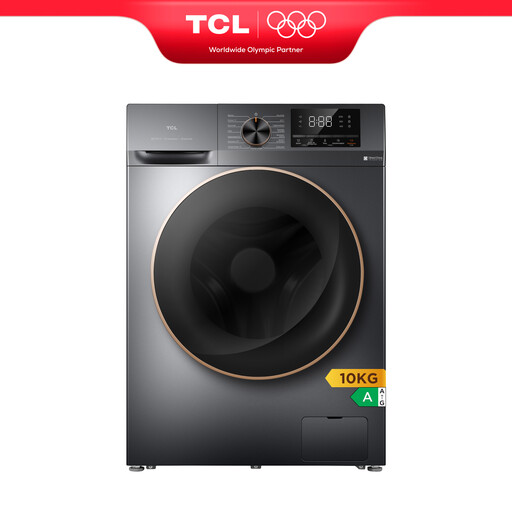
TCL FP2210SA0AMDE washing machine, 10 kg

TCL FP2210SA0AMDE washing machine, 10 kg

A washing machine option if you can hang your tablecloth up to dry afterwards. Always follow the care instructions for the specific tablecloth.

The product name lists a 10 kg capacity, Smart DD motor, Steam Wash, a 15-minute quick programme, child lock and delay start.

View at Joybuy
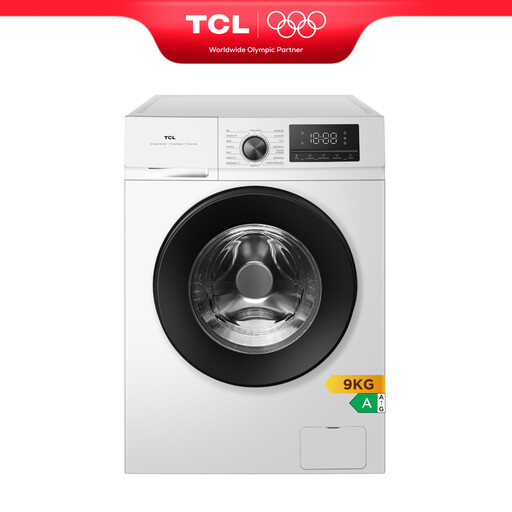
TCL FF0109WA2AMDE washing machine, 9 kg

TCL FF0109WA2AMDE washing machine, 9 kg

This washing machine may suit you if you can air-dry your tablecloth after washing; the care label will tell you how it can be treated.

The product name lists a 9 kg capacity, BLDC motor, Steam Wash, a 15-minute quick programme, child lock and a honeycomb drum structure.

View at Joybuy

LG WT1210EGF WashTower, 12 kg washing and 10 kg drying capacity

LG WT1210EGF WashTower, 12 kg washing / 10 kg drying capacity

The stated drying function may be useful for households without space to hang laundry up to dry. First, check that the care label allows your tablecloth to be machine dried.

The product name lists a 12 kg washing capacity and 10 kg drying capacity, a heat pump tumble dryer and a maximum spin speed of 1,350 rpm.

View at Joybuy

LG WT1210WWF washer-dryer, 12 kg washing and 10 kg drying capacity

LG WT1210WWF washer-dryer, 12 kg washing / 10 kg drying capacity

This washer-dryer may suit you if you don’t have a separate place to dry laundry. Make sure machine drying is suitable for your particular tablecloth.

The product name lists a 12 kg washing capacity and 10 kg drying capacity, Dual Inverter heat pump technology, AI DD, TurboWash 360°, a steam function and the ThinQ app.

View at Joybuy
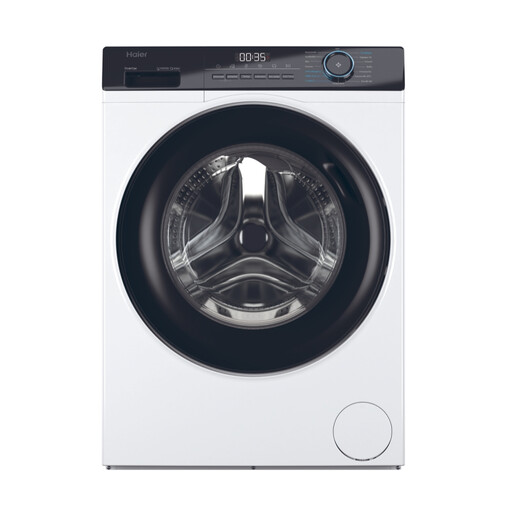
Haier I-PRO SERIES 3 washing machine, 9 kg

Haier I-PRO SERIES 3 washing machine, 9 kg

A washing machine option if you can air-dry your tablecloth afterwards. Follow the care label when choosing how to treat it.

The product name lists a 9 kg capacity, A energy efficiency rating and a maximum spin speed of 1,400 rpm.

View at Joybuy

Frequently asked questions

Can every cotton tablecloth be tumble dried?

No. The material alone doesn’t tell you whether machine drying is suitable. Check the drying symbol and the other care instructions for your particular tablecloth before choosing a washer-dryer.

What does an A energy rating tell me about other programmes?

A washing machine’s energy rating relates to the stated rating for the wash cycle; it doesn’t automatically apply to every programme. HEA explains that the weighted consumption shown on the energy label is based on the ‘eco 40–60’ programme. For a washer-dryer, you should consider the complete wash-and-dry cycle separately.

What should I check before installing an appliance?

Measure the space and access route, and check the water, drainage and electrical connections required for the specific appliance. If you plan to stack a separate tumble dryer on top of the washing machine, check that both models are approved for stacking and that you have the right stacking kit.

How can I dry a tablecloth indoors without overlooking damp?

Make sure the room is properly ventilated when drying laundry indoors. The consumer advice centre warns that lingering moisture can encourage mould. Choosing a spin speed that suits the care label can help reduce the laundry’s residual moisture beforehand.

How do I take a washer-dryer’s drying capacity into account?

For a complete wash-and-dry cycle, the stated drying capacity is what matters, not the larger washing capacity. For example, Bosch lists the WNG24442 as having a 9 kg washing capacity and a 6 kg capacity for washing and drying in one go.