For cotton ties and the occasional family laundry load, an iron with adjustable temperature settings and a dry-ironing mode is a sensible place to start. GINETEX advises that the permitted temperature depends solely on the care label for the whole tie, not its fibre content. If you regularly iron larger loads, a steam generator iron may be more practical, while a garment steamer is no substitute for targeted pressing.
Which iron is right for you?
Smooth ties with care
If you want to smooth narrow cotton ties, you’ll need to avoid shiny patches and flattening their shape. The care label, controllable heat and a pressing cloth matter more than using as much steam as possible. GINETEX and Neakasa highlight the importance of following care instructions and handling ties carefully.
Keep things safe around the family
In homes with children or pets, a safe place to rest the iron and unplugging it after use are just as important as ease of use. Electrical Safety First advises never leaving an iron unattended and keeping it out of reach of children and pets.
Iron ties and other laundry
If you’ll also use the iron for family laundry, consider your usual load size and the space you have available. Braun Household describes steam generator irons as irons with a separate, large water tank in a base unit.
What should you look for when buying?
Steam iron with dry-ironing mode
A good fit if: You want to iron ties with control and use the iron for the occasional family laundry load too.
The trade-off: Heat, moisture and pressure can affect a tie’s shape and surface, so the care label is still the deciding factor.
Garment steamer
A good fit if: You want to ease light creases in a hanging garment and its care instructions permit steaming.
The trade-off: Smoothing without direct contact isn’t a substitute for the targeted pressing action of an iron’s soleplate.
Steam generator iron
A good fit if: You regularly have larger loads of suitable family laundry and space for a separate base unit.
The trade-off: The larger tank is designed for longer ironing sessions; it doesn’t automatically make the unit a better choice for ironing individual ties.
| What matters |
What to check before buying |
Who will value this? |
| Shape and surface |
The care label on the specific tie; a suitable temperature setting and dry-ironing mode. |
If I’m smoothing a narrow cotton tie, I want to avoid shiny patches and misshaping it; around 33% of consumers put preserving shape and surface first. |
| Safe handling |
A stable place to rest the iron and a manageable cord; check whether the specific model has automatic shut-off. |
If children or pets are nearby, I want to be able to put the iron and cord somewhere safe; around 27% of consumers prioritise safe use in a family home. |
| Other family laundry |
Your usual laundry load and available space; the model’s tank and steam settings. |
If I regularly iron other laundry as well as ties, I want the iron and its tank to suit the size of my loads and the length of my ironing sessions; around 20% of consumers prioritise versatility for family laundry. |
| Care and ongoing costs |
The descaling instructions for the exact model; any consumables required and repair options. |
If I want day-to-day care to be as straightforward as possible, I look for clear descaling instructions and service information; around 20% of consumers prioritise low-maintenance care and manageable ongoing costs. |
Common mistakes when ironing ties
-
Assuming cotton can withstand high heat
The care label on the specific tie determines how it can be treated. Interlinings and seams may be more delicate than the outer fabric.
Check the label before ironing. If ironing is permitted, proceed carefully, use light pressure and place a clean pressing cloth over the tie.
-
Expecting a garment steamer to replace targeted pressing
Smoothing without direct contact and pressing a specific area serve different purposes.
For light creases, check whether the tie can be steamed. If you want to press a particular area, consider an iron with suitable temperature controls.
-
Assuming automatic shut-off means you can leave the iron unattended
A hot soleplate, steam and an accessible cord can still pose a risk in a family home if the iron hasn’t been put somewhere safe.
Even with automatic shut-off, don’t leave the iron unattended. Unplug it after use and let it cool out of reach of children.
Brands to consider
Braun
The FreeStyle 3 FI 3194 BK is an example of a steam iron with a rotary dial and dry-ironing mode.
- Braun lists a continuous steam output of 45 g/min and a SuperCeramic soleplate for this model.
- These specifications don’t prove that the iron is especially gentle on ties; the care label and light pressure remain key.
Philips
The 6000 Series DST6130/40 is an example of a model with a fixed OptimalTEMP setting, if you also have other ironable fabrics to care for.
- Philips lists 50 g/min of continuous steam, a drip-stop feature and automatic shut-off.
- The manufacturer’s guidance on use with ironable fabrics doesn’t override a no-ironing symbol or specific care instructions on a tie. If you want to lower the temperature yourself, check how the controls work.
Tefal
The Ultimate Pure FV9851 is an example of a steam iron with a wide range of features for additional family laundry.
- Tefal lists 60 g/min of continuous steam, a precision tip, a drip-stop feature and automatic shut-off.
- A high stated steam output doesn’t prove that this model is better suited to ties with a delicate construction.
Rowenta
The Pro Master DW8210 is an example of a steam iron with manual temperature and steam controls.
- Rowenta lists a drip-stop feature and a 310-ml water tank for this model.
- Rowenta doesn’t list automatic shut-off for the DW8210. If this feature matters to you, check the specifications for the specific model.
Irons at Joybuy
This selection includes irons with a soleplate for pressing, including a travel iron. Check the specific model’s temperature settings and steam options against the care instructions for your tie.
 No image available
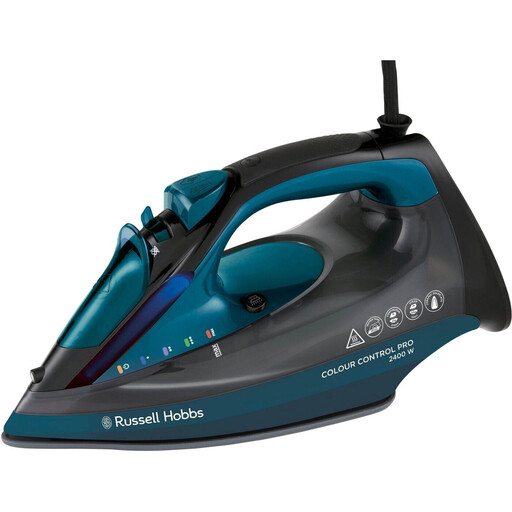
Russell Hobbs Colour Control Pro 27280-56 steam iron
For anyone who also wants to iron fabrics with different care labels; check the temperature setting against the instructions for your tie.
Model: Colour Control Pro 27280-56.
View at Joybuy
 No image available
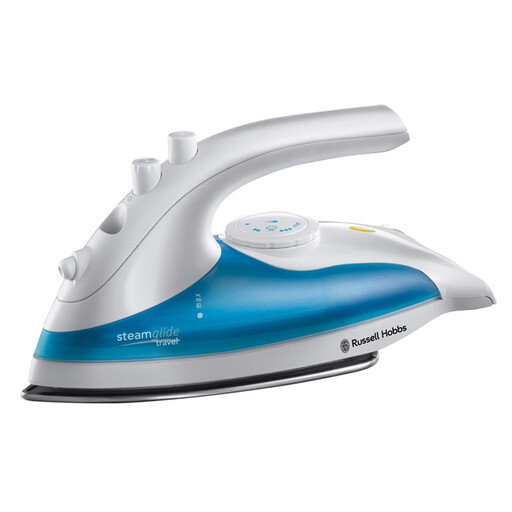
Russell Hobbs Travel Iron 22470, dual voltage
For anyone who wants to take a compact iron on their travels; check that its settings are suitable for the tie’s care label.
Product name: stainless steel soleplate and 1.5-m cable.
View at Joybuy
 No image available
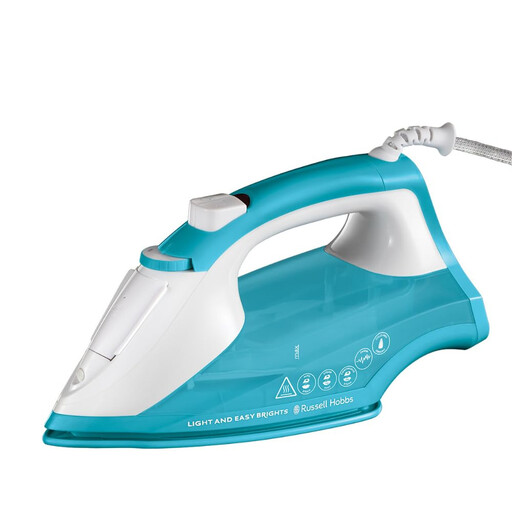
Russell Hobbs 26482-56 Light & Easy Brights Aqua steam iron
For anyone who wants to iron other suitable fabrics as well as ties; check the temperature setting against the care label for each item.
Colour listed in the product name: blue/white.
View at Joybuy
 No image available
Handheld Steam Iron, 2400 W, non-stick soleplate
For targeted ironing with a soleplate; check the temperature required and whether steam is suitable for the tie, using its care label as a guide.
Product name: 2400 W and non-stick soleplate.
View at Joybuy
 No image available
Rowenta DW4320 Express Steam steam iron
For anyone who wants a soleplate and steam function for other ironing jobs too; check the tie’s care instructions before using steam.
Product name: 2500 W, 40 g/min continuous steam, 160 g/min steam boost, Eco function and drip-stop feature.
View at Joybuy
Frequently asked questions
What temperature should I use for a cotton tie?
The care label on the specific tie is what matters, not just the word ‘cotton’. Follow any instruction not to iron it. If ironing is permitted, press gently through a pressing cloth and avoid firm pressure or holding the iron over one area for too long.
Is automatic shut-off enough to make an iron safe in a family home?
No, it’s just an additional appliance feature. Don’t leave a hot iron unattended, keep the iron and cord away from children and pets, and unplug it after use.
How do I descale a steam iron?
Follow the instructions for the specific model. Braun describes a self-cleaning function for its appliances, warns that hot water and steam may escape during use, and advises against using commercially available descalers in those instructions. Don’t assume the same procedure applies to other models without checking first.
What rights do I have when buying online in Germany?
If goods are faulty, your statutory rights are with the seller and are separate from any voluntary guarantee. According to the Verbraucherzentrale, online purchases generally come with a 14-day right to cancel; the terms of your specific purchase will apply.
What should I check for electrical compliance?
For appliances covered by the EU Low Voltage Directive, this includes electrical equipment operating at 50 to 1000 V AC. The European Commission explains that, where relevant EU legislation applies, CE marking represents the manufacturer’s declaration of conformity; it is not a safety certificate issued by a central EU body. Check the product labelling and manufacturer’s information for the specific item.


