Style-conscious tie wearers
You want to smooth narrow sections without damaging the fabric, interlining or shape with excessive heat and pressure. Follow the care label for the specific tie and handle it gently.


For cotton ties, an iron with adjustable temperature and a precision tip is a sensible starting point, provided the care label says ironing is allowed. Use a pressing cloth and apply gentle pressure for just a moment. A dry iron is a good choice if you want to press without steam from the appliance; a handheld garment steamer works if a quick refresh is all you need without an ironing board. A steam generator iron takes up extra space for a single tie, so it’s worth considering mainly if you regularly iron other laundry at home. When choosing a specific electrical appliance, also check for the CE marking and read the product documentation: according to Your Europe, CE is a declaration made by the manufacturer, not an independent quality mark.
You want to smooth narrow sections without damaging the fabric, interlining or shape with excessive heat and pressure. Follow the care label for the specific tie and handle it gently.
You share a surface and an appliance with others, so you need a suitable place to set the appliance down safely and let it cool. Automatic shut-off depends on the model and doesn’t replace safe handling of a hot appliance.
You want to use as little equipment and set-up space as possible for the odd crease in a tie. Consider whether you need to press it precisely or whether a quick refresh while it’s hanging will do.
A good fit if: you want to press the tie precisely and use the same appliance for other clothes that can be ironed. The temperature and steam settings must be suitable for the care label.
Consider: The water tank and soleplate need care, and not every model has automatic shut-off.
A good fit if: you want to press without a water tank or steam from the appliance, and the care label allows ironing. Severin lists stepless temperature control for the BA 3211.
Consider: According to the manufacturer, the Severin BA 3211 has no steam function, so you can’t control moisture through the appliance.
A good fit if: you mainly want to freshen up a hanging tie and don’t want to set up an ironing board. Philips says the STH5010/70R1 handheld garment steamer can be used without an ironing board.
Consider: It doesn’t offer the same focused pressing surface as an iron’s soleplate, and the steam setting must be suitable for the specific tie.
A good fit if: you regularly iron larger amounts of other laundry at home and have room for the base unit and hose.
Consider: According to Tefal, the SV6131 has a removable 1.7-litre tank. The station, hose and tank maintenance all need extra space and effort.
| Buying priority | What to look for | Who it matters to |
|---|---|---|
| Tie shape and care label | Check the label on the specific tie; look at the temperature and steam settings, as well as whether the tip is easy to guide. | I want to protect the fabric and interlining of my tie, so I follow its care label. Around 33% of consumers prioritise protecting the shape and material when buying. |
| Safe use in a shared space | Check whether the exact model has automatic shut-off, and make sure you have a suitable surface for setting it down and letting it cool. | It’s important to me that a hot appliance can be used carefully and put down safely in a shared ironing space. Around 27% of consumers put safe shared use first. |
| Space and set-up | Consider whether you need to press the tie precisely or simply freshen it up; allow storage space for an ironing board or the station base. | If I only smooth a tie occasionally, I want to use as little space as possible for setting up and storing the appliance. A compact footprint is the top priority for around 20% of consumers. |
| Water care and maintenance | For a steam appliance, follow the model-specific instructions for the tank, cleaning and descaling. | I want to avoid tank maintenance if I don’t need steam from the appliance for my tie. Around 20% of consumers prioritise keeping water-related maintenance to a minimum. |
The care label applies to the whole textile. Too much heat, pressure or moisture can damage the tie’s surface, interlining or shape.
Check the label first. If ironing is allowed, start carefully with a pressing cloth and brief, gentle pressure.
This feature depends on the model: Braun lists it for the TexStyle 3 SI 3055, while Tefal doesn’t list it for the Virtuo FV1713 and Rowenta doesn’t list it for the DW5310.
Check the specifications for the exact model and put a hot appliance down safely in a shared ironing space.
A larger tank doesn’t automatically make a steam generator iron right for this small task. The station also needs space for its base unit and hose.
Consider a station mainly if you regularly iron other laundry at home and have room for the extra equipment.
The TexStyle 3 SI 3055 focuses on a precision tip and automatic shut-off.
The Virtuo FV1713 is a steam iron with manual steam and temperature settings; the Express Easy SV6131 is a steam generator alternative.
The Focus Excel DW5310 is a steam iron with a precision tip highlighted by the manufacturer.
The BA 3211 is a dry iron for people who want to iron without steam from the appliance.
The Azur DST8020/20 is a steam iron; the STH5010/70R1 handheld garment steamer is a space-saving alternative for freshening clothes.
This selection includes steam irons and steam generator irons. A station needs extra space, so it’s worth considering mainly for households that regularly iron other laundry as well as ties.
 No image available
As a steam iron, it’s worth considering for precise pressing, provided the care label and the selected temperature and steam settings are compatible.
The product name lists a 280 g/min steam boost, vertical steam and automatic shut-off.
How you treat the tie depends on its care label; cotton alone doesn’t determine the right temperature or amount of steam.
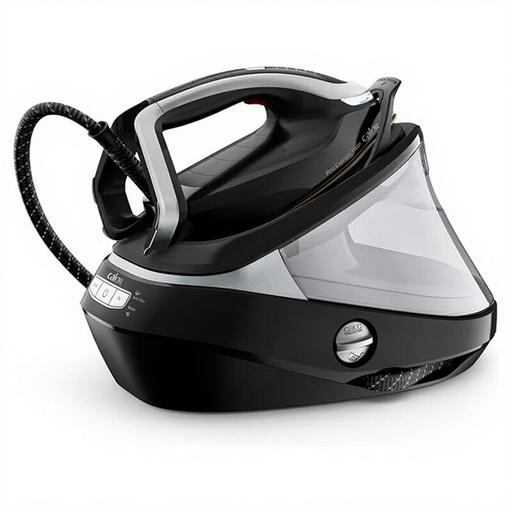 No image available
This station is worth considering mainly if you regularly iron larger amounts of other laundry at home as well as ties.
The product name lists a 1.2-litre tank, continuous steam of 180 g/min and a steam boost of 800 g/min.
For a single tie, you’ll also need to account for the extra base unit and space; the temperature and steam settings must suit the care label.
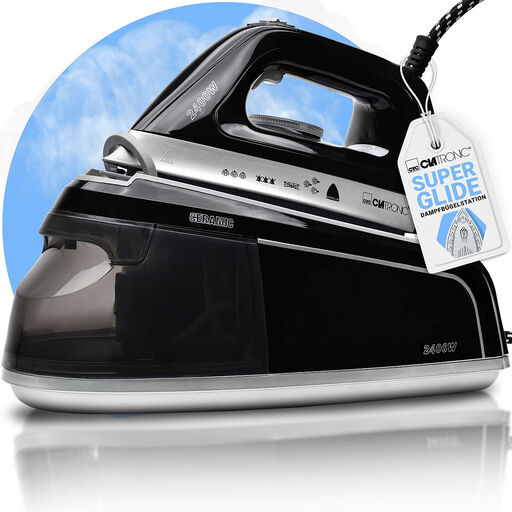 No image available
This station is worth considering mainly for households with other laundry to iron as well as ties.
The product name lists a 1.2-litre water tank and an operating pressure of 3.5 bar.
The base unit and tank need extra space; set the temperature and steam according to the tie’s care label.
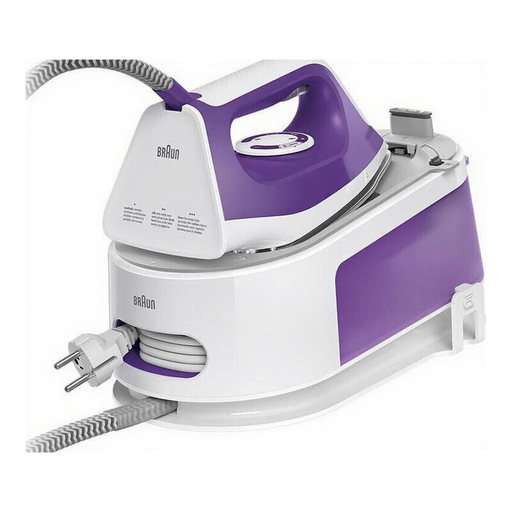 No image available
This station is worth considering mainly for households with other laundry to iron as well as ties; for a single tie, the extra base unit takes up space.
The temperature and steam settings must suit the care label of the specific tie.
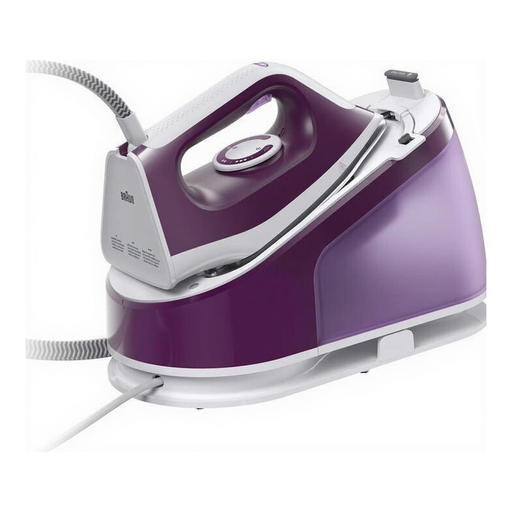 No image available
This station is worth considering mainly for households with other laundry to iron as well as ties; for a single tie, the extra base unit takes up space.
The temperature and steam settings must suit the care label of the specific tie.
No. The care label for the whole item is what matters, not just the cotton fibre. GINETEX Germany lists ironing symbols with maximum soleplate temperatures of 210 °C, 160 °C and 120 °C, as well as the “Do not iron” symbol; at the low setting, steam can cause irreparable damage. You can’t use this information to recommend a temperature for a tie without a known care label.
Check the care label first, and only start if ironing is allowed. Neakasa recommends using a clean pressing cloth, a low temperature and brief, gentle pressure on ties, rather than pressing down firmly and sliding the iron over them. Whether this is suitable for your tie depends on its care label.
No, it’s no substitute for supervision or putting the appliance down safely. Braun says the TexStyle 3 SI 3055 switches off after eight minutes when upright or one minute when horizontal; these timings apply to this model, not all irons.
No. Your Europe explains that, for products where the marking is required, CE represents the manufacturer’s declaration that the product complies with the applicable requirements. It is not an independent quality mark for a specific appliance.
If there’s a fault, the seller is generally responsible under the statutory guarantee. The Verbraucherzentrale says this lasts for two years from delivery; online purchases usually come with a 14-day right to cancel. A voluntary manufacturer’s warranty is separate.