Careful ironers
If you want to smooth a slim cotton tie, check the care label for the whole tie and avoid changing its shape with a sharp crease. GINETEX Germany explains care symbols and their maximum temperatures.


For the occasional cotton tie and short shared ironing slots, a compact steam iron with adjustable temperature is usually the better fit. A steam generator is more suitable if you regularly have larger loads of other items to iron. Always check the care label for the whole tie: GINETEX Germany uses the iron symbol to indicate the maximum permitted temperature, and a more powerful appliance does not override a ban on ironing.
If you want to smooth a slim cotton tie, check the care label for the whole tie and avoid changing its shape with a sharp crease. GINETEX Germany explains care symbols and their maximum temperatures.
If you only have a limited shared slot for ironing and need to get a few items done, choose the tank size and footprint to suit the amount of laundry you actually have.
When several people use the same appliance, clear settings, an automatic shut-off confirmed for the exact model, and agreed descaling arrangements are important things to consider.
Start with the care label and the treatment permitted. Then compare tank size, space requirements and features for shared use.
| Consideration | What to check before buying | Who is it important to? |
|---|---|---|
| Smoothing a tie gently | Care label, temperature control and whether steam is permitted for the item. | When I smooth a slim tie, I want to preserve its shape and use only the permitted treatment; around 36% of consumers put gentle tie care first. |
| A few items in a limited slot | Match the appliance type, footprint and tank size to the amount of laundry in your shared ironing slot. | If you only have brief access to the ironing area, you want to get a few items done without setting aside unnecessary space for a large steam generator; around 29% of consumers prioritise short ironing sessions. |
| Shared use | Check automatic shut-off for the exact model number and keep the instructions accessible. | When several people use an appliance, easy-to-understand settings and safe handling after ironing matter; around 21% of consumers prioritise shared use. |
| Water marks and maintenance | Check the anti-drip feature and descaling method for the specific model. | If you share a steam iron, you want to avoid water marks and unclear maintenance responsibilities; around 14% of consumers put easy appliance maintenance first. |
The care symbol applies to the whole tie, not just its outer fabric. Using the wrong treatment can damage the fabric, interlining or shape.
Check the label first. Only iron the tie if permitted, and choose a suitable setting.
The feature varies by model: Tefal lists it for the FV6842, but not for the FV2838.
Check the full model number, and always put the appliance away safely after use, even if it has automatic shut-off.
A large tank is most useful when you also have bigger loads of laundry to iron. Philips lists a 1.5-litre tank for the PSG7300/80.
Compare the total amount of laundry you need to iron in your shared slot with the space available.
A steam generator needs extra space and must be descaled according to the model’s instructions.
The models mentioned offer different features in steam irons.
The DST3041/80 is a traditional steam iron, while the PSG7300/80 is a steam generator.
The Focus Excel DW5310 is a comparison model with what the manufacturer describes as a precision tip.
The TexStyle 7 Pro SI 7181 Violet is an example of a steam iron whose soleplate is highlighted by the manufacturer.
This selection includes steam irons for short ironing sessions and shared ironing slots. Check the care label for the whole tie before each use.
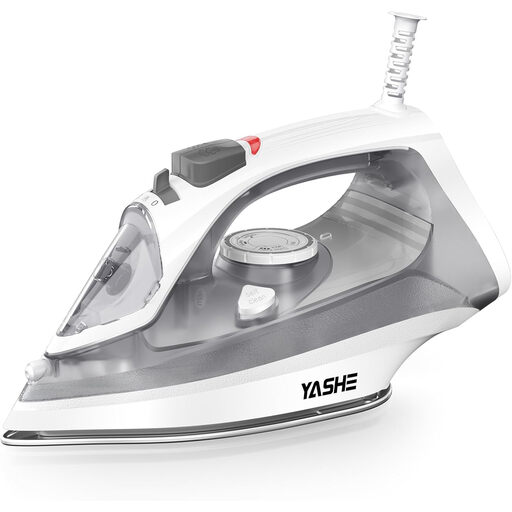 No image available
A traditional steam iron for short ironing sessions; follow the tie’s care label when using it.
Features listed in the product name: 2300 W, 300 ml water tank, 150 g/min steam boost, non-stick soleplate, self-cleaning and anti-drip function.
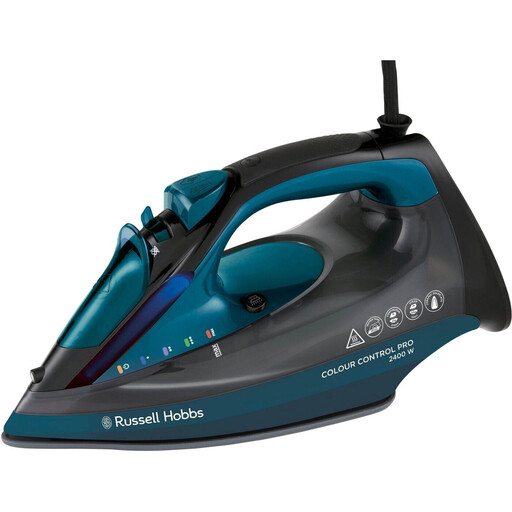 No image available
A steam iron for anyone choosing an appliance for shared ironing slots. Follow the tie’s care label when using it.
 No image available
Another compact handheld steam iron for short ironing sessions; only use it if the care label permits ironing.
Features listed in the product name: 2400 W, non-stick soleplate, automatic cleaning and anti-drip function.
 No image available
A traditional steam iron for a shared household. Check whether the tie can be ironed before use.
Features listed in the product name: 2500 W, 40 g/min continuous steam, 160 g/min steam boost, Eco function and anti-drip system.
 No image available
For anyone who wants to consider automatic shut-off and scale care when choosing an appliance for shared use. This does not replace checking the care label.
Features listed in the product name: 280 g/min steam boost, vertical steam, XL water inlet, stable heel rest, anti-scale technology, anti-drip system and automatic shut-off.
No. The care label for the whole tie is what matters, and a ban on ironing takes precedence. GINETEX Germany lists maximum soleplate temperatures of 120 °C, 160 °C and 210 °C for iron symbols. According to GINETEX, steam can cause damage when the label permits ironing at 120 °C. So always check the actual label.
Agree who will put the appliance away safely after use and take care of descaling according to the manufacturer’s instructions. Philips notes that limescale can contribute to discolouration, leaks and reduced steam output in its steam generators; cleaning steps vary by model.
Look for clear appliance identification, manufacturer details, the required marking and German instructions covering use and warnings. The EU Low Voltage Directive covers electrical household appliances within its specified voltage range. The German Federal Network Agency lists these as aspects of market surveillance; a marking is not an independent performance test.