
Lieferung heute & morgen

Qualitätsgarantie

Willkommens-Angebote freischalten: KOSTENLOSE Lieferung | Bis zu 80 % RABATT | Kostenlose 30-Tage-JoyPlus-Testphase
App herunterladen
Cotton towels are an essential part of every bathroom, kitchen, gym bag and family home. Even so, choosing the right ones is not always easy. Product descriptions often use terms such as “extra soft”, “thick” or “quick-drying” without explaining all the details that really matter. If you choose based solely on colour or a low price, you may end up with a towel that is too small for its intended use, dries slowly or loses its softness after several washes.
The following points will help you compare cotton towels using clear, practical criteria and choose a model that suits your everyday needs.
A high fabric weight can create a fuller, more luxurious feel. However, it does not by itself indicate how quickly a towel absorbs moisture or dries. The weave, fibres, manufacture and care routine also play a part. For a bath towel used every day, a medium weight may be more practical than an especially heavy terry towel, which takes up more room in the laundry basket and on the airer.
A face towel, hand towel and bath towel all serve different purposes. For example, a size of around 35 × 72 cm is suitable for hands or the face, while 70 × 140 cm covers considerably more of the body. If you are looking for a towel for the gym, sauna or travel, you should also check whether it will fit in your sports or travel bag.
Fabric softener can reduce the absorbency of cotton textiles, as residue may build up on the fibres. High temperatures, bleach and incorrect drying can also put greater strain on the colour and material. It is therefore worth checking the permitted washing temperature and drying recommendation before buying.
100% cotton is often chosen for its natural feel and good moisture absorption. Terry cloth with a looped texture usually feels fuller and is well suited to bath towels, shower towels and hand towels. Depending on their composition, blended fabrics may offer different characteristics, such as a lower weight or a different drying time.
When choosing towels for sensitive baby skin, check the material composition particularly carefully. A baby towel should be made to a soft finish and must only be used and washed in accordance with the manufacturer’s instructions. Material information does not replace an individual assessment of suitability and is not a medical claim.
Fabric weight is usually given in g/m² or GSM. It describes how much one square metre of fabric weighs. A value of 450 GSM indicates a denser, more substantial textile than a significantly lighter towel. Some listings, however, only state the total weight, such as 390 g. Without the exact surface area, this figure cannot be directly compared with GSM.
When deciding what to buy:
Colour is also a practical consideration. A green towel, celadon or army green can easily complement an existing bathroom or sports colour scheme. For households with several people, it is a good idea to assign colours or sizes clearly to each person.
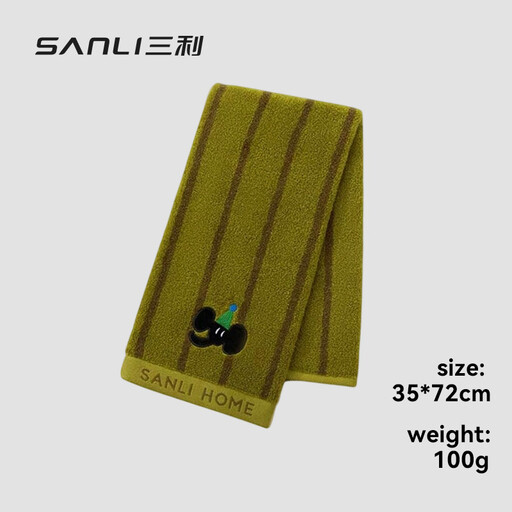
Why this product suits the profile: This compact 100% cotton face towel is suitable for everyday hand washing, use on the face or as a small towel in your luggage. The green colour makes it easier to identify in a family bathroom.
The specific size of 35 × 72 cm and stated weight of 100 g make the choice clearer than a purely promotional claim about thickness.
100% cotton; compact size; machine-washable everyday textile according to the product listing.
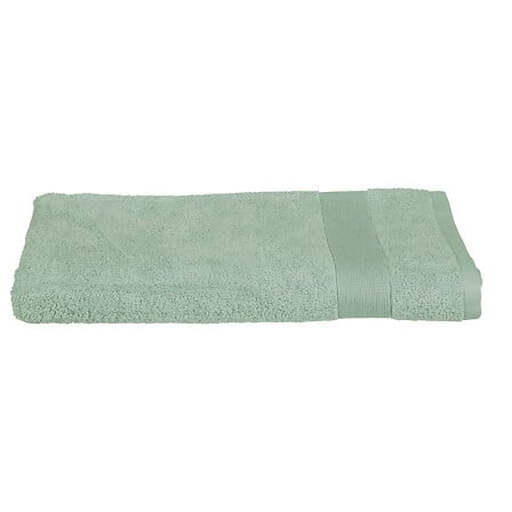
Why this product suits the profile: Measuring 100 × 150 cm, this large bath towel provides plenty of coverage after bathing or showering. Its stated composition of 100% cotton and fabric weight of 450 g/m² will appeal to shoppers who pay close attention to material and size information.
Rather than simply promoting the towel as “soft” or “thick”, the listing provides specific measurements, material information and a GSM value.
100 × 150 cm; 100% cotton; 450 g/m² according to the product description.
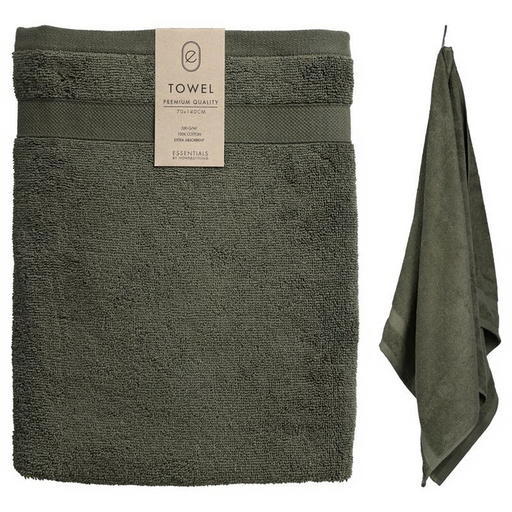
Why this product suits the profile: Measuring 70 × 140 cm, this towel is suitable for the shower, gym, travel and outdoor activities. The army green colour is less likely to show everyday marks than very light shades.
The clearly stated size prevents a towel that appears suitable for showering from providing too little coverage for sport or drying yourself.
70 × 140 cm; cotton material according to the product description; designed for machine washing and tumble drying on a low setting.
New cotton towels should be washed before first use. This helps remove any production residue and allows the fibres to develop their intended feel. For good absorbency, it is advisable to use fabric softener sparingly or not at all. The product’s own care instructions should always take priority.
Practical basic rules:
For families, a towel set with several sizes can be a practical choice. This ensures that a face towel, hand towel and shower towel are available for different uses. Shoppers with limited storage space, on the other hand, may prefer to select individual sizes that are needed most often.
We have put together a complete, regularly updated list of products that fully meet these strict selection criteria and the safety regulations applicable in the EU.
For everyday use, sizes of around 70 × 130 cm to 73 × 140 cm are common. If you want to cover more of your body, you can choose a bath towel measuring approximately 100 × 150 cm. More compact sizes are often easier to carry for sport and travel.
Their lifespan depends on the quality of the fibres, the weave, washing temperature, drying method and frequency of use. It is not possible to give a reliable fixed lifespan for every product. Thinning areas, frayed edges or permanently reduced absorbency are practical signs that it may be time for a replacement.
No. A higher fabric weight can mean a denser feel, but it also makes the textile heavier and may extend drying time. For small bathrooms, frequent washing or travel, lighter, easy-care towels may be better suited to your everyday routine.