Ironing a waistcoat with lots of details
If you want to work carefully around button plackets, seams and narrow edges, look for an iron with an easy-to-manoeuvre tip. GINETEX points out that the care label specifies how the garment may be treated.


For button plackets and narrow waistcoat edges, a hand-held iron with an easy-to-manoeuvre tip and suitable temperature settings is the obvious starting point – provided you have a suitable ironing surface. A folding garment steamer is easy to store and works well for freshening up hanging clothes, but there’s no evidence that it presses edges just as effectively. A steam generator iron is more likely to suit you if you regularly iron larger loads as well as waistcoats and have room for the base. The care label on the whole waistcoat should always determine the temperature and whether you use steam.
If you want to work carefully around button plackets, seams and narrow edges, look for an iron with an easy-to-manoeuvre tip. GINETEX points out that the care label specifies how the garment may be treated.
If you usually iron one item at a time, look for an appliance that’s easy to store and consider whether you can set up an ironing surface. Tefal describes the DT3030 as a folding hand-held garment steamer that can be used without an ironing board.
If you have other clothes to iron as well as waistcoats, compare tank capacity, maintenance requirements and the space the appliance needs. A steam generator iron needs room for a separate base as well as an ironing surface.
First, decide whether you want to press the waistcoat edges on a suitable ironing surface. Then check that the appliance matches the care label, your steam requirements and the storage space available.
A good fit if: you want to press waistcoat details carefully on a suitable ironing surface.
Keep in mind: you’ll need an ironing surface, water and model-appropriate descaling. Only use steam if the care label allows it.
A good fit if: you want to freshen up individual hanging waistcoats and store as little equipment as possible.
Keep in mind: there’s no evidence that it presses edges as effectively as an iron soleplate.
A good fit if: you regularly plan longer ironing sessions as well as ironing waistcoats.
Keep in mind: even a model described as compact needs room for its separate base and an ironing surface.
| Priority | What to check when buying | Who it matters to |
|---|---|---|
| Pressing waistcoat details | Check how easy the tip is to manoeuvre and the temperature control on the specific model. | If I want to work carefully around button plackets and narrow edges, precision is my priority. Around 36% of consumers put precise pressing of waistcoat details first. |
| Space requirements | Check the appliance dimensions, a safe place to set it down and whether you’ll need an ironing surface; allow for the base too if you’re considering a steam generator iron. | If I only iron one item at a time and have little room to set up or store an appliance, a suitable design that’s easy to put away matters to me. Around 29% of consumers prioritise space requirements. |
| Following the care label | Read the ironing symbol and choose the right temperature setting and, where necessary, dry ironing. | If I want to treat a particular waistcoat gently, I follow its care label when choosing the temperature and whether to use steam. Around 21% of consumers prioritise protecting their clothes. |
| Larger loads of washing | Compare your usual load per session, tank capacity and the model’s descaling instructions. | If I regularly iron other laundry as well as waistcoats, I look for longer sessions and consider the extra space a steam generator iron needs. Around 14% of consumers prioritise larger ironing loads. |
GINETEX explains that the care symbol on the garment determines how it may be treated. The material name alone doesn’t tell you what temperature to use or whether steam is allowed.
Before ironing, check the care label on the whole waistcoat and follow the maximum temperature shown, along with any instructions not to use steam or iron the garment.
Treating it incorrectly could damage the waistcoat.
Tefal describes the DT3030 as being for freshening up hanging clothes without an ironing board. This doesn’t mean it presses waistcoat edges just as effectively.
If defined edges matter, start by comparing a suitable iron. Consider a garment steamer as an option for freshening up clothes, provided steam is allowed.
Despite being described as compact, the Philips GC7844/20 has a separate base. Philips gives the model’s dimensions as 19,3 × 22,3 × 37,3 cm.
Check the dimensions against the space you have available for using and storing it, and allow room for an ironing surface too.
Manufacturer information applies to the specific model. Tefal doesn’t list an automatic shut-off for the FV5714.
Before buying, check the full model number and the specifications of the particular appliance.
The TexStyle 3 SI 3055 is a hand-held steam iron for shoppers comparing models with a specified precision tip and manual temperature control.
The DST3041/80 is described as suitable for smaller ironing loads; the GC7844/20 is a separate steam generator iron that Philips describes as compact.
The Easygliss Plus FV5714 is an iron with a specified precision tip; the Access’Steam Pocket DT3030 is a folding hand-held garment steamer for freshening up clothes.
The BA 3210 is a hand-held steam iron with published dimensions and tank capacity to help you assess whether it will fit in a small ironing area.
These are hand-held irons for pressing on a suitable ironing surface. Before using one on your waistcoat, check that the care label, temperature and, where applicable, steam setting are all compatible.
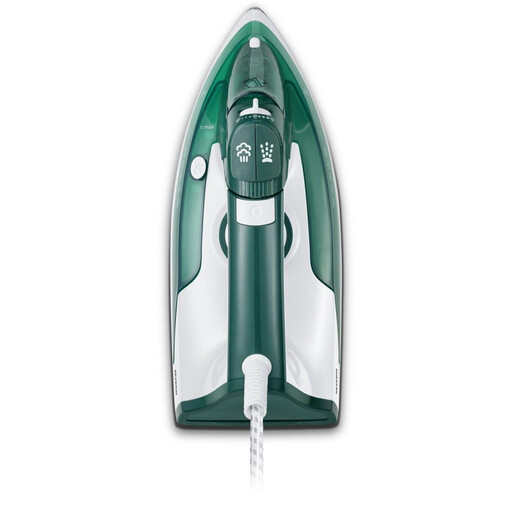 No image available
The variable temperature control can be adjusted to suit the care label.
Stainless steel soleplate; removable water tank with a capacity of around 175 ml; variable steam output; anti-drip function; 2400 W.
 No image available
The description lists dry ironing and continuous steam. Choose the setting to suit the waistcoat’s care label.
Five temperature settings; 350-ml water tank; self-cleaning and anti-drip functions; 2400 W.
 No image available
The stainless steel soleplate makes direct contact with the fabric on a suitable ironing surface.
250-ml water tank; continuous steam of up to 40 g/min and a steam boost of up to 160 g/min; anti-drip system; 1,5 kg.
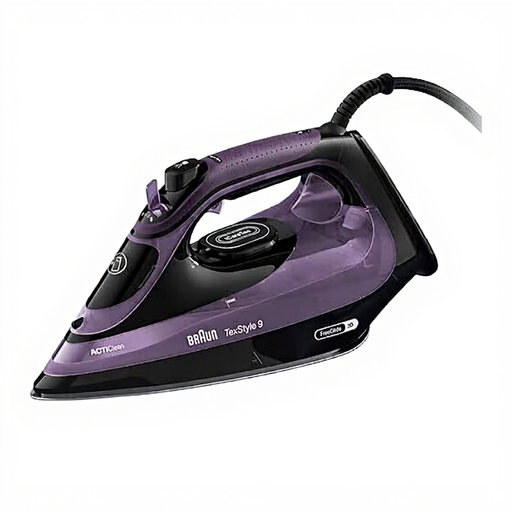 No image available
The specified precision tip may be useful for manoeuvring around buttons and narrow details.
330-ml water tank; iCare temperature setting; automatic shut-off; descaling reminder; anti-drip system.
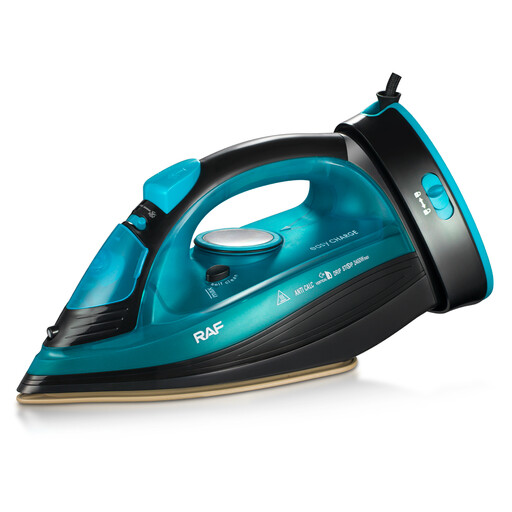 No image available
The specified precision tip is designed for manoeuvring around buttons and collars. The iron should be placed on its charging base to heat up.
Ceramic soleplate; 320-ml water tank; steam output of 15–25 g/min; 360° charging base.
Not as a general rule: the ironing symbol on the whole waistcoat is what matters. GINETEX specifies maximum temperatures of 210, 160 and 120 °C, as well as symbols for ironing without steam and for ‘do not iron’.
Tefal describes the DT3030 as suitable for freshening up hanging clothes without an ironing board. This doesn’t show that it presses a waistcoat edge as effectively as an iron.
Follow the instructions for the appliance you choose. Braun lists a self-cleaning function for the SI 3055; Philips lists Smart Calc-Clean for the GC7844/20 and says no additional cartridges are required. This doesn’t mean the appliances are maintenance-free.
According to the Verbraucherzentrale, consumers buying online generally have a 14-day right to cancel; you must notify the retailer if you wish to cancel. Your statutory rights against the seller are separate from any voluntary guarantee.
According to information from the European Union, electrical and electronic equipment is among the product groups that require CE marking. By affixing the CE mark, the manufacturer declares that the product complies with applicable EU product rules; it isn’t an independent quality mark. Check the information for the specific appliance and follow its safety instructions.