Waistcoats with lots of detail
If you want to smooth the button placket, seams and narrow edges before travelling, look for a tip that’s easy to manoeuvre.


For an individual cotton waistcoat that the care label says can be ironed, a compact iron with a well-designed tip and adjustable temperature is a sensible place to start. A garment steamer is better suited to steaming clothes on a hanger, while a steam generator is worth considering mainly if you regularly iron larger loads and have enough room for it. The EU Low Voltage Directive 2014/35/EU requires equipment within its scope, including electrical equipment rated at 50 to 1,000 V AC, to carry a CE marking – check the specific item you’re buying.
If you want to smooth the button placket, seams and narrow edges before travelling, look for a tip that’s easy to manoeuvre.
Set the temperature and steam according to the care label for the whole waistcoat, not just its cotton content.
If you regularly iron several suitable garments before packing, weigh up tank capacity against the space the appliance will take up.
Start by checking the care label for the whole waistcoat, then decide whether you need a soleplate for pressing or steam for smoothing clothes on a hanger.
| What matters | What to check before buying | Who it matters most to |
|---|---|---|
| Button placket and narrow edges | Check the tip shape and temperature control; don’t press directly over hard buttons. | If I want to tackle the button placket and seams precisely, a tip that’s easy to manoeuvre is important. Around 38% of consumers prioritise precision in narrow areas. |
| Temperature and steam | Check the care label; if needed, choose a dry mode or an iron without a steam function. | If I want to protect the lining and finish, I follow the care label for the whole waistcoat. Around 31% of consumers put suitable care first. |
| Quick to get started | Compare warm-up times for the exact model only, and plan for the space it needs and the position of the cable. | If I’m ironing just a few things shortly before travelling, I want an appliance that’s easy to get started. Around 23% of consumers prioritise a quick start. |
| Several garments | Match the tank capacity and refill options to the amount you usually iron and the space available. | If I’m ironing several suitable garments before travelling, I want to refill less often without taking up unnecessary space. Around 8% of consumers prioritise being able to iron a larger load. |
The care label applies to the garment as a whole. Steam can cause damage at a low ironing setting; GINETEX Germany also distinguishes between care instructions where steam may cause damage and those where ironing is not permitted.
Before choosing an appliance, check the ironing symbol for the whole waistcoat and set the temperature and steam accordingly.
Braun lists continuous steam for the Braun GS 5011 PU; this doesn’t mean it can create a sharply pressed edge on a waistcoat.
If neat, narrow edges matter, compare irons with a suitable tip. Consider a garment steamer for smoothing clothes on a hanger instead, as long as the care label allows steam.
According to Tefal, the Tefal Pro Express Ultimate II GV9710E0 has a separate tank and takes two minutes to heat up. Tank capacity alone doesn’t tell you whether a steam generator is worthwhile for a single waistcoat.
Weigh up how much you usually iron, the set-up and the space available against a compact appliance.
A steam generator needs a separate base, as well as extra room for use and storage.
The FreeStyle 3 range includes steam irons; the QuickStyle 5 is a handheld garment steamer designed for a different way of ironing.
The DST7040/80 in the 7000 Series is a steam iron with an integrated tank and model-specific care features.
The Focus Excel DW5310D1 is a steam iron with a tip designed for narrow areas.
The Pro Express Ultimate II GV9710E0 is a steam generator designed for larger, regular ironing loads.
The BA 3211 is a dry iron for anyone who wants to iron without steam.
The Joybuy options below are steam irons for pressing clothes flat. Before buying a specific mains-powered appliance, check that the item carries the required CE marking.
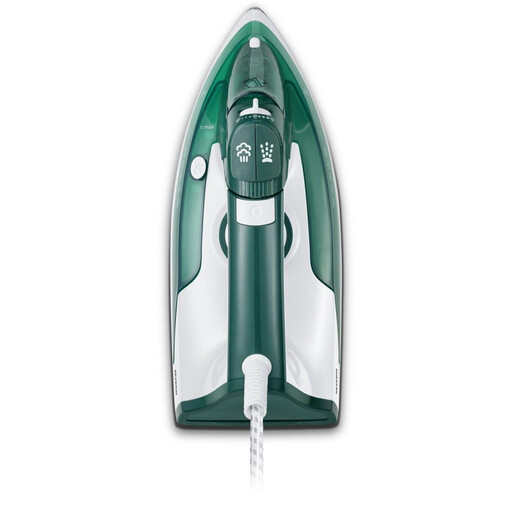 No image available
For pressing clothes flat, with temperature control and a dry mode so you can adjust the setting to suit the care instructions.
2,400 W; 85 g/min steam boost and variable steam output of 30 g/min; removable 175 ml water tank.
 No image available
A steam iron with a stainless steel soleplate for pressing clothes flat; check the waistcoat’s care label to see whether steam is suitable.
2,500 W; 40 g/min continuous steam and 160 g/min steam boost; 250 ml water tank and anti-drip system.
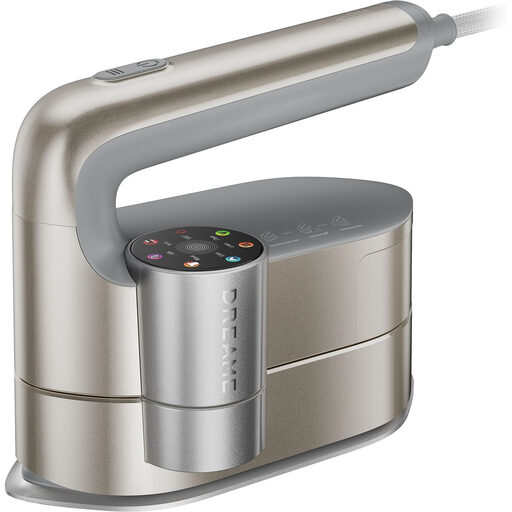 No image available
For pressing clothes flat; the rotating soleplate can be useful in narrow areas, provided the waistcoat can be ironed.
The product details list four steam modes, a dry mode and a soleplate that rotates through 90°.
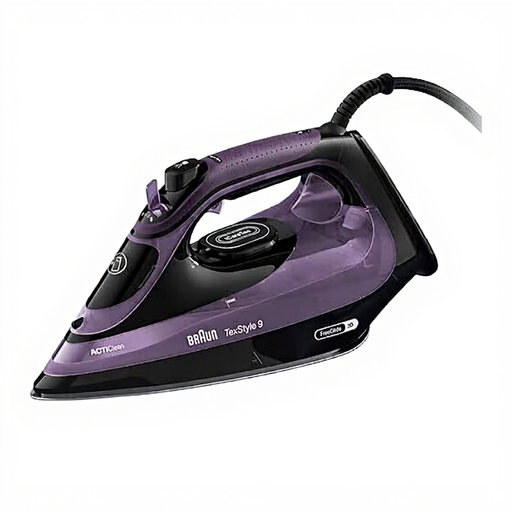 No image available
The precision tip is designed for targeted ironing in narrow areas. The automatic temperature setting doesn’t replace checking the care label for the whole waistcoat.
330 ml tank; variable steam settings, vertical steam and automatic shut-off.
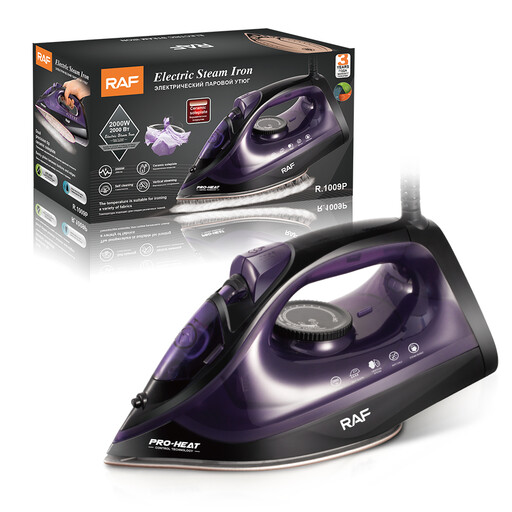 No image available
For pressing clothes flat with a ceramic soleplate; only use steam if the waistcoat’s care label allows it.
1,600 W; 210 ml water tank. Steam boost, vertical steam and self-cleaning function are listed.
No. What matters is the care label for the whole waistcoat, not just its fibre content. GINETEX Germany distinguishes between ironing temperatures of up to 210 °C, 160 °C and 120 °C, as well as instructions where steam may cause damage or ironing is not permitted.
Yes, if the appliance falls within the scope of the EU Low Voltage Directive 2014/35/EU, which covers, among other things, electrical equipment rated at 50 to 1,000 V AC. According to Your Europe, the manufacturer uses the CE marking to declare that the product meets the relevant EU requirements. Check the marking on the specific item you’re buying.
Follow the instructions for your model when descaling it and choosing which water to use. Tefal notes that water hardness affects how often descaling is needed; unplug the iron before cleaning the soleplate and let it cool completely.
For a consumer purchase in the EU, the statutory two-year legal guarantee applies to your contract with the seller, not the manufacturer. EU consumer information says the period starts when you receive the goods; an additional manufacturer’s guarantee doesn’t replace your legal rights.