Households with lined waistcoats
You want to smooth the cotton fabric while taking care of the care symbols, lining and trims.


For ironing individual cotton waistcoats, a handheld steam iron with adjustable temperature and a pointed tip that’s easy to manoeuvre is a sensible place to start. A steam generator may be a better fit if you regularly iron larger loads and have enough space to store it. The care label for the whole waistcoat is what matters, including the lining and trims – not just the cotton fabric. Before choosing a specific appliance, you’ll also need to check that it meets the relevant product safety requirements.
You want to smooth the cotton fabric while taking care of the care symbols, lining and trims.
You iron individual waistcoats and don’t want to set up or store a large ironing system just for the job.
You regularly iron other laundry too, so you’re comparing tank capacity, refilling and maintenance.
First, check the care instructions for the whole waistcoat. Then choose between a compact handheld iron for occasional items and a steam generator for regularly ironing larger loads. The percentages indicate each household’s main priority when ironing cotton waistcoats.
| Priority | What to look for when buying | Who is this important to? |
|---|---|---|
| Temperature and steam | The care label for the whole waistcoat, along with the appliance’s temperature and steam settings. | When ironing a lined waistcoat, I follow the instructions for its most delicate part, not just the outer fabric; around 40 % of consumers would put this first. |
| Precision around details | The shape of the tip, ease of use and room to iron around buttons and seams. | I want to work carefully around button plackets and seams without overlooking the care settings; around 27 % of consumers would prioritise precise ironing above all else. |
| Ease of use and storage | Tank capacity and the space available for setting up and storing the iron. | If I only iron individual waistcoats, I want an appliance that’s easy to set up and put away; around 13 % of consumers would prioritise quick ironing sessions and minimal storage space. |
| Water capacity and maintenance | Tank capacity and the descaling process for the specific model variant. | For regular ironing sessions that include other family laundry, I look at how often the appliance needs refilling and maintaining; around 7 % of consumers would prioritise ironing larger loads. |
| Safe handling | The specific model’s automatic shut-off, a stable ironing surface and the instructions in the manual. | When there are children at home, I want to take care around the hot soleplate, steam and cable; around 13 % of consumers would put safe use first. |
The care symbol shows how the garment may be treated, not just what its main fibre is. The lining or trims may be more delicate.
Check the care label for the whole waistcoat before setting the iron, and only use steam if the care instructions allow it.
A steam generator takes up extra space, both when in use and in storage. There’s no evidence that it offers an advantage over a handheld iron for occasional ironing of individual waistcoats.
Compare the total amount you regularly iron with the space you have before choosing a larger system.
An iron with automatic shut-off still has hot parts and produces steam; the feature doesn’t replace supervision.
Follow the instructions for your specific model and keep an eye on the iron while it’s in use.
The FreeStyle 3 FI3194BK is a model to consider if you want manual temperature control and precision when ironing waistcoat details.
The DST7040/80 is a model to compare for tank capacity, descaling features and automatic shut-off.
The Ultragliss Plus FV6830 is a model to consider, with a removable limescale collector and vertical steam.
The Perfect Steam Pro DG8626 is a steam generator alternative for households with larger loads to iron as well.
The products below are handheld steam irons for home use. Before buying, check that each specific appliance meets the relevant EU requirements, including the required CE marking. CE marking alone is not an independent quality mark.
 No image available
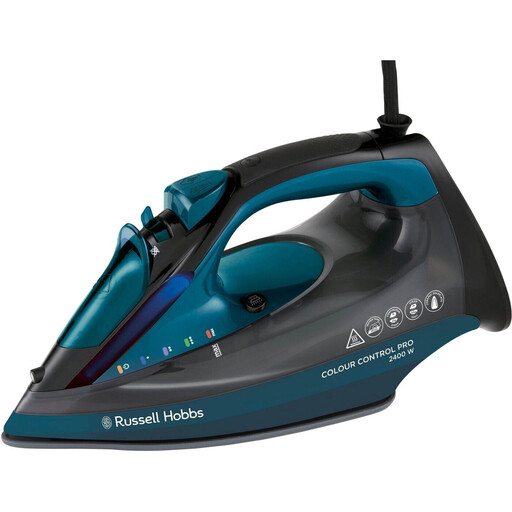
This handheld steam iron could suit you if you’re looking for an appliance to iron individual garments at home.
Set the temperature and steam according to the care label for the whole waistcoat, including any delicate areas.
 No image available
This handheld appliance is an option if you’re looking for a steam iron to use on individual garments at home.
The product name specifies a non-stick soleplate. Even so, set the temperature and steam according to the care instructions for the whole waistcoat.
 No image available
This handheld steam iron could suit your needs if you’re looking for an appliance for waistcoats and other garments.
According to the product name: 2500 W, continuous steam of up to 40 g/min, steam boost of up to 160 g/min and an anti-drip system. The waistcoat’s care instructions still determine the temperature and whether to use steam.
 No image available
This handheld steam iron is an option for individual garments if you don’t want to set up a steam generator.
The product name lists a 280 g/min steam boost, vertical steam and automatic shut-off. Choose the temperature and steam settings according to the care label for the whole waistcoat.
 No image available
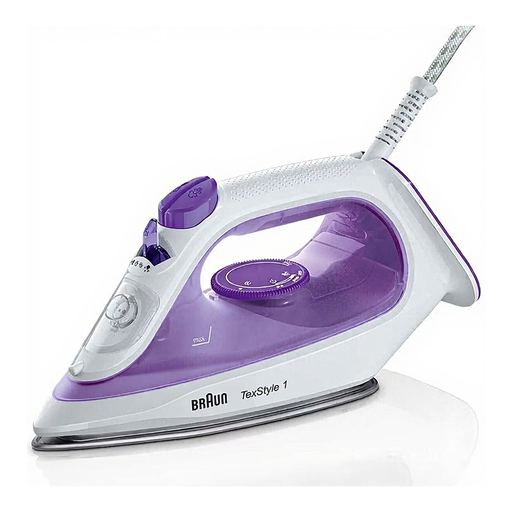
This handheld model could suit you if you’re looking for an iron for individual waistcoats and other garments.
Set the temperature and steam according to the care instructions for the whole waistcoat, and follow the model’s user manual.
No, not just because it’s made from cotton. The care label for the whole waistcoat, including any delicate areas, is what matters. GINETEX distinguishes between ironing limits of 200 °C, 150 °C and 110 °C; the 110 °C treatment listed excludes steam.
Read the manual for your specific model and use a stable ironing surface. Pay particular attention to the instructions for refilling and cooling: one household appliance manual warns about hot water and steam and says to unplug the appliance before filling it. Always follow the manual for your own appliance.
Follow the descaling instructions for your specific model. Philips notes that limescale can build up more quickly in its steam generators when the water is harder; this doesn’t mean there’s one descaling schedule that applies to every brand.
Your statutory rights against the seller are separate from any voluntary guarantee. The Verbraucherzentrale generally allows for a two-year statutory warranty and describes a one-off 12-month extension for sales contracts from 31 July 2026 if you choose a repair when a fault occurs. The relevant conditions apply.
According to EU consumer information, electrical and electronic equipment is among the product categories that must carry CE marking. The mark is the manufacturer’s declaration that the product meets the relevant requirements; it doesn’t replace checks on the specific product.