
Lieferung heute & morgen

Qualitätsgarantie

Willkommens-Angebote freischalten: KOSTENLOSE Lieferung | Bis zu 80 % RABATT | Kostenlose 30-Tage-JoyPlus-Testphase
App herunterladen
A countertop blender can prepare smoothies, sauces, dips, soups and frozen ingredients. In practice, however, wattage alone does not determine whether a model is right for your household. The container material, usable capacity, controls and cleaning requirements can have just as much impact on everyday use.
Motor power is an important indication, but it is not the only measure of quality. A 1000-watt countertop blender may be suitable for ice and frozen fruit, while the blade design, container geometry and operating time also play a role. Wattage describes the electrical power drawn from the mains, not necessarily the power actually reaching the blades.
You should therefore consider the combination of motor power, stainless-steel blades, speed settings and pulse function. More compact appliances are often sufficient for occasional smoothies. If you regularly process nuts, ice or large quantities, choose a suitable model with greater power reserves.
A 2-litre container does not necessarily hold 2 litres of liquid during operation. The maximum fill line and the manufacturer's stated effective capacity are crucial. When processing hot ingredients, you must also leave enough room for steam and pressure.
For individual portions, a 700 ml smoothie blender is often sufficient. Families and keen home cooks, on the other hand, can benefit from a large-capacity countertop blender, provided there is enough space on the worktop.
Ridges, permanently attached blades and hard-to-reach seals can make cleaning more difficult. A dishwasher-safe countertop blender with removable parts reduces the effort involved, but you should still check the manufacturer's instructions for the specific model.
There are two common container options:
A useful countertop blender test should not focus solely on motor power. For choosing a blender for a UK household, these parameters are particularly relevant:
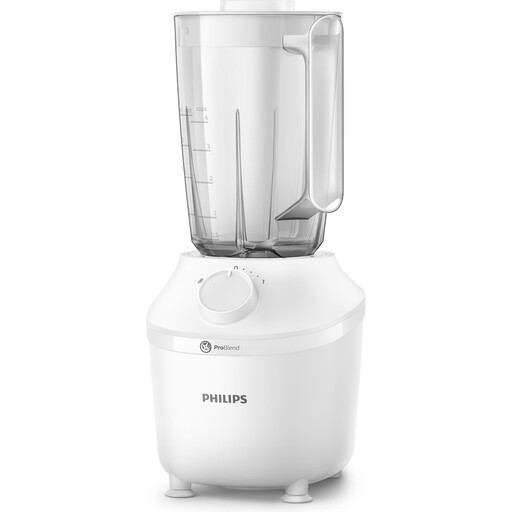
Why this product suits this profile: With 450 W, an effective capacity of 1.0 litre and a pulse function, it handles everyday tasks such as smoothies, sauces and smaller portions of ice.
The manufacturer's specifications state both the maximum capacity of 1.9 litres and the effective capacity of 1.0 litre. This makes it easier to estimate the actual portion size.
Stainless-steel blades, motor thermal protection, suction feet and removable dishwasher-safe parts.
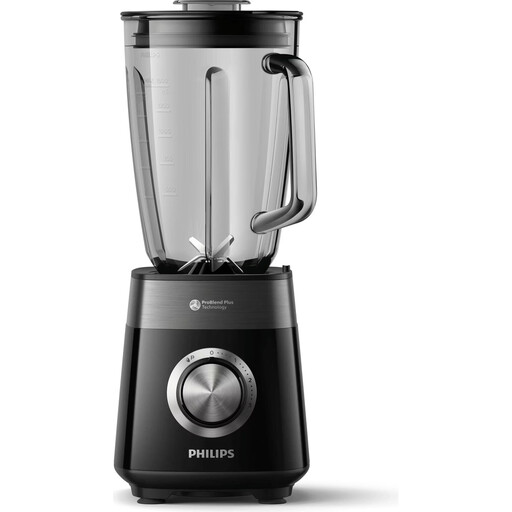
Why this product suits this profile: The 2-litre glass container and 1200 W provide a well-balanced combination for family portions, soups, sauces and frozen ingredients.
The effective container size is clearly stated as 2 litres. According to the product specifications, the glass container is hygienic and dishwasher-safe; sudden temperature changes and drops should nevertheless be avoided.
Pulse and Ice-Crush functions, removable dishwasher-safe parts and stainless-steel blades.
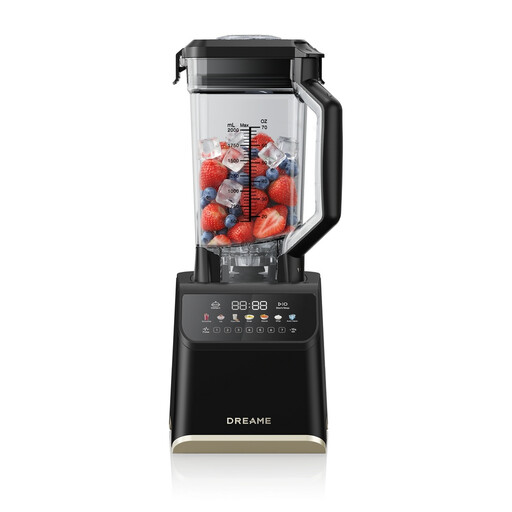
Why this product suits this profile: With 2000 W, a 2.0-litre capacity, a 700 ml To-Go cup, seven speed settings and nine programmes, it is designed for frequent and varied preparation.
The programmes for smoothies, ice, soup, sauce and automatic cleaning make the range of functions clear. The maximum fill line must still be observed.
Two Tritan containers, touchscreen, automatic cleaning and BPA-free, dishwasher-safe cups.
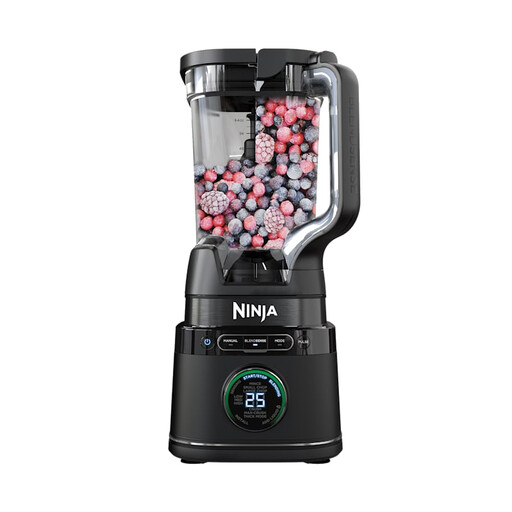
Why this product suits this profile: The container holds 2.1 litres, while the maximum liquid quantity is 1.9 litres according to the product specifications. This makes it suitable for larger quantities of smoothies or drinks.
The maximum liquid quantity prevents the nominal capacity from being confused with the operating fill level. A maximum continuous running time of 60 seconds must also be observed.
1000 W motor, three speed settings plus pulse function and removable dishwasher-safe parts.
We have put together a complete, regularly updated list of products that fully meet these strict selection criteria and the safety regulations applicable in the EU.
The running costs of a kitchen blender depend mainly on power consumption, operating time and frequency of use. An appliance with a higher wattage uses more electricity over the same period; short programmes and breaks can help limit consumption. The specific electricity cost calculation is:
Power in kilowatts × operating time in hours × electricity price per kilowatt-hour.
For a long service life, do not fill the container above the fill line, process hard ingredients according to the instructions and allow the motor to cool down between longer blending cycles. The motor unit must not be immersed in water. The blades are sharp and should only be cleaned when the appliance is unplugged.
For simple smoothies and soft ingredients, lower power ratings may be sufficient. If you frequently want to crush ice, nuts or frozen fruit, models from around 1000 watts with a suitable blade design and pulse function are a sensible choice. Wattage alone does not guarantee a particular consistency.
That depends on how you plan to use it. Glass is heavier and less likely to absorb odours or become stained, but it requires careful handling. Tritan is lighter and more shatter-resistant for everyday use. With both materials, check the maximum temperature, fill quantity and dishwasher suitability.
There is no reliable way to state a universal service life. It depends on the construction, workload, care and adherence to the instruction manual. Regular overfilling, prolonged continuous operation and processing hot liquids that are not approved for use can increase the strain on the motor, seals and container.