
Lieferung heute & morgen

Qualitätsgarantie

Willkommens-Angebote freischalten: KOSTENLOSE Lieferung | Bis zu 80 % RABATT | Kostenlose 30-Tage-JoyPlus-Testphase
App herunterladen
Depending on your household, a countertop blender should reliably handle smoothies, shakes, frozen fruit, ice, sauces or baby food. In practice, however, several common buying decisions can lead to disappointment: a machine may look powerful on paper, yet be unsuitable for its intended use or awkward to clean after use.
This buying guide explains which specifications for a countertop blender you can rely on, which features make a difference in everyday use and which model could suit different usage profiles.
A high motor rating is not, on its own, proof of good blending results. The blade shape, number of blades, jug design and permitted operating time are also important. A compact smoothie maker with 300 watts may be sufficient for soft fruit, while a blender for frozen fruit or ice requires a suitably designed blade and motor unit.
Also check whether the stated power refers to the rated output or maximum power consumption. These figures are not always directly comparable.
A countertop blender with a 1.5-litre jug does not automatically offer 1.5 litres of usable blending capacity. Many jugs have a maximum-fill mark below their total capacity. According to the product specifications, the Ninja Professional Blender has a jug capacity of 2.1 litres, but the maximum liquid quantity is 1.9 litres.
A large jug can be impractical for individual portions. If you only make one smoothie in the morning, a personal blender with a drinking cup may be more convenient. Families and households preparing meals in advance, on the other hand, need more capacity.
A pulse function can circulate water and washing-up liquid around the jug, but it will not necessarily remove residue from the seals, beneath the blade or around the lid. Removable blades, dishwasher-safe parts and a wide, easily accessible jug opening make daily cleaning much easier.
Always use a brush when cleaning sharp blades and never touch the blade directly with your fingers. The motor base must not be immersed in water.
For soft ingredients such as bananas, berries or yoghurt, a compact blender for smoothies and shakes is often sufficient. For ice, nuts and frozen fruit, however, a powerful motor and robust stainless-steel blades are advisable.
The following combination is important:
A high-performance blender is therefore not automatically necessary for every kitchen. What matters is whether you regularly process hard or frozen ingredients.
A BPA-free blender may appeal to buyers who pay close attention to the jug’s material specifications. Check whether the BPA-free claim applies to the jug, lid and any other parts. Tritan or polycarbonate are listed as jug materials for various models.
Other relevant features include:
Hot or boiling liquids should only be processed if the operating instructions expressly permit this. Several of the devices listed here warn against hot liquids, as pressure can build up inside the jug.
A multifunctional blender with grinding or chopping attachments can offer greater versatility, but it also requires more storage space and additional individual parts. Before buying, check whether you are actually likely to use these functions.
The dimensions are also important: a 2.1-litre jug may be over 40 centimetres tall and might not fit beneath every kitchen wall cupboard. In smaller kitchens, compact models or a smoothie blender with drinking cups are often more practical.
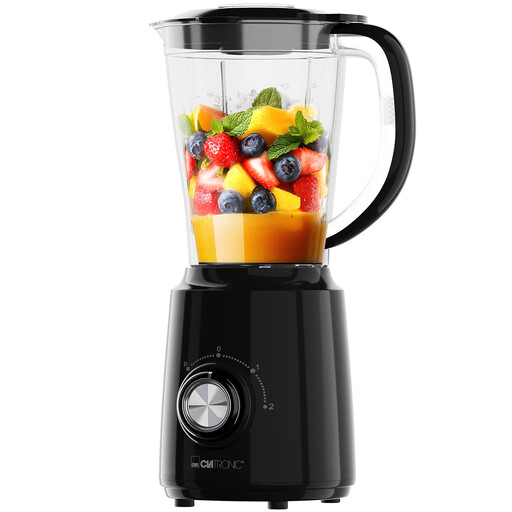
Why this product suits this profile: This kitchen blender combines a 1.5-litre scale with three speed settings, plus pulse/turbo functions, making it suitable for everyday smoothies, shakes and sauces.
The maximum filling quantity can be read directly on the jug. The product specifications also state that the stainless-steel blades are removable, making cleaning easier.
500-watt motor, BPA-free 1.5-litre jug, ice-crushing function and safety cut-out.
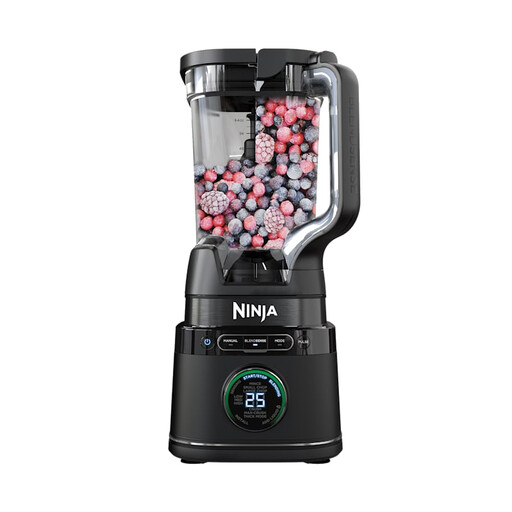
Why this product suits this profile: The large jug is suitable for family portions, entertaining and meal preparation. The three speed settings and pulse function allow you to achieve different consistencies.
The maximum liquid quantity of 1.9 litres is specified separately. According to the product specifications, the removable parts are dishwasher-safe.
1,000-watt motor, six-piece stainless-steel blade, BPA-free jug and 3 speed settings plus pulse.
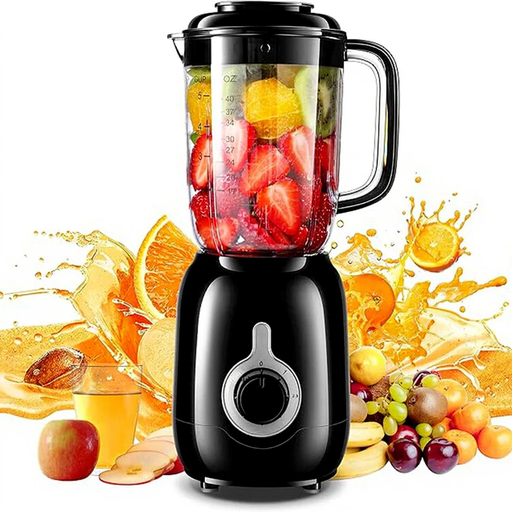
Why this product suits this profile: According to the product description, the package includes a grinding cup and a chopping cup in addition to the blending jug. This makes it appealing to users who want one appliance to handle several kitchen tasks.
The instructions specify a minimum liquid quantity of 300 millilitres and warn against overloading. This helps you prepare the ingredients more appropriately.
500 watts, 1.2-litre jug, four stainless-steel blades, pulse function, plus additional grinding and chopping attachments.
A countertop blender chops ingredients together with their pulp, making it suitable for smoothies, purées, sauces and shakes. A juicer, by contrast, separates the juice from the solid parts. Devices such as the WOOX Juicer Machine or the EUHOMY Cold Press Juicer therefore belong to a different product category. If you are looking for a smoothie maker for creamy drinks, search specifically for a blender rather than simply choosing a device labelled ‘Juicer’.
We have put together a complete, regularly updated list of products that fully meet these strict selection criteria and the safety regulations applicable in the EU.
For soft fruit and occasional shakes, 300 to 500 watts may be sufficient. If you want to crush ice, nuts or frozen fruit regularly, motors rated at around 900 watts or more can be a useful guideline. However, you should also consider the blade design, jug shape and operating time.
Its lifespan depends on how often it is used, cleaning, overloading and compliance with the operating instructions. Short blending cycles, sufficient liquid and breaks between several batches can reduce strain on the motor. Avoid overfilling the jug and do not allow the appliance to run empty.
You can calculate the electricity cost using the formula power in kilowatts × operating time in hours × electricity price per kilowatt-hour. A 1,000-watt appliance running for five minutes uses approximately 0.083 kilowatt-hours. The actual cost depends on your individual electricity tariff.