
Lieferung heute & morgen

Qualitätsgarantie

Willkommens-Angebote freischalten: KOSTENLOSE Lieferung | Bis zu 80 % RABATT | Kostenlose 30-Tage-JoyPlus-Testphase
App herunterladen
A countertop blender can prepare smoothies, shakes, salsas, purées and frozen drinks. The choice ranges from a compact Personal Blender to a large kitchen blender for several portions. However, a high wattage alone does not automatically guarantee the right results. What matters is how the motor, blade design, container, controls and cleaning requirements work together.
A power rating such as 500 or 1,000 watts initially only describes the electrical power consumption. It does not, on its own, indicate how evenly a blender works or how well it crushes ice. For hard ingredients, the blade shape, number of blades, torque transmission and a suitable control function are also important.
A blender for crushing ice should therefore be explicitly designed for this purpose. A pulse function can help deliver short bursts of power. Continuous operation is not suitable for every appliance: the product specifications for several models state a maximum operating time of 60 seconds.
The capacity stated on the container does not always correspond to the maximum amount of liquid it can hold. The Ninja Professional Blender has a capacity of 2.1 litres, but the maximum liquid capacity is 1.9 litres. Exceeding this marking risks overflow or liquid entering the motor area.
For a single-person household, a smoothie maker holding around 0.6 litres is often sufficient. Families or people who prepare several portions at once are more likely to benefit from 1.2 to 2.1 litres. A large container does, however, require more storage space and may be harder to clean.
Removable blades, dishwasher-safe parts and a wide container opening reduce the effort involved in cleaning. With permanently fitted blade assemblies, residue can collect around seals and joins. Sharp blades should only be handled by the intended plastic grip or blade attachment.
A BPA-free blender may appeal to buyers who specifically prefer this material standard. The product description should clearly state which components are BPA-free. For the Ninja, the container and lid are specified as BPA-free polycarbonate and Tritan material respectively. Glass containers are another option, but they are heavier and may present a risk of breakage.
For soft fruit and liquids, a compact smoothie blender often requires less power. Frozen fruit, nuts and ice place greater demands on the appliance. Alongside the wattage, the following details are relevant:
A high-performance blender with 900 or 1,000 watts may be designed for larger quantities and hard ingredients. However, this does not automatically mean that every application can be completed without breaks.
A blender with a glass container is suitable for users who prefer glass to plastic. A plastic or Tritan container, on the other hand, is often lighter and more practical for use on the go. For transport, leak-proof drinking lids, insulated cups and low weight are all relevant.
A portable blender with a rechargeable battery can be used while out and about, but it needs to be charged regularly. The nutribullet Flip is specified as having a USB-C connection, an insulated stainless steel cup with a capacity of 590 millilitres and more than 14 stated blending cycles per full charge. Exact usage depends on the ingredients, fill level and blending time.
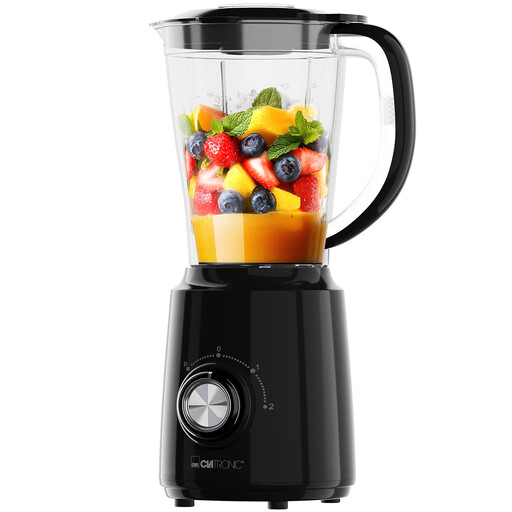
Why this product suits this profile: This kitchen blender offers a 1.5-litre capacity, four speed settings, plus ice-crushing and turbo functions for typical household tasks.
The relevant functions are clearly specified instead of relying solely on a wattage claim. The container is BPA-free and has a measurement scale.
500-watt motor, 1.5-litre container, removable stainless steel blades and safety switch.
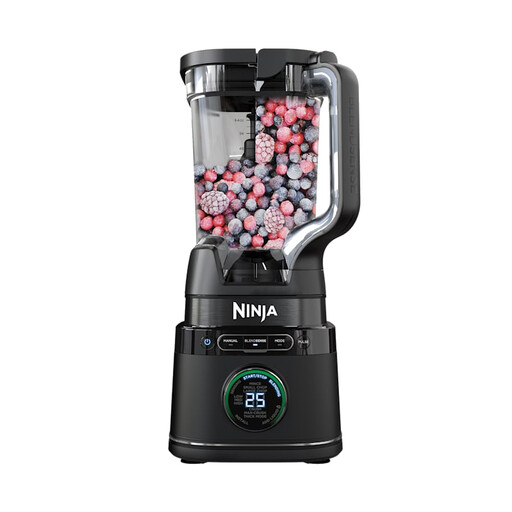
Why this product suits this profile: A large container, three speeds and a pulse function are available for family-sized portions and preparing several drinks.
The maximum liquid capacity of 1.9 litres is stated separately. This makes it easier to plan the fill level for larger batches.
1,000-watt motor, six stainless steel blades, BPA-free container and removable dishwasher-safe parts.
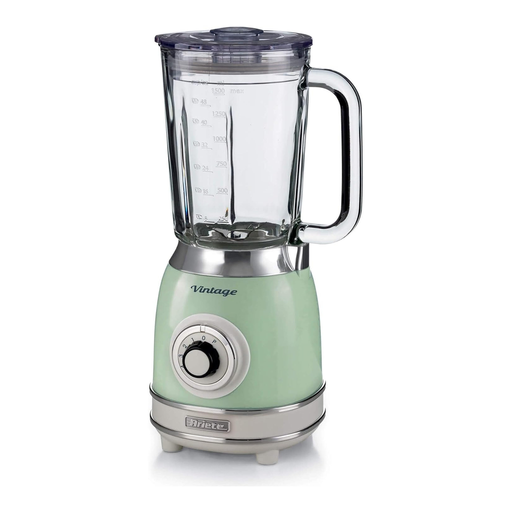
Why this product suits this profile: The 1.5-litre glass container is aimed at households looking for a countertop blender for smoothies, creams and iced drinks.
The container material, capacity, four speeds, pulse function and ice-crushing function are all clearly specified.
1,000 watts, four stainless steel blades, glass container and dishwasher-safe components according to the product description.
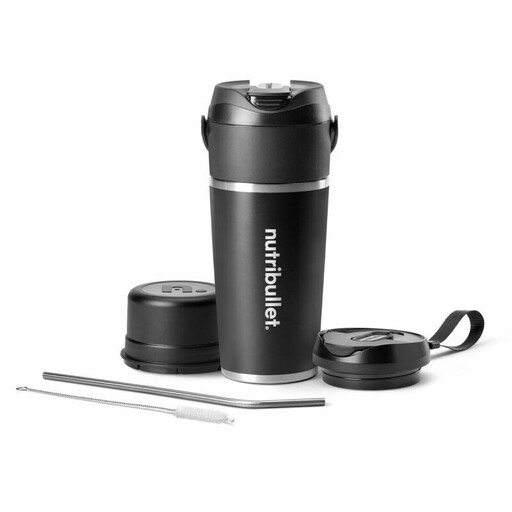
Why this product suits this profile: This rechargeable Personal Blender is designed for individual portions and for taking to work, the gym or on trips.
The battery life, charging method, cup size and maximum blending time are all described in specific terms.
590-millilitre insulated stainless steel cup, USB-C charging port, drinking lid and cleaning brush.
We have put together a complete, regularly updated list of products that fully meet these strict selection criteria and the safety regulations applicable in the EU.
Before using the blender for the first time, clean the container, lid and removable blades according to the instructions. Hot or boiling liquids should only be placed in the blender if the manufacturer expressly permits this. Several of the models mentioned here warn against using hot liquids. The maximum fill line must not be exceeded.
For electricity costs, actual operating time is more important than wattage alone. A 1,000-watt appliance used for a short time may consume less energy than a lower-powered model with a significantly longer operating time. Other ongoing costs may include replacement blades, seals or additional drinking containers. Therefore, check whether accessories and spare parts are available.
For soft ingredients and individual smoothies, 300 to 500 watts may be sufficient. Higher power ratings, suitable stainless steel blades and a pulse function are useful for ice, frozen fruit and larger quantities. Wattage should always be considered alongside the container size and the manufacturer's specifications.
Not necessarily. According to the operating instructions, many appliances must not be used to process hot or boiling liquids. Pressure can build up when the container is sealed, potentially forcing the lid off. The safety instructions for the specific model are the deciding factor.
There is no universal answer regarding a blender's service life. It depends on how frequently it is used, the ingredients, cleaning methods and whether the maximum operating time is observed. Not running the blender empty, respecting the fill line and taking breaks between several batches can reduce avoidable strain.