Class organisers with lots of cups to wash
If you want clean cups ready between class sessions, check that they fit in the rack and allow enough time for the planned wash cycles. Place-setting capacity doesn’t tell you how many cups will fit.


For a weekend cookery class, a countertop dishwasher should suit the cups you’ll actually be washing, the breaks between class sessions and the water connections available at the venue. A model with a water tank can do away with a fixed water supply, but you’ll still need a safe way to drain the wastewater. A model that connects to a tap could work for planned loads, provided there’s enough space. If the class is run as a food business, a household quick cycle alone doesn’t prove that the machine is hygienically suitable: the washing process must meet the requirements of your business’s food hygiene plan.
If you want clean cups ready between class sessions, check that they fit in the rack and allow enough time for the planned wash cycles. Place-setting capacity doesn’t tell you how many cups will fit.
If you’re working at a venue without a usable water connection, check in advance how the machine will be filled and how wastewater can be drained safely. A tank and a tap connection are two different solutions.
If you need space for food preparation, compare the machine’s external dimensions and installation requirements with the space available. A slim design alone doesn’t tell you how many of your cups will fit in the rack.
First, work out where the machine can go and how water will be supplied and drained. Then check how many cups will fit and whether the programme duration suits your class schedule.
| What matters | What to check before buying | Who it matters most to |
|---|---|---|
| Cup fit and throughput | Check cup height and handle spacing against the rack; consider the planned load and when you’ll need the next clean cups. | If you need several cups between class sessions, the usable rack space matters more than the stated place-setting capacity. Around 36% of consumers prioritise cup fit and throughput. |
| Water supply and drainage | Check whether the machine uses a tank, a tap or a fixed water supply; plan the hose routing and safe wastewater drainage. | If you can’t use a fixed water supply at the venue, you’ll need a practical way to fill the machine and a safe way to drain wastewater. Around 29% of consumers prioritise flexible water connections. |
| Footprint and interior space | Check the external dimensions, space needed to open the door and the connections; make sure your cups fit in the rack. | If you also need the worktop for food preparation, the machine must fit in its designated spot without making the cup load impractically small. Around 21% of consumers prioritise a small footprint. |
| Wash time and consumption | Check the programme duration for your planned load; compare consumption figures only on the basis of the same Eco programme. | If you need to reuse cups during short breaks, factor the programme duration into your schedule and allow for any additional loads. Around 14% of consumers prioritise predictable wash times and the effort required for each load. |
The stated place-setting capacity doesn’t tell you how many large cups with handles will fit in a load. If fewer cups fit than you planned, you may need to run extra cycles.
Try loading the machine with your own cups and check their dimensions and the rack layout before estimating how many you can wash at once.
A tank model has to be filled manually; a tap connection isn’t the same as a tank. Either way, wastewater must be drained safely.
At the venue, check separately how water can be supplied and drained, then make sure the connections match the machine’s instructions.
Consumption figures for Eco programmes can’t automatically be applied to other programmes. The German Federal Institute for Risk Assessment identifies water temperature, water quality and contact time, among other factors, as important for hygienic dishwashing in catering.
Compare consumption separately from your schedule, and if you’re running a food business, check which washing process is suitable for your food hygiene plan.
The TSG 7405 and TSG 5701 models have different designs and water-supply arrangements.
According to Daan Tech, Bob is designed for manual tank filling and smaller loads.
The Amazonia Nano is a compact option that connects to a tap rather than a permanently installed water supply.
The DWT60 (MD37496) and DWT51 (MD 37766) differ in capacity and water-supply arrangements.
The Joybuy products below include tank models for venues without a fixed water supply, as well as a countertop model that connects to a water supply. The key things to check are whether your cups fit and whether wastewater can be drained safely.
 No image available
The tank may suit a venue without a direct tap connection; plan separately how you’ll drain the wastewater.
The product specifications state a capacity of up to four standard place settings, nine programmes and a width of 37 cm.
Other listed features include two spray arms and dimensions of 37 × 50 cm.
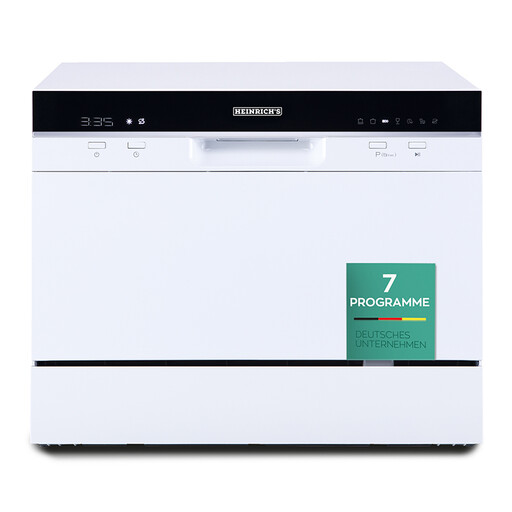 No image available
This model may suit planned loads at a venue with a compatible water connection; check that your cups fit before buying.
The listed specifications include six standard place settings, seven programmes and a 30-minute quick programme.
The product description limits use to domestic settings. Bear this restriction in mind if you’re running a commercial cookery class.
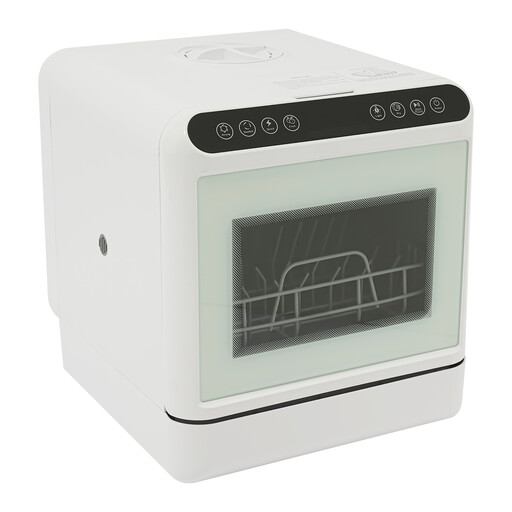 No image available
The integrated tank may suit a compact space without a fixed water supply; wastewater still needs to be drained safely.
The product description lists a two-tier rack and hot-air drying.
Suggested settings include small kitchens and motorhomes.
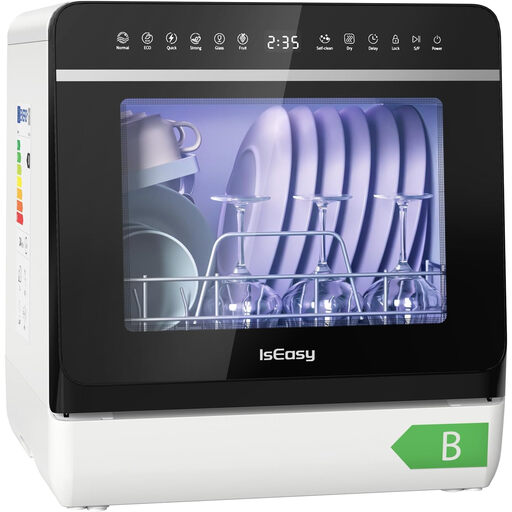 No image available
The tank is designed for smaller loads at a venue without a fixed water supply; remember to plan how you’ll drain the wash water.
The specifications state a capacity of up to three standard place settings, seven programmes, a delay function and a drying function.
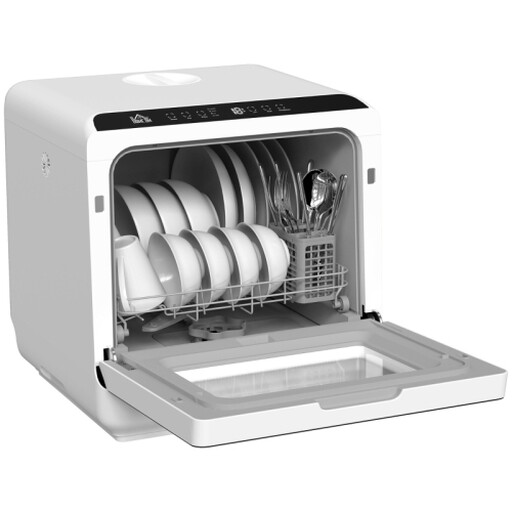 No image available
The tank may suit a location without a fixed water supply; check that the stated capacity works for your cup load.
The description lists up to four standard place settings, five programmes including a quick cycle, and a drying function.
Not necessarily. Six standard place settings are a stated capacity, not a tested count for your cups. Check cup height, handles, the cup shelf and how you plan to load them together.
On models designed for it, a tank can replace a fixed water supply, but you’ll still need to plan for wastewater. Daan Tech lists a drain hose for Bob; according to Klarstein, the Amazonia Nano connects to a tap.
The EU energy label gives electricity consumption in kWh per 100 Eco cycles and water consumption in litres per Eco cycle. Compare figures on this like-for-like basis, and don’t assume Eco figures apply to a quick programme without checking.
This depends on the model. Check the instructions for guidance on cleaning the filter and which cleaning products to use. Before buying, also find out about the manufacturer’s spare-parts and repair arrangements.
No. You can’t establish that from household product specifications or a quick programme alone. EU Regulation (EC) No 852/2004 sets requirements for food businesses; for dishwashing in catering, the German Federal Institute for Risk Assessment highlights factors including water temperature, water quality and contact time. Check the specific requirements for your business and its food hygiene plan to establish which process is needed. Requirements for food businesses don’t automatically apply to food prepared at home for personal use.