Households where people eat at different times
If cutlery gets used at different times, you can decide whether to wash smaller loads as they come up or collect cutlery from several meals for a larger load.


Choose based on how much cutlery and crockery you expect to have by the time it suits you to run the dishwasher. A compact model may be enough for smaller loads, while a larger one gives you more room to collect items. A water tank removes the need for a permanent water supply, but you’ll still need a way to drain the wastewater. The energy-saving benefit of an Eco programme applies to full loads; the German Environment Agency makes this comparison on that basis.
If cutlery gets used at different times, you can decide whether to wash smaller loads as they come up or collect cutlery from several meals for a larger load.
A countertop model with a tank could be an option if there’s no suitable water connection where you plan to put it. You’ll still need to allow space for filling it and arrange a suitable way to drain the wastewater.
If you regularly have plates and cups to wash as well as cutlery, usable capacity and the internal layout matter too. Check that the dishwasher can fit your usual crockery and will fit in the space you have available.
When cutlery gets used at different times, the usable cutlery capacity and your planned washing routine matter just as much as the stated capacity.
| Priority | What to check before buying | Who it matters most to |
|---|---|---|
| Cutlery capacity | Check whether there’s a cutlery basket or tray, and whether its usable length and layout suit your cutlery. | If you want cutlery from several meals to wait until the next wash, having a suitable basket or tray is important; around 33% of consumers put this first. |
| Water supply and space | Check the dishwasher’s dimensions, whether it has a tank or needs a water connection, and how the wastewater will drain. | If there’s no permanent water supply where you plan to put it, you’ll want to plan for a tank, drainage and the necessary connections; around 27% prioritise water supply. |
| Capacity for other crockery | Compare the place-setting capacity and internal layout with the plates, cups and cutlery you usually use. | If you want to collect plates and cups along with cutlery, you need suitable capacity, not just a small appliance; around 20% of consumers put this first. |
| Energy and programme choice | Compare Eco energy and water figures, and Eco programme duration, with how often you plan to run the dishwasher. | If running costs are a particular concern, you’ll want to consider the figures alongside your washing routine; around 20% prioritise this. |
The tank in a model such as the Midea MDWMT201DW supplies water to the dishwasher; draining the wastewater is a separate matter.
Plan for filling the tank or connecting the water supply, and for wastewater drainage, separately and in line with the instructions for your model.
The figures on the energy label are based on the Eco programme. The German Environment Agency’s comparison with washing up by hand assumes a full load.
Don’t compare Eco figures with quick programmes, and consider how many loads your routine actually requires.
A cutlery basket and a cutlery tray offer different ways to load your cutlery. Bosch Home Appliances describes a basket as quick to fill, but the key thing is whether your cutlery fits the layout of the model you choose.
Check the layout for the specific model, and make sure it can fit the length and quantity of your dishwasher-safe cutlery.
The Bomann TSG 7405 is a countertop model with capacity for 6 place settings and a cutlery basket.
The Midea MDWMT201DW is a countertop model with a 5-litre water tank and a fold-down cutlery tray.
The Aquatica is a compact countertop model with capacity for 2 place settings and a tap connection.
The LIFE DWT51 (MD 37766) is listed for 5 place settings and can be used with a water connection or bucket water supply.
The Bosch SKS62E32EU is a technical point of comparison, with capacity for 6 place settings and a cutlery basket; it is not listed as a current buying option.
The options below include countertop dishwashers with water tanks, as well as models for smaller loads and for washing cutlery alongside other crockery.
 No image available
The integrated tank makes this relevant if there’s no permanent water supply where you plan to put it; you’ll still need a suitable way to drain the wastewater.
Nine wash programmes. The product title also gives dimensions of 37 × 50 cm.
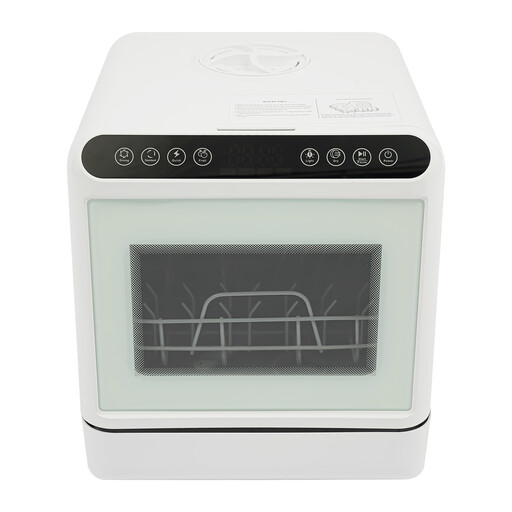 No image available
The water tank mentioned in the product title makes this relevant if there’s no permanent water supply where you plan to put it; wastewater drainage needs to be arranged separately.
The product title lists a 6-litre water tank and touch controls.
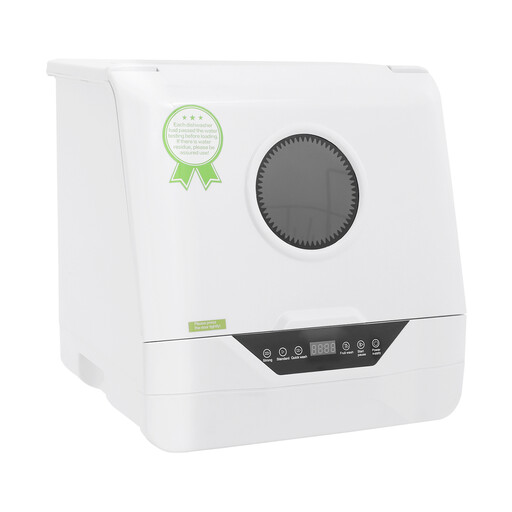 No image available
The product description lists a 29-minute quick programme and inlet and drain hoses. Check that the programme and connections suit your space and washing routine.
Four wash modes; 220 V and 800 W according to the product title.
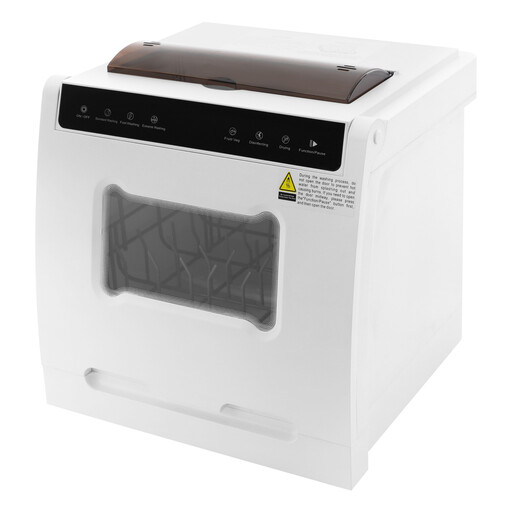 No image available
The product title lists six wash modes. Check the programme descriptions before choosing a particular setting for your cutlery.
The product title also lists 72 °C.
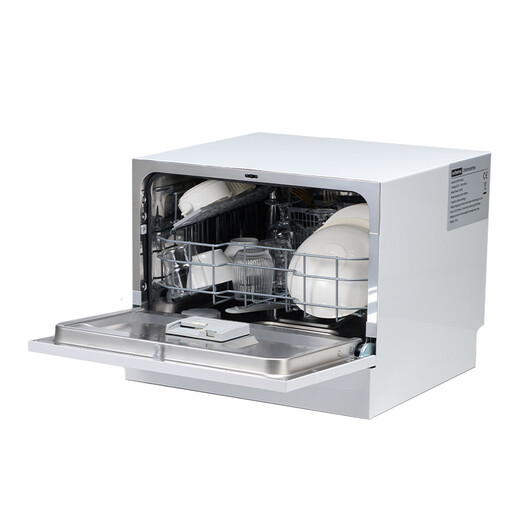 No image available
The description mentions cutlery as well as other crockery. Its stated capacity could be useful if you want to collect items for a shared load; check that it suits your crockery and the space available.
The product title lists a 30-minute quick programme and eight functions.
No. Also compare the basket or tray with the length and quantity of your cutlery. Bosch Home Appliances describes a basket as quick to fill; check whether the layout suits you on the specific model.
No. A tank only removes the need for a permanent water supply. Follow the appliance instructions and plan for a suitable way to drain the wastewater and for a power supply.
Not necessarily. Choose a programme based on how dirty the cutlery is and the appliance instructions. The Bomann manual warns that dishwasher tablets may not dissolve completely in short programmes with a low water temperature.
Compare electricity consumption in kWh per 100 Eco cycles and water consumption in litres per Eco cycle. The German consumer advice centre explains this labelling basis; also consider how often you actually run the dishwasher and how full you load it.
No. According to the German consumer advice centre, the glass-and-fork symbol indicates that an item is suitable for contact with food. For dishwasher use, follow the separate care instructions from the cutlery manufacturer.