What should you look for when buying?
First, check whether your shared load of mugs will fit in the basket and what kind of water connection is possible where you plan to put the appliance. Then consider the space available and the effort involved in everyday use.
| What matters |
What to check before buying |
Who should pay particular attention? |
| Mug capacity and basket fit |
Check the height and handles of your mugs against the basket, mug holders and usable interior space of the specific model. |
If we have lots of mugs to wash together, it matters whether they can be loaded sensibly with their handles in place. Around 36% of consumers say the number of mugs per load is their main concern. |
| Water inlet and drainage |
Check whether the appliance uses a tank or hose connection, and whether there’s a suitable water inlet and a safe way to drain wastewater where you plan to put it. |
If our kitchen doesn’t have a suitable mains water inlet, we’ll need a suitable alternative as well as a safe way to drain the water. Around 29% of consumers say flexibility around connections is their main concern. |
| Space and room to operate |
Measure the appliance’s height, width and depth, and allow space for the door to open, hoses to connect and the controls to be used. |
If worktop space is limited, the appliance mustn’t block access to the door or the rest of the kitchen. Around 21% of consumers prioritise finding a suitable place for the appliance. |
| Everyday use and care |
Compare Eco cycle durations and noise levels, and agree who is responsible for detergent and appliance care. |
If we share the appliance, choosing programmes and looking after it should be practical day to day. Around 14% of consumers say simple, quiet and economical operation is their main concern. |
Joybuy products for shared kitchens
The Joybuy models below include compact countertop dishwashers with tank operation, as well as appliances that use hoses for the water inlet and drain. The right option depends on the actual load of mugs and the connections available where you plan to put the appliance.
 No image available
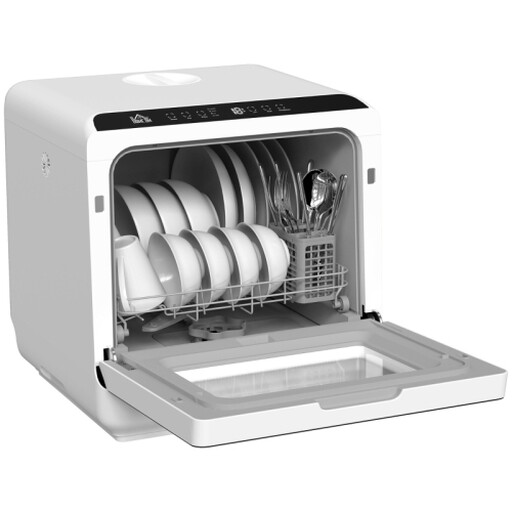
AIRMSEN countertop dishwasher with 5-l tank
The integrated tank is an option if you don’t want to rely on a mains water inlet where the appliance will be used.
The product title lists a 5-l tank, 5+1 wash programmes and a door made from double-tempered glass.
View at Joybuy
 No image available
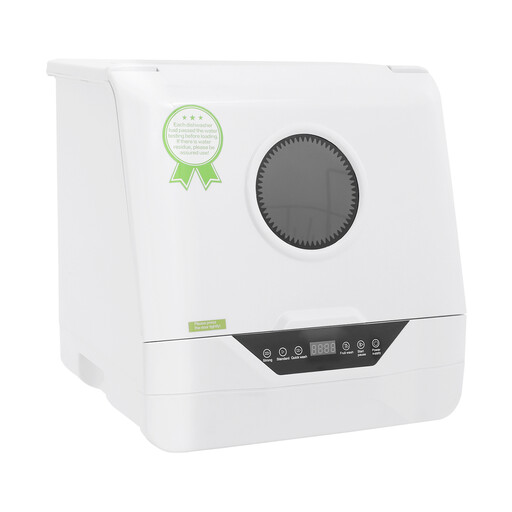
Countertop dishwasher with 6-l tank
The stated tank or tap water supply gives you two options for the water inlet.
The product description lists capacity for up to four place settings and a 6-l tank. The title lists five programmes, an LED display and a drying function. Place settings don’t guarantee that a particular number of tall or wide mugs will fit.
View at Joybuy
 No image available
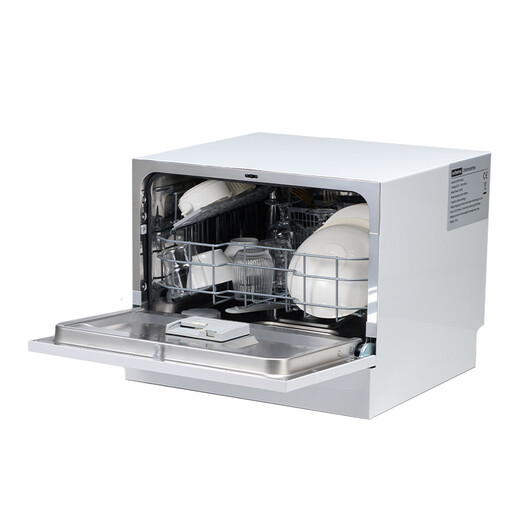
Countertop dishwasher, 220 V, 800 W
This model may suit you if the inlet and drain hoses can be routed neatly where you plan to use it.
The product title lists 220 V and 800 W. The description lists four wash modes, rotating spray arms and supplied inlet and drain hoses.
View at Joybuy
 No image available
Ochama countertop dishwasher
The stated capacity can help you gauge whether it might suit a batch of mugs, but you’ll still need to check how your own mugs fit.
The product description lists six standard place settings, eight programmes, a 30-minute quick cycle and a 70 °C rinse. Six place settings don’t automatically mean that six or more mugs will fit.
View at Joybuy
 No image available
Heinrich's HTG 8855
The title lists tank operation or a water connection; check which option will work where you plan to put it.
The product title lists capacity for three place settings, seven programmes, a 5-l tank or water connection, 56,3 dB and energy class C. The capacity doesn’t represent a fixed number of mugs.
View at Joybuy
Frequently asked questions
Will six place settings automatically fit six large mugs?
No. The manufacturer’s figure refers to a standardised load of dishes, not the number of tall mugs or cups with wide handles. Compare your mugs’ dimensions with the basket in the specific model.
Can I use a tank-fed countertop dishwasher without any plumbing?
Suitable tank models may not need a mains water inlet, but you’ll still need to arrange a power supply and a safe way to drain wastewater. Follow the instructions for your particular appliance.
How can we organise care in a shared kitchen?
Agree who will remove large food scraps, load the dishes so they don’t block one another, and top up detergent and, if needed, salt and rinse aid in line with the appliance instructions. The German Environment Agency recommends running the dishwasher with a full load where possible and making sure dishes aren’t touching one another.
What do the energy label and warranty tell me about running costs and service?
The EU energy label includes figures such as energy use for 100 Eco cycles, water use per Eco cycle, programme duration and noise level. These figures don’t automatically show the consumption of other programmes. The Verbraucherzentrale distinguishes between statutory rights against the seller and a voluntary guarantee. Check the terms of the specific offer.
What should I consider when using one in a workplace shared kitchen?
If the appliance is provided to employees as work equipment, the responsible organisation must assess whether it’s suitable for its intended use and can be used safely. Arbeitsschutz in NRW describes selecting suitable work equipment and using it safely as part of workplace safety; this doesn’t mean every domestic model is suitable for every workplace.
How can I tell whether a mug is dishwasher-safe?
Check the information for the specific mug. According to the Verbraucherzentrale, the glass-and-fork symbol identifies materials intended to come into contact with food; on its own, it doesn’t mean the mug is approved for dishwasher use.


