Hosts who need ice at short notice
When guests come round, you may want to make more ice for drinks rather than rely solely on trays filled in advance and kept in the freezer. In that case, both the first batch and the ongoing supply matter.


If you often need to top up the ice for drinks when guests arrive, a countertop machine is worth considering. For just a few ice cubes when you can plan ahead, freezer trays may be enough. Compare the time to the first batch, the hourly output and the ice basket’s capacity, rather than assuming the daily output is available straight away. Ice for drinks does not prove that perishable food in a lunch box will stay safely chilled: the Federal Institute for Risk Assessment emphasises the need for cooling during transport and storage.
When guests come round, you may want to make more ice for drinks rather than rely solely on trays filled in advance and kept in the freezer. In that case, both the first batch and the ongoing supply matter.
When preparing lunch boxes for the working week, it’s important to distinguish ice for drinks from safely chilling perishable food. The Federal Institute for Risk Assessment highlights the importance of keeping food sufficiently chilled during transport and storage.
If you only need ice occasionally, you may want to limit the worktop space, storage and cleaning involved. The F.A.Z. buying guide notes that ice cube trays may also be suitable for drinks that only need chilling now and then. Check the appliance’s dimensions and setup instructions too.
First check how quickly the first batch is ready, then consider the ongoing supply and the space the machine needs. You’ll need to plan cooling for perishable food in lunch boxes separately from the ice maker.
| Priority | What to check before buying | Who is this important to? |
|---|---|---|
| Ice for guests’ drinks | Compare the time to the first batch, the number of cubes per cycle, the hourly output and the capacity of the removable ice basket separately. | If I want to serve several drinks with ice when guests visit, I need a reliable ongoing supply as well as the first batch. This is the top priority for around 36% of consumers. |
| Keeping lunch boxes chilled | Don’t confuse ice for drinks with controlling the temperature of perishable food; plan cooling during transport and storage separately. The Federal Institute for Risk Assessment highlights both periods. | If my lunch box contains perishable food, I need to think about keeping it chilled until it’s eaten. Around 29% of consumers put this priority first. |
| Cleaning and care | Check how easy it is to reach the water tank, ice basket and drain, and read the care instructions for the specific model. A rinse function doesn’t automatically mean the machine is fully clean. | If I want to use the machine regularly without neglecting its upkeep, it matters how easily I can reach the parts that need attention. Around 21% of consumers put this priority first. |
| Space and storage | Check the appliance’s dimensions and weight, as well as the required clearances in the instructions; it may need more room than its casing alone takes up. | If my worktop space is limited or I want to put the machine away after use, it needs to fit the space available. Around 14% of consumers consider this their top priority. |
A figure in kilograms per day doesn’t tell you how much ice is already available for the next round of drinks. For the IceMaster Pro, CASO gives an hourly output of around 500 g as well as a daily figure.
Compare figures for the same period and check the capacity of the removable ice basket too.
A machine’s ice production doesn’t prove that perishable food will stay sufficiently cold during transport and storage. The Federal Institute for Risk Assessment warns of the risks posed by inadequate temperatures.
Plan how to keep perishable food chilled independently of whether you buy an ice maker.
According to Unold, the rinse function on the Unold Freeze 48935 is for the water circuit. This doesn’t mean that all surfaces that come into contact with ice stay clean without further care.
Check the drain, accessibility and care instructions for the specific model. Studies of catering businesses by the Lower Saxony State Office for Consumer Protection and Food Safety are not tests of private countertop machines.
For the 120-watt KLAMER model reviewed, the manufacturer also specifies a clearance of 20 cm around the appliance. The space required may therefore be greater than the casing’s footprint alone.
Measure the space you have, including the clearances required in the instructions for your chosen model.
The 120-watt countertop model reviewed is aimed at households that want to make more ice for drinks when guests visit. KLAMER also offers a separate compact model.
The IceMaster Pro 3301 is an option for serving drinks with ice when guests visit. You can check its cycle time and hourly output.
The Erik 48925 is a smaller countertop ice maker. The separate Freeze 48935 model focuses, among other things, on draining and rinsing the water circuit.
The LIFE Nugget Ice Maker MD 11960 is an alternative if you specifically want nugget ice for drinks.
The countertop machines below are suitable for making ice for drinks and topping up the supply when guests visit. For perishable food in lunch boxes, cooling during transport and storage needs to be considered separately.
 No image available
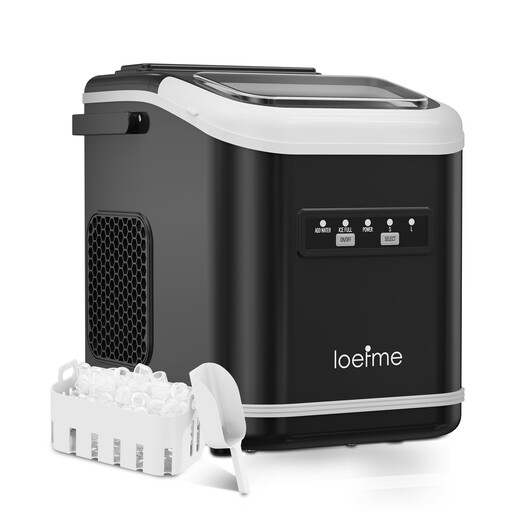
For drinks when guests visit, the product title states that it makes 9 ice cubes per cycle in 6–13 minutes.
Two ice sizes, automatic cleaning and a 1,4-l water tank. The stated production capacity is up to 12 kg/24 h.
 No image available
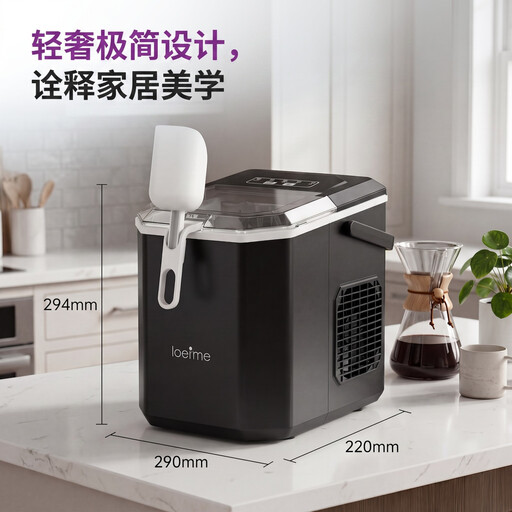
For a regular supply of ice for drinks, the product title states that it makes 9 ice cubes per cycle in 6–13 minutes.
Two ice sizes, automatic cleaning and a 1,2-l water tank. The description gives the ice basket capacity as 0,6 kg; the stated production capacity is up to 12 kg/24 h.
 No image available
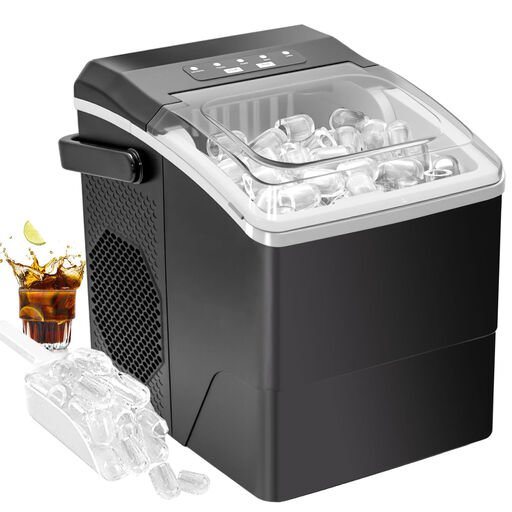
For drinks when guests visit, the product description states that it makes up to 9 ice cubes in 6 minutes.
Two ice sizes, a 1,3-l water tank, and indicators for a full ice basket and when more water is needed. The description gives an output of up to 12 kg/24 h.
 No image available
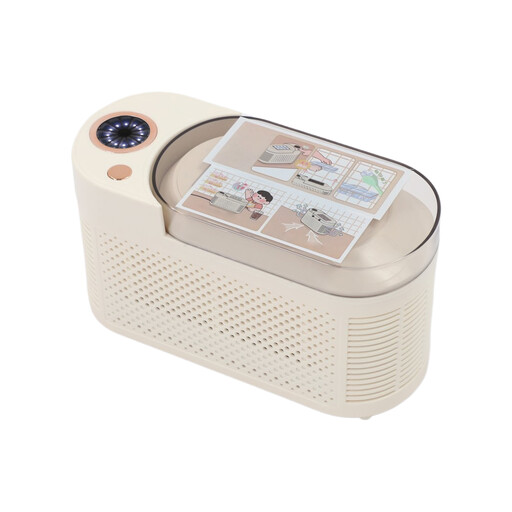
For smaller gatherings, the product description states that it makes 8 ice cubes per cycle.
The appliance is rated at 120 W and makes square ice cubes. The description lists a mains adapter or a 12-V car cable as power options.
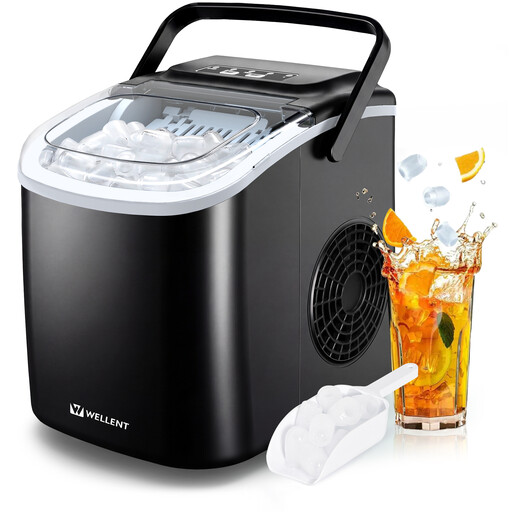 No image available
For ice for drinks at short notice, the product description states that the first batch is ready after 6 minutes.
Two ice sizes, a 0,8-l water tank, a 0,45-kg ice basket and a self-cleaning function. The stated production capacity is up to 12 kg/24 h; the weight and dimensions are given as 5,35 kg and 20,2 × 28,1 × 26,4 cm.
You can’t tell from the machine’s ice output alone. What matters is keeping the food sufficiently chilled and the actual temperatures during transport and storage. The Federal Institute for Risk Assessment recommends keeping perishable food as cold as possible until it is eaten. So assess how you’ll keep the lunch box chilled independently of the ice maker.
Follow the instructions for the specific appliance, including the stated clearances, and care for parts that come into contact with water and ice as directed by the manufacturer. For its 120-watt model reviewed, KLAMER specifies 20 cm of clearance all round. According to Unold, the rinse function on the Unold Freeze 48935 is for the water circuit; it doesn’t automatically replace the other care instructions.
No. Your statutory rights if a product is faulty are claims against the seller; a guarantee is an additional voluntary promise with its own terms. The Verbraucherzentrale explains that the first remedy for a fault may be repair or replacement.
The Bundesnetzagentur lists CE marking, an identifiable product and manufacturer details, as well as German instructions with the required information, among the points checked in market surveillance. CE marking is based on a declaration of conformity for which the manufacturer is responsible; it is not an independent endorsement of the ice quality.
Electrical waste must not go in household rubbish. The Umweltbundesamt lists a recycling centre as a free return option; also check what collection options are available locally.