When serving several fruit drinks in quick succession, the ice basket and the amount produced per cycle tell you more than daily output alone: they show how much ice is available at once and how quickly more can be made. If you only switch the machine on shortly before serving, the time to the first batch matters too. For a longer evening, remember to allow time to top up the water, remove the ice and clean the machine. The output figures quoted are manufacturer- or model-specific and may depend on the conditions.
Which machine is right for you?
Hosts serving several glasses at once
If you want plenty of ice ready for the first round of drinks, compare the basket capacity, amount produced per cycle and water tank separately. Gastroback lists a 1.5 kg ice basket for the Bartender Pro; daily output doesn’t tell you how much ice fits in the basket at once.
Those making drinks at short notice
If you only switch the machine on shortly before serving, check how long it takes to make the first batch and how many cubes it contains. A short cycle time alone doesn’t tell you whether there will be enough for everyone’s glasses.
People with small kitchens
If you want to clean and put the machine away after serving, check its dimensions, weight and water drainage. Also allow for the clearance required during operation, as specified in the instructions for the particular model.
What should you look for when buying?
Start by thinking about how much ice you want available at once for the first round. A daily output figure is no substitute for checking the ice basket, or the amount and duration of each cycle.
| Priority |
What to look for |
Who is it important to? |
| Ice supply and replenishment |
Check the basket, amount produced per cycle and cycle duration separately. For the Bartender Pro, Gastroback lists a 1.5 kg basket capacity and nine cubes every 7–15 minutes. |
If I want to fill several glasses one after another, the available supply matters just as much as how quickly more ice can be made. Around 36% of consumers are likely to share this priority. |
| First batch |
Consider the time to the first batch and the number of cubes it contains together. CASO lists a preparation time of 6–13 minutes for the IceMaster Pro 3301. |
If I only start making ice shortly before serving, getting the first portion ready in time is essential. Around 29% of consumers are likely to prioritise this. |
| Cleaning and changing the water |
Check how to drain any remaining water and what cleaning steps are specified in the instructions. For the Freeze 48935, Unold lists a drain for leftover water and a rinse cycle for the water circuit. |
If I use the machine repeatedly for drinks, I want to be able to drain the water and fit routine care easily into my day. Around 21% of consumers are likely to prioritise this. |
| Counter space and storage |
Check the external dimensions, weight and clearance needed during operation. Unold lists dimensions of 32,3 × 22,4 × 28,9 cm and a weight of 8,5 kg for the Freeze 48935. |
If I have limited worktop space and want to put the machine away after use, its size and weight are particularly important. Around 14% of consumers are likely to share this priority. |
Common buying and planning mistakes
-
Confusing daily output with the amount of ice available straight away
For the Bartender Pro, Gastroback lists up to 12–15 kg in 24 hours, as well as a 1.5 kg ice basket and nine cubes per cycle. The daily figure doesn’t mean that the full amount will be in the basket at once.
Plan for the first round of drinks, and compare basket capacity, batch size and water tank separately.
-
Planning around the shortest cycle time as if it were guaranteed
According to the model-specific instructions, cycle times for the EWM-100 depend on factors including ice size, ambient temperature and water quality.
Allow extra time when making several batches, and take account of the conditions described in the instructions for your particular model.
-
Measuring only the appliance dimensions when checking where it will fit
At least 20 cm of clearance around the EWM-100 is recommended. This guidance applies to this model and shouldn’t automatically be assumed to apply to other ice makers.
Before buying, measure the available space, including the operating clearance required in the instructions for your chosen appliance.
A guide to relevant brands
Gastroback
The Bartender Pro 41143 is designed for serving several drinks in succession. According to the manufacturer, it has a 1.5 kg basket and a 2.8 l tank.
- Gastroback lists nine bullet ice cubes per cycle in 7–15 minutes, and up to 12–15 kg in 24 hours.
- At around 11,2 kg and measuring 400 × 240 × 430 mm, this isn’t a particularly compact model to store away. These figures relate to the Bartender Pro 41143.
Klamer
Klamer’s 120 W ice maker has a timer and two cube sizes, making it easy to plan ahead for more ice.
- The manufacturer states that each batch produces ten ice cubes. It also lists up to 15 kg per day and a 2.1 l tank.
- The daily figure doesn’t tell you how much ice fits in the basket at once, or guarantee a fixed hourly output.
Caso
The IceMaster Pro 3301 has two cube sizes and a 2.2 l tank for making ice in batches.
- CASO lists 6–13 minutes per batch, as well as around 500 g per hour or 12 kg in 24 hours.
- The product information gives the model’s weight as 9,4 kg. The output figures relate to the IceMaster Pro 3301.
Unold
The Freeze 48935 is worth considering if basket capacity, draining leftover water and the rinse function matter to you.
- Unold lists up to around 60 cubes per hour, a basket holding approximately 700 g and a 1.6 l tank.
- Without a figure for the weight of each cube, you can’t compare the number of cubes directly with the output in kilograms listed for other models.
Rosenstein & Söhne
The EWM-100 has two cube sizes, a removable basket and a cleaning programme for making ice in batches.
- The model-specific product information lists nine cubes per cycle, up to 12 kg per day and a 1.3 l tank.
- According to the instructions, cycle times depend on factors including ambient temperature and ice size.
Joybuy products to consider
These models are suitable for making ice at home and preparing several drinks. Compare the batch size, tank and stated cycle time with the way you plan to serve your drinks.
 No image available
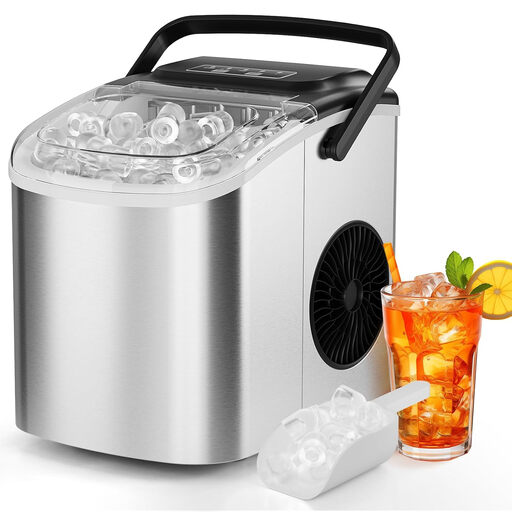
Ice maker, 9 cubes per cycle, 2 sizes
For serving several glasses in succession, the product description lists nine ice cubes per cycle in 6–12 minutes.
It lists two ice cube sizes, a 1,2 l water tank and a self-cleaning function. Daily output is stated as up to 12 kg.
View at Joybuy
 No image available
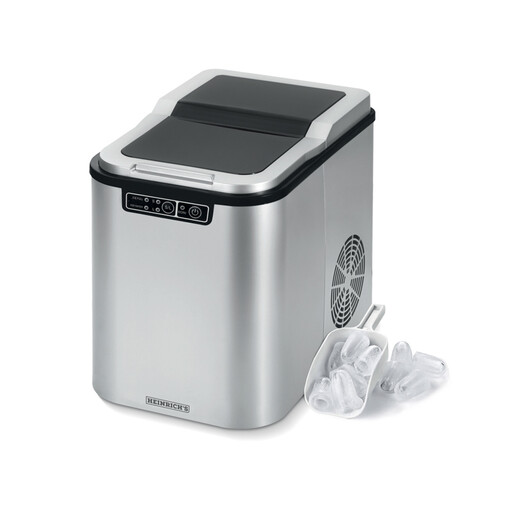
120 W ice maker, 9 cubes in 9 minutes, 2,2 l tank
For making more ice in batches, the product description lists nine ice cubes per cycle in nine minutes.
It lists two cube sizes, a 2,2 l water tank, a self-cleaning function and up to 12 kg of ice per day.
View at Joybuy
 No image available
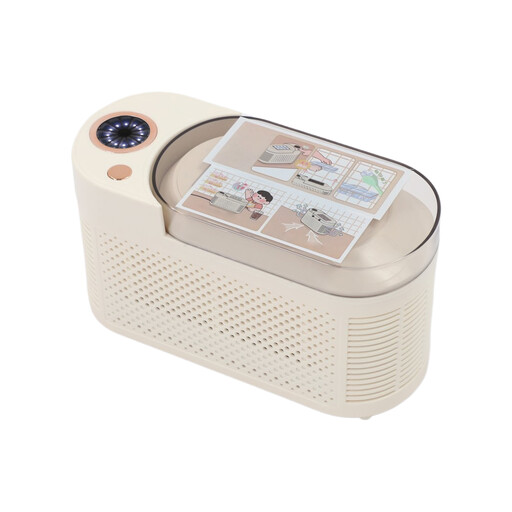
Portable 120 W ice maker, 8 cubes per cycle
For serving drinks in batches, the product description lists eight ice cubes per cycle.
It includes a 100–230 V mains adaptor and a 12 V car cable. The product information doesn’t state a cycle time.
View at Joybuy
 No image available
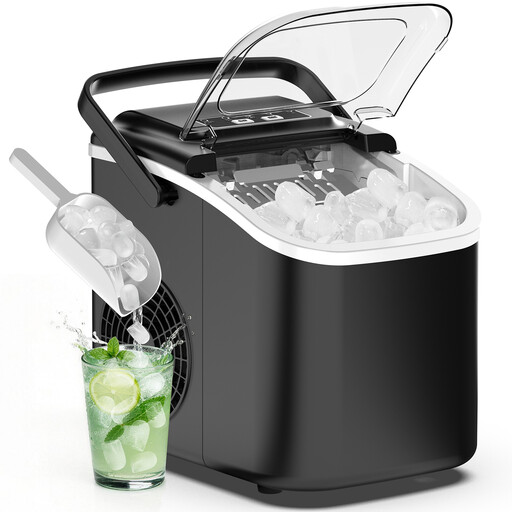
Ice maker, 8 cubes in 6 minutes, 2 sizes
For a first round of drinks, the product title lists eight ice cubes in six minutes.
It lists two cube sizes, a self-cleaning function and up to 12 kg of ice per day.
View at Joybuy
 No image available
Ice maker with a 0,8 l tank and 0,45 kg basket
For a first serving, the product description lists a first batch of ice in six minutes.
It lists a 0,8 l water tank, an ice basket with a capacity of 0,45 kg and up to 12 kg in 24 hours. The weight is listed as 5,35 kg.
View at Joybuy
Frequently asked questions
Is 12 or 15 kg of ice a day enough for several glasses at once?
The daily figure alone won’t tell you. Also compare basket capacity, the number of cubes per batch and how long each batch takes. For example, Gastroback lists a 1.5 kg basket for the Bartender Pro separately from its daily output.
Can I put fruit juice in the tank instead of water?
The model-specific instructions for the EWM-100 say to use drinking water only. Add fruit juice to your glass when making a cooler, and check the instructions for other machines rather than assuming the same rule applies to every model.
Does a self-cleaning programme take care of all the cleaning?
A rinse function doesn’t necessarily mean the machine is fully clean. Check the instructions for how to care for the basket, surfaces that come into contact with water and any remaining water. Unold describes the Freeze 48935 function as rinsing the water circuit.
What are the rules in Germany for labelling, complaints and disposal?
For electrical appliances covered by the relevant harmonised EU rules, the CE marking is the manufacturer’s declaration of conformity, not an independent quality mark, as noted by Your Europe, the European Union’s information portal. The Verbraucherzentrale distinguishes between the statutory legal guarantee against the seller and a voluntary commercial guarantee. Electrical waste must not be put in household rubbish; the Umweltbundesamt lists recycling centres and retailers as free take-back options. The requirements that apply depend on the particular appliance.


