Stocking up for guests
If you want to make several batches for a get-together and freeze them for later, make sure you allow time to empty the collection basket while the machine is running.


When you’re building up a supply of ice, what matters is how much you can make during the time you have available and transfer to the freezer. The stated daily output isn’t the machine’s storage capacity. MEDION specifically advises that the ice produced by its machines must be put in the freezer for storage. So, before choosing based on ice shape, water tank and footprint, plan for a separate container and repeated trips to empty the basket.
If you want to make several batches for a get-together and freeze them for later, make sure you allow time to empty the collection basket while the machine is running.
If you prefer bullet, nugget or clear ice for certain drinks, check the type of ice made by the specific model rather than relying on its daily output alone.
If you only need smaller quantities, weigh up the space it takes up, cleaning and room in your freezer. Ice cube trays may also be worth considering for occasional use.
Start by working out how much ice you need and how much time you have to prepare it. Then compare the type of ice, how you’ll transfer it and the appliance dimensions for the specific model.
| What to consider | What to check before buying | Who should pay particular attention? |
|---|---|---|
| Ice produced in the time available | Check the stated output in g/h or kg/24 h separately from the cycle time, and compare it with the time you have to prepare. | If I want to make several batches before a get-together, the amount ready to serve is what matters. Around 26% of consumers put the amount they can make for a stash first. |
| Transferring ice to the freezer | Check whether the ice basket is removable, and allow for a separate container and time to transfer the ice in several batches. | If you want to freeze finished batches without hassle, look for a straightforward process. Around 26% of consumers prioritise transferring ice between the machine and freezer. |
| Ice shape and size | Check the exact model to see whether it makes bullet, nugget or clear ice, and whether it offers different sizes. | If a particular shape of ice matters for my drinks, I check exactly what the machine makes. Around 21% of consumers put their preferred type of ice first. |
| Water and cleaning | Check the instructions for the specific model for guidance on water, accessible parts and cleaning. | If I’m making ice repeatedly, I want to be able to work water and care instructions easily into my routine. Around 16% of consumers give cleaning and maintenance particular importance. |
| Kitchen worktop space | Compare the appliance dimensions with the space available, and allow extra room for the container you’ll use in the freezer. | If my worktop is short on space, the machine needs to fit without me overlooking the space needed in the freezer. Around 11% of consumers prioritise the appliance footprint. |
A daily figure refers to the stated production output, not the amount of ice that can be stored in the collection basket at once. To build up a freezer stash, you’ll need to remove the finished ice as you go.
Compare the production time with the process for removing the ice, and make room for a suitable container in your freezer.
Repeated transfers take time and need a separate space in the freezer.
The capacity in litres refers to the water tank; it doesn’t tell you how much finished ice the collection basket can hold.
Check the tank and ice basket as separate features, and look for a specific capacity figure for the basket.
A cleaning function doesn’t necessarily replace all the care steps recommended for the specific model.
Before buying, check the cleaning instructions and see which parts of the appliance are accessible.
Regular cleaning and drying are part of ongoing maintenance.
The 2-litre ice maker is an option if you want bullet ice in two sizes.
The model ranges vary in stated output, type of ice and dimensions.
The ChillOut is sold as a bullet ice maker for producing batches continuously.
According to the manufacturer, the KB14 offers two ice sizes, a removable ice basket and a 2.1-l water tank.
The range includes ice makers, including nugget ice models, so the type of ice you want is a useful first filter.
The selection below features countertop ice makers for producing ice in batches. Stated daily outputs don’t indicate the capacity of the ice basket, so remember to allow separately for removing and freezing finished batches.
 No image available
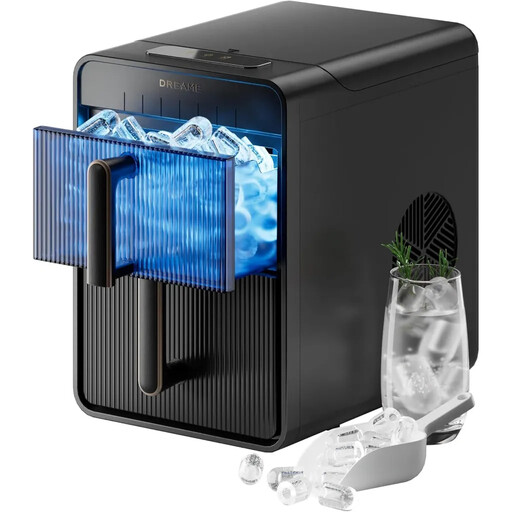
For making several batches, with two stated types of bullet ice.
Up to 12 kg daily output; 6–8 minutes per cycle; 900-ml water tank.
A self-cleaning function is listed in the product name.
 No image available
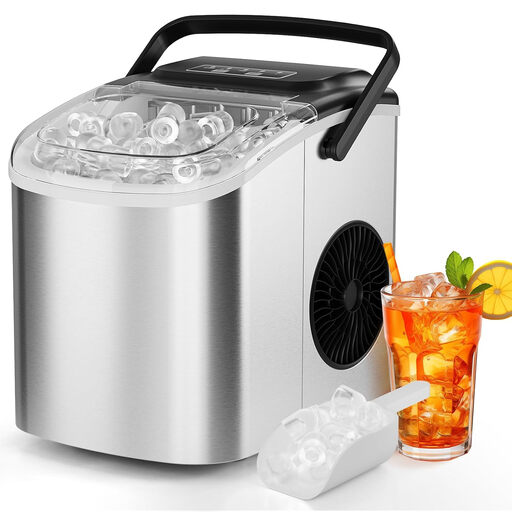
For batches with two selectable ice sizes and a listed basket.
Up to 12 kg per 24 hours; according to the description, nine bullet ice cubes per cycle in 6–12 minutes; 1.2-l water tank.
A self-cleaning function and an ice scoop are listed.
 No image available
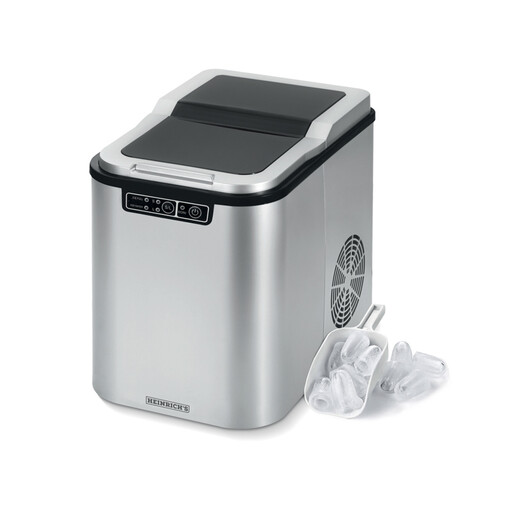
For preparing batches with two selectable ice sizes.
Up to 12 kg in 24 hours; nine cubes in nine minutes; 2.2-l water tank.
A self-cleaning function is listed in the product name.
 No image available
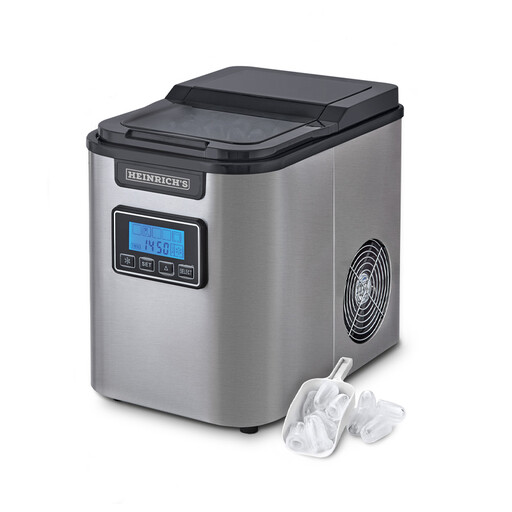
For drinks where three selectable ice sizes come in handy.
Up to 12 kg in 24 hours; nine cubes in nine minutes; 2.2-l water tank.
Basket-full and water-level indicators, plus a self-cleaning function, are listed.
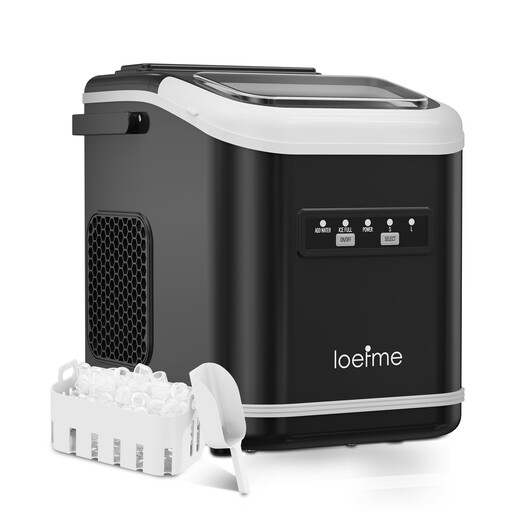 No image available
For making several batches, with two selectable bullet ice sizes.
Up to 12 kg per 24 hours; nine cubes per cycle in 6–13 minutes; 1.4-l water tank.
An ice basket and automatic cleaning function are listed.
Don’t assume so based on the “kg/24 h” figure. MEDION advises that its machines can’t store these quantities inside the appliance. Remove the ice from the basket and put it in the freezer for storage before making the next batch.
Read the instructions for the exact model and follow the guidance on positioning, water and cleaning. CASO specifies that drinking water must be used to make ice in the IceMaster Pro. Germany’s Federal Institute for Risk Assessment explains how to handle drinking water hygienically at home; the instructions for your specific appliance take precedence.
If a product is faulty, the seller is generally responsible for the statutory warranty, not the manufacturer. The Verbraucherzentrale states that the statutory period for goods to be free from defects at the time of delivery is two years. Any additional manufacturer’s guarantee is separate and subject to its own terms.
For relevant products, the manufacturer uses the CE marking to declare that the appliance meets applicable EU product requirements; it isn’t an independent quality mark. Also check the information for the specific appliance about any parts that come into contact with food.