Choose a countertop ice maker based on how much ice you need in advance and how often you can empty the basket and move the ice to the freezer. A larger basket and water tank can make it easier to produce several batches, but take up more space. The stated daily output is not a storage capacity and, on its own, won’t tell you how quickly a specific batch will be ready.
Who makes ice in advance?
Batch planners
If you want to make several batches before serving and store them in the freezer, basket capacity and how often you need to empty it matter more than a single fast cycle. MEDION and Gastroback describe making repeated batches or using a removable basket.
Quick starters for fruit drinks
If one batch will do to start with and you plan to make more later, check the cycle time for the specific model. CASO Design and Unold provide model-specific information about ice-making times.
Kitchens short on worktop space
If you’re happy to make smaller batches and refill more often, but have limited worktop space, check the dimensions and allow room to operate the machine. CASO Design describes both a compact ice maker and a separate range with a larger tank.
What should you look for when buying?
If you’re building up a supply of ice, compare basket capacity, tank size and daily output separately. Then check how you’ll remove and store each finished batch.
| What matters to you |
What to look for when buying |
Who will find this most important? |
| Enough ice for a batch to store |
Compare basket capacity in kg, tank capacity in l and daily output in kg/24 h separately. |
When I’m preparing several fruit drinks, I want to know when to remove the ice and start the next cycle. Around 36% of consumers prioritise the amount of ice available to store. |
| Moving ice to the freezer |
Look for a removable basket and enough space for a suitable freezer container. |
I want to be able to remove finished batches and freeze them for later drinks. Around 29% of consumers prioritise transferring ice to the freezer easily. |
| Worktop space |
Check the appliance’s dimensions, tank size and the clearance required according to the instruction manual. |
If worktop space is limited, I’d rather refill more often than struggle to find room for the appliance. Around 21% of consumers prioritise the space it takes up. |
| Handling water and cleaning |
Check the cleaning instructions, which parts are accessible and whether there’s a drain for leftover water. |
I want to be able to reach the parts that need cleaning and remove any leftover water after use. Around 14% of consumers put these care requirements first. |
Common misconceptions when buying
-
Confusing daily output with the amount of ice ready to use
Daily output describes how much ice a machine can make over a longer period. The basket of a specific model holds far less than its stated daily output.
Plan around the basket capacity and how often you’ll need to empty it, rather than relying on the kg/24 h figure alone.
Emptying the basket repeatedly takes time and means you’ll need space in the freezer for a suitable container.
-
Mistaking a fast first batch for a fast supply of ice
Cycle time, tank size and basket capacity describe different stages of the process. Making several batches can also take time, especially when you need to refill and empty the machine.
Compare these details for the same model and consider how you’ll store the ice between batches.
-
Assuming self-cleaning means no further care is needed
A self-cleaning function is a feature of the appliance, not a general guarantee that no further care is needed. Food hygiene still matters, as the German Federal Institute for Risk Assessment also emphasises.
Before buying, check which parts are accessible and what cleaning the instructions for the specific appliance recommend.
Even with a cleaning function, allow time to care for the appliance according to its instructions.
Key brands at a glance
Gastroback
The Bartender Pro 41143 is worth considering if you want to make repeated batches of ice and remove the basket between cycles.
- Gastroback lists a 2.8-l tank, a removable basket with a 1.5 kg capacity and a daily output of around 12–15 kg for this model.
- At around 400 × 240 × 430 mm, the appliance needs worktop space. Its daily output assumes repeated removal of ice and doesn’t represent the amount that can be stored at one time.
CASO Design
The IceChef and IceMaster ranges offer different tank sizes. Features of one model don’t necessarily apply to the other.
- According to CASO Design, the IceChef Compact has a 1-l tank, a removable basket and a self-cleaning function. The manufacturer lists a 2.2-l tank and two ice sizes for the IceMaster Pro.
- Check the tank, basket and cleaning process for the exact model instead of assuming details carry over between ranges.
Unold
The Freeze could suit buyers looking for a water-level indicator and a drain for leftover water.
- Unold lists a tank capacity of around 1.6 l and a basket capacity of around 700 g for the Freeze. The manufacturer also states that it can make up to around 60 cubes per hour.
- Basket capacity and cubes per hour don’t tell you how much ice can be stored at one time.
Arendo
The 2-l model described is an option if you’re looking for a larger tank and two ice sizes.
- Arendo lists two ice sizes for the 2-l model and says it makes around nine large cubes in nine minutes.
- These details apply to the model described and shouldn’t be assumed to apply to all Arendo variants.
MEDION
The appliances described suit a routine of removing finished batches and storing them in the freezer.
- MEDION recommends putting removed ice cubes in a suitable container in the freezer.
- The general figure of around 12–15 kg in 24 hours doesn’t confirm the output of every individual MEDION model.
Joybuy products for making ice in batches
This selection features countertop ice makers for making and removing batches of ice for fruit drinks. If you’re building up a supply, pay particular attention to the basket, tank and cycle time.
 No image available
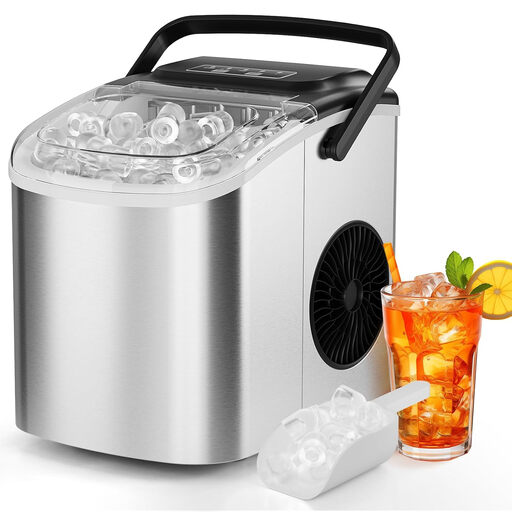
Countertop ice maker, 1.2-l tank, two ice sizes
For smaller batches when you want to make ice a little at a time and remove it once ready.
The title states that it makes nine cubes per 6–12-minute cycle and offers two ice sizes. It also lists a 1.2-l water tank, daily output of up to 12 kg, a basket and a scoop.
Joybuy
 No image available
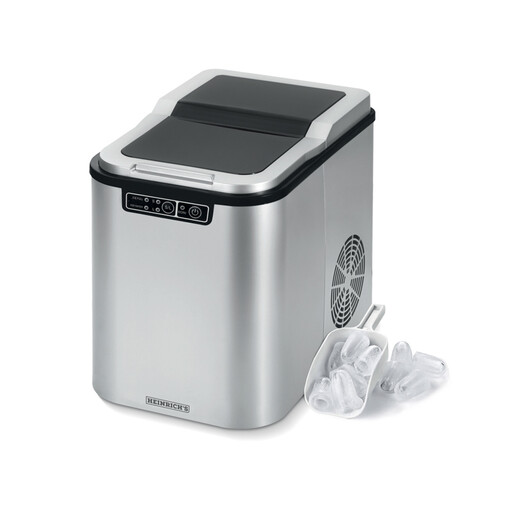
Countertop ice maker, 2.2-l tank, two ice sizes
The larger stated tank may be useful for making several batches. A basket and scoop are also included in the details.
The title states that it makes nine cubes in nine minutes and offers two ice sizes and a self-cleaning function. The description gives a daily output of up to 12 kg.
Joybuy
 No image available
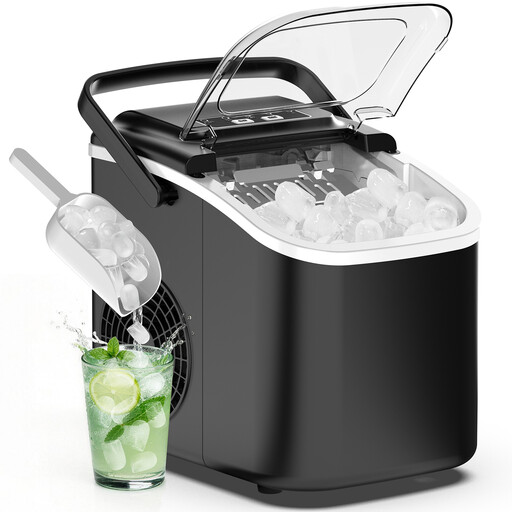
Countertop ice maker, two ice sizes
For making ice in batches when you want to plan for cube size and removal.
The description states that it makes eight cubes in six minutes and includes an ice basket, a scoop and a self-cleaning function. It also lists two ice sizes and a daily output of up to 12 kg.
Joybuy
 No image available
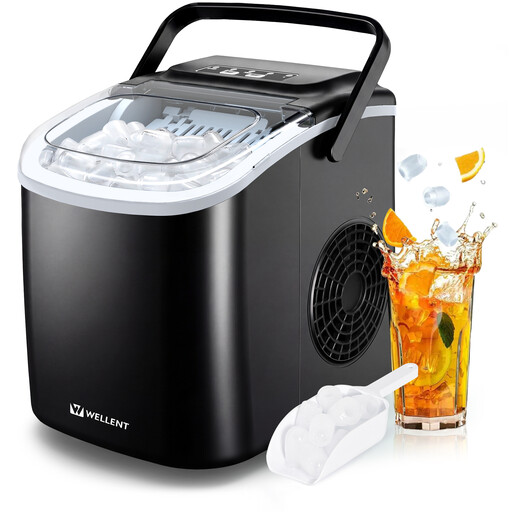
Countertop ice maker, 0.8-l tank, 0.45-kg basket
The smaller stated basket capacity is suited to removing ice in batches, rather than holding a large amount at once.
The description lists a 0.8-l water tank, a 0.45-kg basket, two ice sizes and a self-cleaning function. Daily output is stated as up to 12 kg.
Joybuy
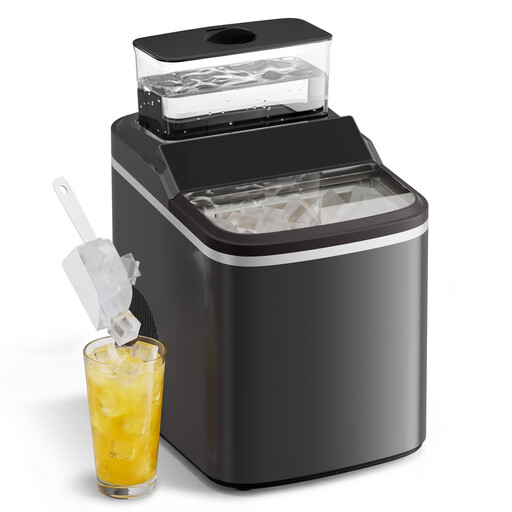 No image available
Countertop ice maker, external 1.5-l tank, 0.75-kg basket
The external tank and stated basket capacity can help you plan refilling and removing ice when making several batches.
The title states that it makes twelve cubes per 8–15 minutes and has a 0.75-kg ice container. It also lists an external 1.5-l water tank and an automatic cleaning function.
Joybuy
Frequently asked questions
Can I leave a batch in the collection basket?
To build up a supply in the freezer, remove finished batches and freeze them in a suitable container. MEDION specifically describes this step; daily output shouldn’t be confused with basket capacity.
How should I prepare the water and machine for ice in drinks?
Use water that’s safe to drink and follow the cleaning instructions for your specific model. The German Federal Institute for Risk Assessment highlights the importance of food hygiene. A self-cleaning function doesn’t guarantee that no further cleaning is needed.
What should I check if the appliance develops a fault after purchase?
Distinguish your statutory rights regarding faults from any voluntary manufacturer’s guarantee. The Verbraucherzentrale explains your rights under the statutory warranty and the repair rules that changed on 31 July 2026. Check separately whether any additional repair rights apply to the specific appliance.
What rules apply to an appliance sold in Germany?
EU rules apply to materials that come into contact with food, including parts of food-processing appliances. According to Your Europe, CE marking applies to products covered by the relevant EU rules and isn’t an independent quality mark. In Germany, end-of-life electrical appliances must not be put in household waste, as the Federal Environment Agency points out.


