Hosts who need ice at short notice
You want to have the first cubes ready quickly when friends come over, followed by a steady supply, rather than relying solely on ice made in advance using freezer trays.


A countertop ice maker is worth considering when you’re hosting and want a steady supply of ice throughout the evening. For a few occasional drinks, freezer trays may be enough. The key factors aren’t just kilograms per 24 hours, but how long the first batch takes, how much ice the basket holds, the space the machine needs (including clearance) and how easy it is to clean in a shared kitchen. Bullet ice, nugget ice and dispensers suit different preferences, so choose a style to match the ice shape and dispensing method you want, rather than focusing only on daily output.
You want to have the first cubes ready quickly when friends come over, followed by a steady supply, rather than relying solely on ice made in advance using freezer trays.
You need to set the machine up in a shared kitchen, leave enough room for ventilation and be able to put it away afterwards. Check the setup instructions for the specific model.
You need a clear routine for fresh water, removable parts and cleaning after use. A self-cleaning function doesn’t necessarily replace every step of cleaning by hand.
When choosing an ice maker for guests in a shared kitchen, the main things to consider are the supply of ice, where you’ll put it, cleaning and the type of ice you want.
| What matters when buying | What to look for | Who is it important to? |
|---|---|---|
| Ice and replenishment | Check the time to the first batch, the amount produced per cycle and the basket size separately from the daily output. Remember to allow for refilling and removing the ice, too. | When I’m preparing several drinks for guests, I want the first cubes ready in time and the option to top them up afterwards. Around 33% of consumers are likely to prioritise a quick supply of ice. |
| Space and storage | Compare the appliance’s dimensions with the clearance it needs. Also allow room to fill it, remove the ice and move the machine. | When several housemates share the worktop, the machine needs to be easy to put away after use. Around 27% of consumers are likely to place the greatest importance on space and storage. |
| Cleaning and use | Look for removable parts and check the instructions for emptying and cleaning the machine. Agree on who will clean it after guests have left. | If several people use the tank, basket or scoop, I want to know how cleaning will be handled after an evening with guests. Around 20% of consumers are likely to prioritise easy cleaning and clear responsibilities. |
| Ice shape and dispensing | Decide whether you want bullet ice, nuggets or ice dispensed straight into a glass. Then check the capacity and space requirements of the style you’re considering. | If a particular ice shape or self-service is important for the drinks you’re planning, the machine should suit those needs. Around 20% of consumers are likely to consider ice shape or dispensing their top buying priority. |
A figure in kilograms per 24 hours describes ongoing production, not how much ice the basket can hold at once.
Compare daily output, time to the first batch and basket or container capacity as separate figures.
When you have several guests, repeatedly removing ice and waiting for more to be made can take your attention away from hosting.
An appliance may need extra clearance when set up. KLAMER specifies 20 cm of clearance all around its 120-watt ice maker; this figure doesn’t automatically apply to other appliances.
Measure the space you plan to use and check the setup instructions for the exact model you’re thinking of buying.
A self-cleaning function and removable basket don’t mean you can skip every cleaning step.
Empty and care for the machine as directed in its instructions, and agree on who will clean it in your shared kitchen.
The IceChef Compact is a countertop bullet ice maker with a carry handle, a 1-litre tank and a removable basket.
The LIFE Nugget ice maker MD 11960 is designed for anyone specifically looking for nugget ice.
The 2L ice maker is a bullet ice option with two sizes and a carry handle.
The Ice Volcano 2G is an option if you want ice dispensed straight into a glass.
The EZ 7415 is a countertop ice maker with removable parts for cleaning.
This selection features countertop ice makers with water tanks for hosting, from bullet ice to spherical or square cubes. Compare the time to the first batch with the capacity of the removable ice basket: daily output doesn’t tell you how much ice is ready at any one time.
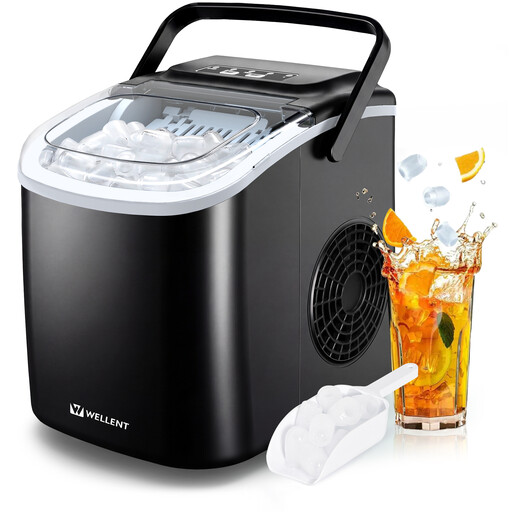 No image available
For hosting when you want bullet ice in two sizes and need to move the appliance after use.
First ice cubes in 6 minutes; 0.8-litre water tank and 0.45 kg storage basket. The stated daily output is up to 12 kg. A self-cleaning function and carry handle are also listed.
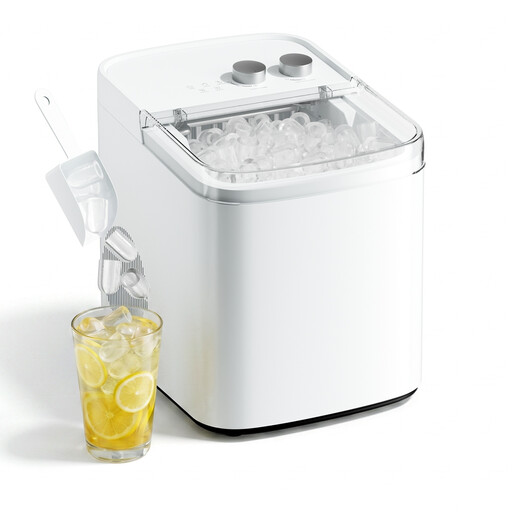 No image available
If you want spherical ice cubes in two selectable sizes for drinks when you’re entertaining.
Nine ice cubes per cycle in 6–10 minutes; 1.2-litre water tank and 0.5 kg basket. The stated daily output is up to 14 kg. Automatic cleaning is also listed.
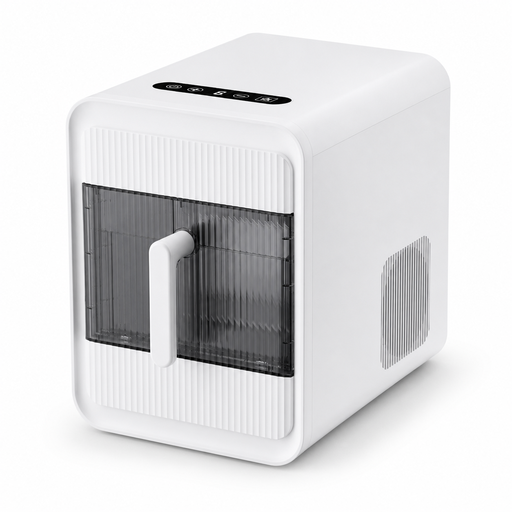 No image available
If you specifically want square ice cubes and prefer a removable ice tray for serving.
The water tank holds 1.5 litres; the first batch is stated to take 8–12 minutes. A removable ice tray and self-cleaning function are also listed. Stated dimensions: 230 × 292 × 300 mm.
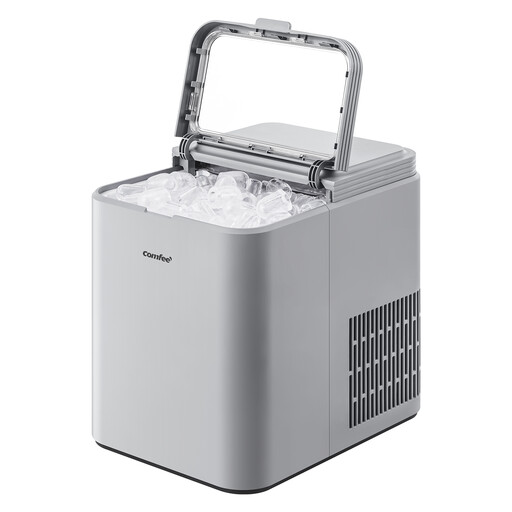 No image available
For an evening with guests when you want bullet ice in two sizes and a removable basket.
Eight ice cubes in 6 minutes; 1.3-litre water tank and 0.4 kg basket. The stated daily output is up to 12 kg. A scoop and self-cleaning function are also listed.
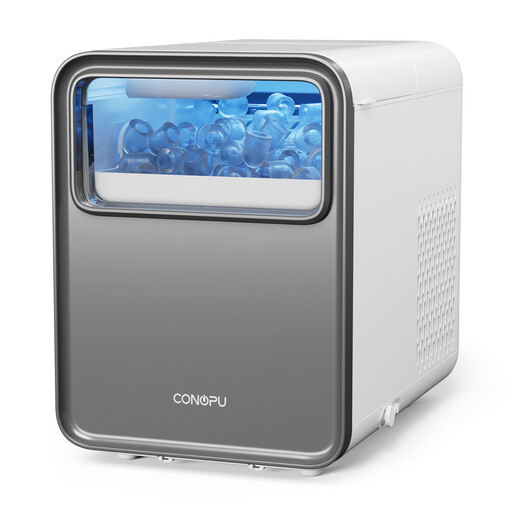 No image available
If you want to serve bullet ice in two sizes quickly when you’re entertaining.
Nine ice cubes in around 6 minutes; 1.5-litre water tank. The stated daily output is up to 12.02 kg. A basket, scoop and 30-minute cleaning cycle are also listed.
Allow time for the first batch before you start preparing drinks, and factor in removing the ice and refilling the machine. CASO states that the IceChef Compact takes around 6–13 minutes to make its first cubes; the figure of 12 kg per 24 hours, by contrast, refers to production during continuous operation.
Not for the tank models described here: according to the manufacturer, the CASO IceChef Compact has a 1-litre water tank and the MEDION LIFE MD 11960 has a 2-litre tank. For other models, check the connection details in the product description.
You can’t tell from the name of the feature alone. CASO and MEDION list self-cleaning functions and removable baskets; empty and clean the appliance according to the instructions for the model you buy, and agree on who will look after it after use in your shared kitchen.
If you buy from a business seller in Germany, your statutory rights for faulty goods are a claim against the seller; a warranty is an additional voluntary service with its own terms and conditions. The Verbraucherzentrale explains that, if the seller puts things right by repairing or replacing the item, they cover the associated costs.
According to the Bundesnetzagentur, the manufacturer uses the CE marking to declare that the product complies with the applicable EU harmonisation requirements. You should also check the manufacturer’s information and the safety and usage instructions in German for the specific appliance.