Iced coffee on a small worktop
If you use the same space for cooking and making drinks, make sure the appliance will fit the room you have available.


If your only cooking and worktop space needs to stay clear, start by checking a countertop ice maker’s actual dimensions and the space it needs. Then consider the time to the first batch, the tank and how you collect the ice. A compact appliance may be more practical for making the occasional iced coffee than a larger model, while a bigger tank may mean fewer refills when preparing several drinks. CASO’s published figures for the two models differ in tank capacity and dimensions. Cycle times and performance figures are specific to each model, not universal real-world measures.
If you use the same space for cooking and making drinks, make sure the appliance will fit the room you have available.
If you make ice as and when you need it, the time to the first batch for that particular model is more useful than its stated daily output on its own.
If you regularly make several drinks, the tank, replenishment and ice collection are important considerations alongside the space it takes up.
If you have just one cooking station, it’s worth weighing up the space available and how much ice you need to start with against the tank size and cleaning requirements.
| What matters | What to check before buying | Who is this important to? |
|---|---|---|
| Space and positioning | Appliance dimensions, the clearance required and the positioning instructions for the specific model. | If I only have one cooking and worktop area, the appliance needs to fit without getting in the way of preparing other things. Around 36% of consumers put available worktop space first. |
| First batch of ice | Time to the first batch and the amount of ice made per cycle. | When I fancy an iced coffee, I don’t want to wait too long for the first usable amount of ice. Daily output alone doesn’t tell me this. Around 29% of consumers pay particular attention to the first batch. |
| Changing the water and cleaning | How easy it is to access the tank and containers, and the care instructions for the specific model. | When I make ice for drinks, I want to keep the tank and containers clean without a lot of fuss. Easy cleaning is a priority for around 21% of consumers. |
| Making enough for several drinks | Compare the tank and ice collection capacity separately from the stated production output. | If I’m making several iced coffees in a row, I don’t want to keep refilling the water or transferring the ice. Around 14% of consumers prioritise having enough ice for several drinks. |
Daily output, cycle time and tank capacity describe different things. If you want an iced coffee on the spur of the moment, the first thing to check is when the first batch will be ready.
Compare the time to the first batch and the amount made per cycle. If you’re making several drinks, the tank and how you collect the ice matter too.
You may have to wait between batches, and a smaller tank may need refilling more often.
A self-cleaning function doesn’t necessarily replace every manual cleaning step. Instructions in a manual also apply only to the model they describe.
Before buying, read the care instructions for the specific model and check which parts you’ll need to clean.
When you have just one cooking and worktop area, even a small difference in dimensions can affect where the appliance will fit. The product page lists different dimensions for the CASO IceChef Compact.
Confirm the dimensions of the version on offer, then measure the space you plan to use, including the clearance required.
The 2-litre ice maker is an option for making bullet-shaped ice cubes for drinks.
The IceChef Compact is designed to take up less worktop space, while the IceMaster Pro has a larger tank.
The IceVolcano 2G is an option if dispensing ice cubes straight into a glass suits the way you make drinks.
The KB14 is a countertop option for making drinks repeatedly and has a removable ice cube tray.
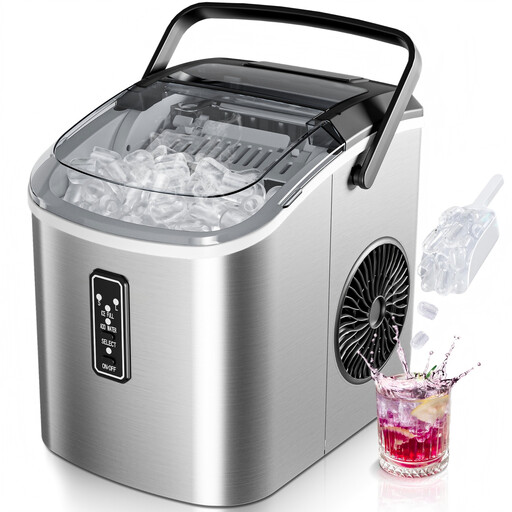
The Joybuy products below are for making ice for iced coffee and other cold drinks on your worktop.
 No image available
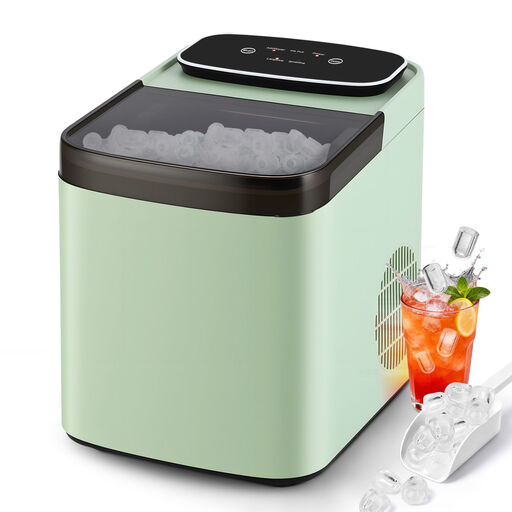
An option for making individual drinks when worktop space is limited.
The manufacturer’s description lists 9 ice cubes per cycle, a first batch in 6 minutes and two ice sizes. Water tank: 1.3 l; ice container: 0.5 kg. Dimensions given: 23.5 × 30.5 × 30.2 cm.
Self-cleaning function, according to the product description.
 No image available
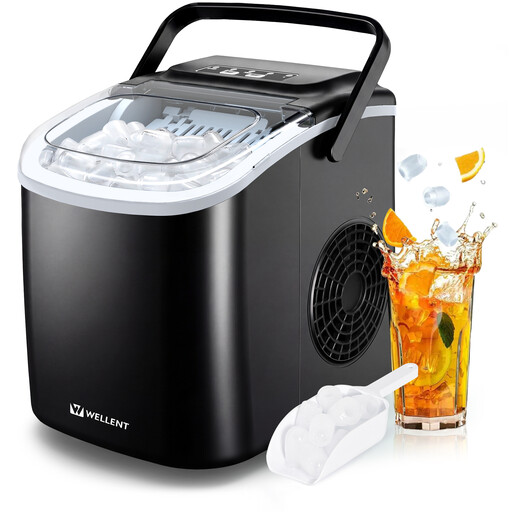
The compact design and carrying handle described may suit a worktop where you need to move the appliance around.
The product description lists a first batch in around 6 minutes and two ice sizes. Water tank: 0.8 l; ice container: 0.45 kg. Dimensions given: 20.2 × 28.1 × 26.4 cm.
If you’re making several drinks, the 0.8-l tank may need refilling more often.
 No image available
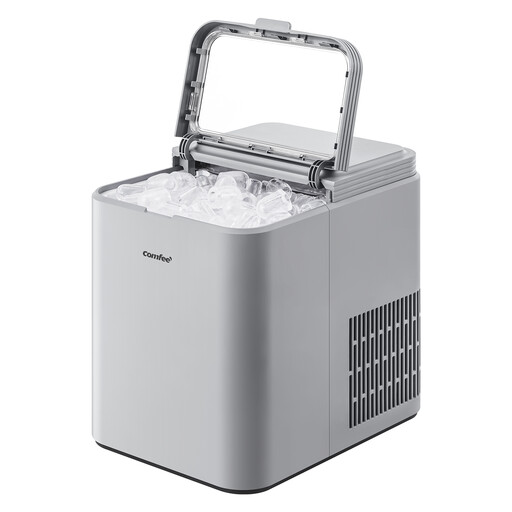
An option for making drinks if you want to produce a first batch and choose between two ice sizes.
The description lists 8 ice cubes in 6 minutes. Water tank: 1.3 l; removable ice container: 0.4 kg. Dimensions given: 295.7 × 213 × 295 mm.
Self-cleaning function, according to the product description.
 No image available
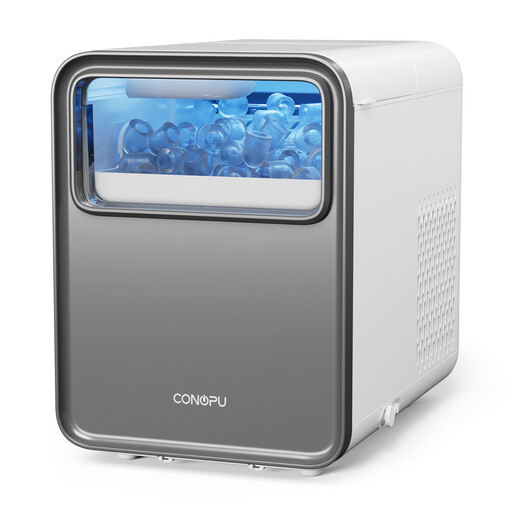
The product description lists coffee and cold drinks among its uses.
Water tank: 1.5 l. It lists 9 ice cubes in 6 to 8 minutes and two ice sizes. Dimensions given: 35 × 23 × 30 cm.
The description lists an automatic cleaning programme.
 No image available
An option for iced coffee if you want to choose between two ice sizes.
The product description lists 9 ice cubes in 6 minutes and two ice sizes. Dimensions given: 35 × 23 × 30 cm.
Self-cleaning function; the description lists an ice container and scoop.
Compare the appliance’s dimensions with the space available and read the positioning instructions for the specific model. The CASO IceChef Compact’s dimensions differ on the same product page, so confirm the measurements of the model on offer.
Follow the instructions for your model. The CASO IceMaster Pro manual recommends changing the tank water every 24 hours. It also says to switch off the appliance and unplug it before cleaning. This recommendation applies to that model; it isn’t a general legal requirement.
In Germany, materials and articles intended to come into contact with food are subject to Regulation (EC) No 1935/2004. The regulation sets requirements for these materials, but on its own it does not prove that the parts of a particular appliance that come into contact with ice comply with them.
Not on its own: a daily output figure doesn’t tell you when the first usable batch will be ready. If you want iced coffee straight away, check the time to the first batch and the amount produced per cycle for that model. For several drinks, tank and ice container capacity also matter.