Who is a countertop ice maker for?

Hosts finishing a late shift

If you’re getting home just before your guests arrive, check how long it takes to make the first batch and how many cubes each cycle produces. The daily output in kilograms alone doesn’t tell you how much ice will be ready at the start.

Hosts serving lots of drinks

If you’ll need a steady supply of ice over several hours, plan to empty the basket regularly. If you want to make ice in advance, you’ll also need space in the freezer; the full daily output won’t fit in the machine’s basket.

Hosts short on worktop space

As well as checking the machine’s dimensions, allow space to operate it and the ventilation clearance specified by the manufacturer. A smaller tank may mean more frequent refills.

What should you look for when buying?

Buying priority What to look for Who it matters most to
First batch ready quickly Check the time until the first batch and the number of ice cubes per cycle for the specific model. If I only get home shortly before the party starts, I want to know how much ice will be ready in time for the first drinks; around 34% of consumers prioritise a quick start.
Ice supply over several hours Don’t confuse daily output with storage capacity; plan to empty the basket and use freezer space if needed. For lots of guests, I need a routine for refilling and removing ice; around 33% of consumers prioritise a continuous supply and the option to build up a stock.
Space required Check the machine’s dimensions, as well as the operating and ventilation clearances. KLAMER specifies 20 cm of clearance around its 120-watt model; this figure does not automatically apply to other models. If my worktop space is limited, the machine and the necessary clearance both need to fit; around 20% of consumers prioritise a suitable space to place it.
Cleaning and care Check the cleaning instructions and access to the basket and tank; a self-cleaning function doesn’t replace other care. If I use the machine repeatedly during a party, I want easy access to the parts that come into contact with water and to handle ice hygienically; around 13% of consumers prioritise low-maintenance care.

Common misconceptions when buying

  • Assuming “12 or 15 kg per day” means ice is immediately available

    Daily output describes how much ice a machine makes over time, not how much can sit in the collection basket at once. MEDION specifically points out that the stated daily quantity cannot be stored in the machine.

    For the start of the party, compare the time to the first batch and the number of cubes per cycle. For later on, plan to empty the basket and freeze some ice if needed.

  • Allowing only for the machine’s dimensions

    You may need extra space to operate the machine and allow air to circulate. KLAMER specifies a minimum clearance of 20 cm around its 120-watt machine; this model-specific figure is not a general requirement for countertop ice makers.

    Before deciding, check the setup instructions for the specific model against the space available on your worktop.

  • Assuming self-cleaning means it’s completely hygienic

    A self-cleaning function doesn’t mean every surface the ice touches will stay clean without any further care. The German Federal Institute for Risk Assessment recommends following good food hygiene practices.

    Check the instructions for the basket, tank and water outlet, and follow the recommended cleaning steps and use the specified products.

Key brands at a glance

Arendo

Worth considering if you want to compare quick batches of bullet ice and selectable ice cube sizes in a countertop machine.

  • Arendo states that its machine makes around nine large ice cubes in nine minutes.
  • Check the exact model and colour variant if you want to verify specifications for a particular machine.

CASO Design

The IceChef Compact and IceMaster Pro ranges are worth considering for different space and tank requirements.

  • CASO specifies a 1-l tank and around 12 kg of output per 24 hours for the IceChef Compact. For the IceMaster Pro, the manufacturer specifies a 2,2-l tank and around 12 kg per 24 hours.
  • Check the IceChef Compact’s dimensions against the specifications for the specific model before buying. A bigger tank doesn’t mean there’s a similarly large supply of ice in the basket.

KLAMER

The 120-watt model is designed for a planned, steady supply; there’s also a separate compact model for tight spaces.

  • For the 120-watt model, KLAMER specifies a 2,1-l tank, up to 15 kg per day and a minimum clearance of 20 cm around the machine. For the compact model, the manufacturer specifies a 1-l tank and up to 11 kg per day.
  • These specifications apply to the model stated and shouldn’t be transferred from one model to another. Daily output isn’t the same as the amount the basket can hold.

MEDION

The LIFE Nugget Ice Maker MD 11960 is an option if you’re looking for nugget ice rather than classic bullet-shaped cubes.

  • MEDION specifies an output of 15 kg per 24 hours and a self-cleaning function for the MD 11960.
  • According to MEDION, the daily output cannot be stored in the machine’s basket. To build up a supply, plan to remove the ice and freeze it if necessary.

Joybuy product selection

The Joybuy products below are countertop ice makers designed to provide ice quickly. If you’ll be using one after a shift, pay particular attention to the details for the first batch, the number of cubes per cycle and the conditions attached to each model’s specifications.
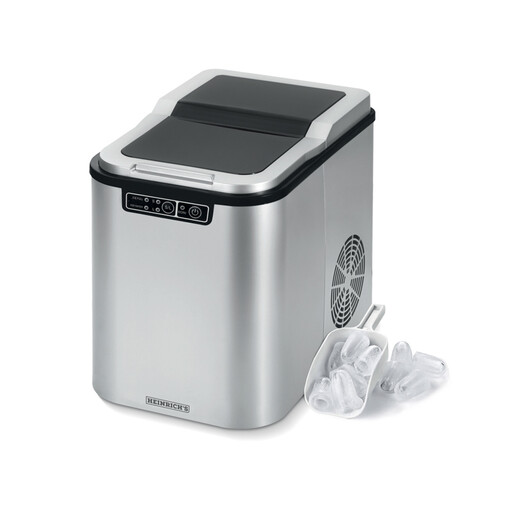
120W ice maker with two ice cube sizes

120W ice maker with two ice cube sizes

For a quick start, the product title states that it makes nine ice cubes in nine minutes.

The title also states an output of 12 kg of ice in 24 hours and a 2,2-l water tank. The daily output isn’t a supply that can all fit in the basket at once.

View at Joybuy
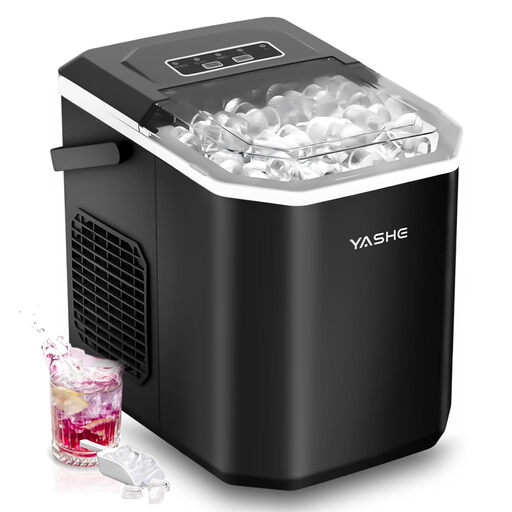
YASHE HZB-12/G ice maker

YASHE HZB-12/G ice maker

If you want to choose between different ice cube sizes, the product title states that it offers two sizes and makes nine cubes in six minutes.

The title states a daily output of 26 lb and a self-cleaning function. Daily output doesn’t tell you how much ice can be stored in the machine at once.

View at Joybuy
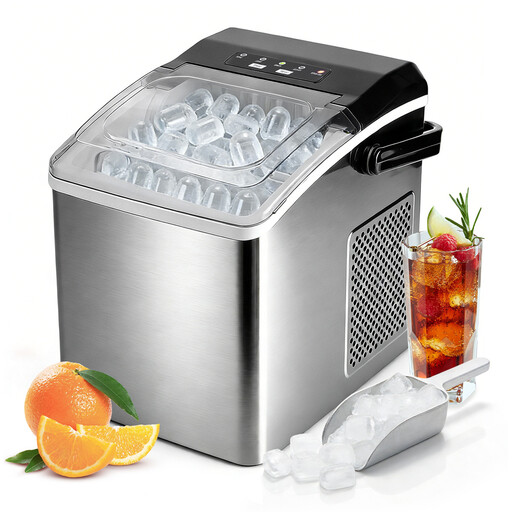
Ice maker with carry handle and two ice cube sizes

Ice maker with carry handle and two ice cube sizes

For a first batch before serving, the product title states that it makes nine ice cubes in six minutes.

The title also states an output of 12 kg per 24 hours, a 1,3-l water tank and a self-cleaning mode. The daily output isn’t the same as the amount of ice the machine can hold at once.

View at Joybuy
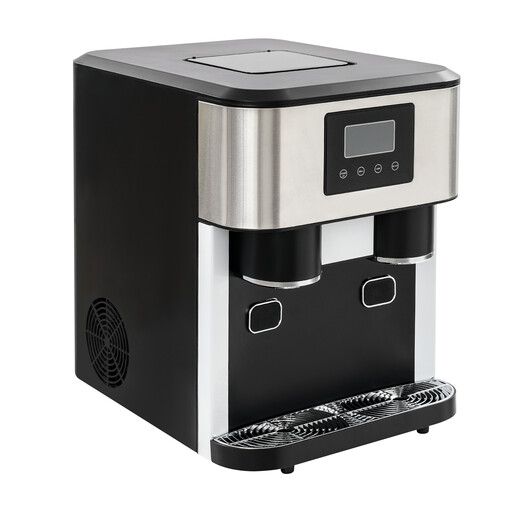
3-in-1 countertop ice maker with several ice options

3-in-1 countertop ice maker

For several drinks at the start of the party, the description states that it makes 16 ice cubes per cycle in 7–9 minutes at room temperatures below 77 °F.

The specifications list bullet ice, crushed ice and cold water. The stated cycle time applies under the specified temperature conditions.

View at Joybuy
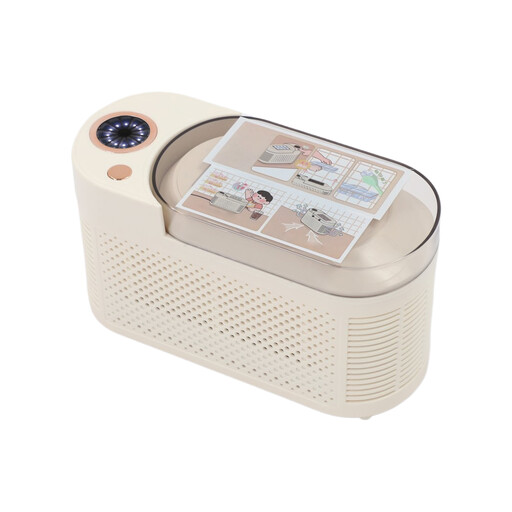
Portable countertop ice maker for home and car

Portable countertop ice maker for home and car

If you want to make ice cubes while you’re out and about too, the description states that it makes eight square ice cubes per cycle.

The description lists a 100–230-V mains adapter and a 12-V car cable. According to the description, ice production on the go requires a 12-V power supply.

View at Joybuy

Frequently asked questions about countertop ice makers

Can the machine keep ice frozen for the party while I’m working a late shift?

Don’t rely on the collection basket as a freezer: MEDION explains that the stated daily output can’t be stored there. To build up a supply, you can remove ice in advance and freeze it if you have room; the machine can then provide a steady supply as well.

Where should I put a countertop ice maker?

Place the machine on a suitable surface and leave the clearance specified in the instructions for that model. KLAMER specifies 20 cm of clearance around its 120-watt model; this figure doesn’t automatically apply to other machines.

Does self-cleaning replace cleaning the machine after the party?

No. A self-cleaning function on some models doesn’t replace the other cleaning steps or the need to handle water and ice hygienically. The instructions for your model will specify the right steps and products.

What should I know about faults and online orders in Germany?

As the Verbraucherzentrale (German consumer advice centre) explains in its information dated 28 September 2026, your statutory rights against the seller are separate from any voluntary manufacturer’s warranty. According to the Verbraucherzentrale, online orders generally come with a 14-day cancellation period from delivery; check the applicable exceptions and the terms of your specific purchase.

What should I look for in product labelling and disposal?

The Bundesnetzagentur (German Federal Network Agency) lists CE marking, manufacturer details and German-language instructions among the aspects it checks as part of its market surveillance; a CE mark alone isn’t an independent performance test. Under the rules outlined by the Umweltbundesamt (German Environment Agency), end-of-life electrical appliances must be collected separately and not put in household waste.