What should you look for when buying?
Measure more than just the space the machine will sit on: allow room to operate it, too. Also plan separately for how you’ll keep the ice coming during the party and where you’ll store ice that’s already been made.
| What to consider |
What to check before buying |
Who should pay particular attention? |
| Space and access |
Dimensions of the exact version, plus room for the lid, basket and controls. |
If I have limited worktop space, the machine and the clearance needed to use it both have to fit; around 36% of consumers put available space at the top of their list. |
| Keeping the ice coming |
Ice per cycle, time per cycle, tank capacity and how often you’ll need to refill it. |
I want to be able to take out ice regularly during the party; around 28% of consumers put a steady supply first. |
| Ice available at one time |
Basket capacity and freezer space for batches made in advance. |
If several drinks need ice at once, the amount ready to use matters most to me; around 22% of consumers prioritise having a larger stock. |
| Cleaning and handling |
Access to the tank and basket, cleaning instructions and, if applicable, a drain for leftover water. |
I want to look after the machine after the party without any unnecessarily fiddly steps; around 14% of consumers prioritise ease of cleaning and maintenance. |
Ice makers at Joybuy
These products are compact countertop ice makers for keeping the ice coming at a party when worktop space is limited.
 No image available
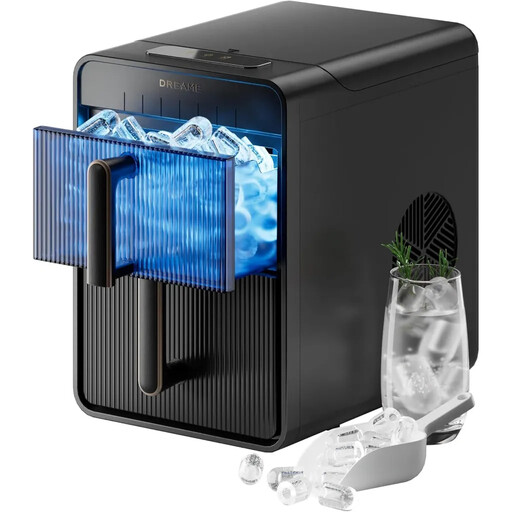
Dreame Bullet Portable Ice Maker
For a steady supply of ice, the product title states a cycle time of 6–8 minutes.
Water tank: 900 ml. Daily output: up to 12 kg; this isn’t the amount available at one time. Two types of bullet ice; self-cleaning function.
View at Joybuy
 No image available
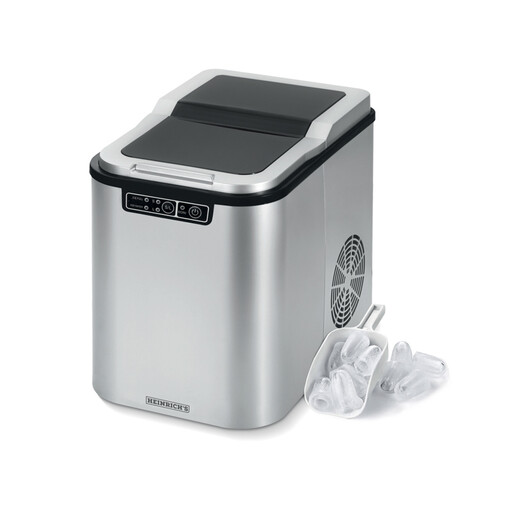
120 W ice maker with a 2.2-litre water tank
For repeat batches, the product description states nine ice cubes in nine minutes.
Water tank: 2.2 l. Two ice cube sizes; self-cleaning function. The stated daily output is up to 12 kg and doesn’t tell you how much ice will be in the basket at one time.
View at Joybuy
 No image available
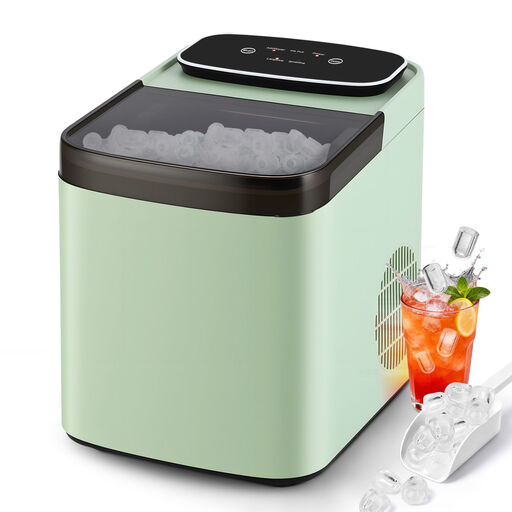
Compact mint ice maker
Its stated dimensions of 23.5 × 30.5 × 30.2 cm make it easy to check whether it’ll fit on a worktop with limited space.
Water tank: 1.3 l. Two ice cube sizes; nine cubes per cycle. The ice basket holds 0.5 kg; if you need more ice ready at once, plan to make it in advance and transfer it elsewhere. Self-cleaning function.
View at Joybuy
 No image available
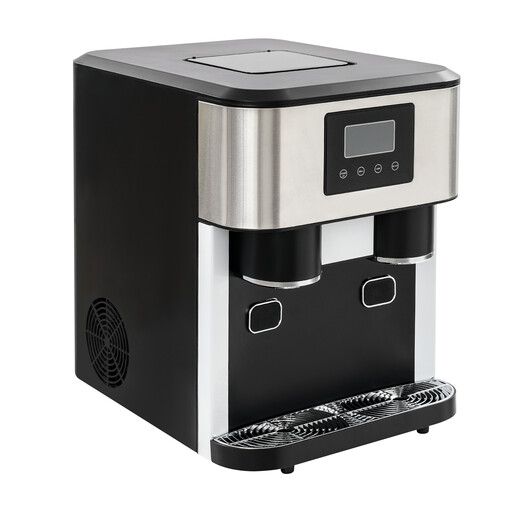
3-in-1 countertop ice maker
The description says it can be used at home and on the go, including in a car or motorhome.
Mains and 12 V car power; the product description states that it makes eight square ice cubes per cycle.
View at Joybuy
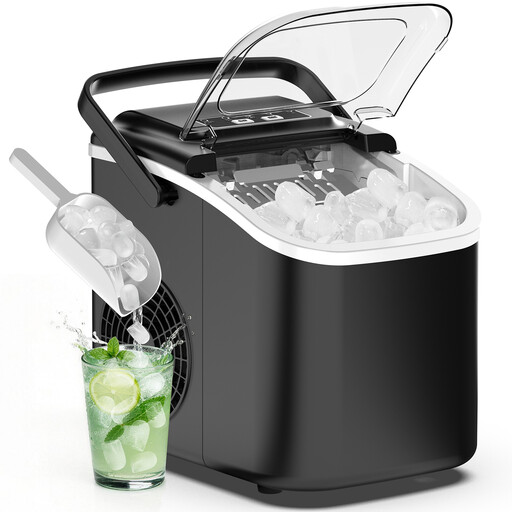 No image available
Ice maker with self-cleaning function
For ice at short intervals, the product description states eight cubes in six minutes.
Two ice cube sizes; self-cleaning function. The stated daily output is up to 12 kg and shouldn’t be confused with the amount of ice available at one time.
View at Joybuy
Frequently asked questions
Is “12 or 15 kg per day” enough for a party?
Not on its own. A daily figure describes how much ice is made over 24 hours, not the basket’s capacity or how much ice is available at a particular time. Also compare the cycle time and basket size, and check whether you can remove and store ice in advance.
What should I check before setting up the machine?
Measure the available footprint and make sure you can reach the lid and basket where you plan to put it. Check the dimensions of the exact model version; CASO Design publishes two different sets of measurements for the IceChef Compact.
What water should I use, and how should I clean the machine?
Use fresh drinking water and follow the machine’s cleaning instructions. The German Environment Agency recommends running off water that has been standing in household plumbing for more than four hours before using it to prepare food or drinks. Unold describes its cleaning function as flushing the water circuit.
Are a guarantee and statutory consumer rights the same thing?
No. The Verbraucherzentrale distinguishes statutory rights when goods are faulty from a guarantee, which is an optional extra provided under its own terms and conditions.
What are the rules in Germany on product safety and disposal?
The European Union’s consumer information lists electrical and electronic equipment as a product group that must carry the CE marking. CE is a declaration by the manufacturer, not an independent quality mark. End-of-life electrical appliances should be taken to an authorised collection point, such as a local council facility or an eligible retailer’s take-back service, rather than put in household rubbish.


