Hosts who need a steady supply of ice
For a longer gathering, it’s the repeated top-ups and the effort involved in emptying the basket that matter, not just the first batch. F.A.Z. Kaufkompass and MEDION highlight this distinction when making ice.


If your kitchen renovation means you have no freezer compartment and you want to keep making ice for several hours, a countertop ice maker with a water tank could be a good option. As well as the production rate, consider how often you’ll need to refill the tank and empty the basket: the daily output isn’t the same as the amount of ice available at any one time. For a one-off party, you could also buy ice or use ice cube trays, as long as you plan how to transport and keep the ice cold, or have a usable freezer compartment.
For a longer gathering, it’s the repeated top-ups and the effort involved in emptying the basket that matter, not just the first batch. F.A.Z. Kaufkompass and MEDION highlight this distinction when making ice.
If you can’t use your freezer compartment during the renovation, bear in mind that the ice you make won’t automatically stay stored in the machine. MEDION points out that the full daily output cannot be kept inside the ice maker.
If you’re setting up the appliance somewhere other than your usual kitchen, consider the tank, available worktop space, and access to water and electricity. MEDION and CASO Design explain why the tank and location matter.
A good fit if: there’s no mains water connection at your temporary setup and you’ll need ice repeatedly during the party.
The trade-off: The tank makes it easier to set the appliance up wherever you need it, but it has to be refilled; the basket is no substitute for a freezer supply.
A good fit if: you have a usable freezer compartment and can prepare a smaller amount in advance.
The trade-off: You won’t need an extra countertop appliance, but you will need freezer space and time to prepare the ice.
A good fit if: you only need ice for this party and can arrange transport and chilled storage.
The trade-off: You won’t need to run or clean an appliance, but you’ll need to keep the ice properly chilled until you use it.
For a summer party during a renovation, consider the supply of ice, storage between batches and running the appliance at a temporary location separately.
| What matters | What to look for when buying | Who should pay particular attention? |
|---|---|---|
| Keeping the ice coming | Consider cycle time and production rate separately, and remember that you’ll need to empty the basket. CASO Design gives a cycle time of 6–13 minutes and an output of around 500 g per hour for the IceMaster Pro. | If I want to keep topping up the ice during a longer party, ongoing production matters more to me than the first batch; around 31% of consumers put a steady supply of ice first. |
| Ice without a freezer compartment | Check the basket capacity and how often you’ll need to remove the ice; daily output isn’t the same as the amount that can be stored at one time. MEDION specifically highlights this limitation. | If the freezer compartment is out of action during the renovation, I need a way to provide ice without freezer storage; around 25% of consumers prioritise exactly this. |
| Temporary location | Check the appliance’s dimensions against the space available, and make sure you have access to a tank, electricity and water. CASO Design lists the IceMaster Pro as measuring 240 × 320 × 360 mm (W × H × D), with a 2,2 l tank. | If the appliance is temporarily set up somewhere other than my usual kitchen, I need to be able to arrange the space, electricity and water access in a practical way; around 25% of consumers prioritise a temporary location. |
| Cleaning | Check whether you can clean the basket and accessible parts as instructed, and whether the specific model has a cleaning programme. The German Environment Agency recommends using fresh water from the cold tap, provided your domestic plumbing is suitable. | If I use the appliance repeatedly for guests, I want to be able to look after the parts that come into contact with water and ice; around 19% of consumers put cleaning first. |
Even a high stated daily output won’t all fit in the appliance’s basket. Without a freezer compartment, you therefore won’t be able to keep all that ice ready at once.
Compare the production rate and basket capacity separately, and plan how you’ll remove and use the ice during the party.
The first batch alone doesn’t tell you how well an appliance will keep making ice over several hours.
Also check the stated production rate and how often you’ll need to refill the water and empty the basket.
A cleaning programme doesn’t remove the need to check how to care for the accessible parts of the specific appliance.
Read the cleaning instructions and check whether the basket and accessible parts can be cleaned as directed.
Countertop ice makers for bullet ice, with a range of tank sizes.
The IceMaster Pro is a tank-fed appliance for making bullet ice continuously.
The Albaron is a countertop appliance with a tank and a cleaning programme listed by the manufacturer.
The range includes bullet ice makers and the LIFE Nugget Ice Maker MD 11960.
These Joybuy products are countertop ice makers and portable appliances for making ice in different locations.
 No image available
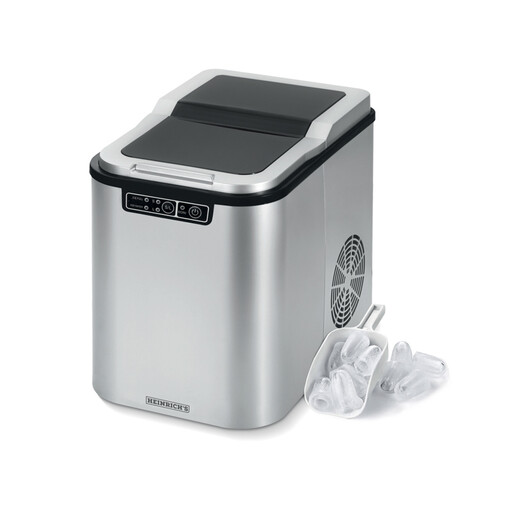
This countertop appliance with a water tank is worth considering if you’ll be making ice repeatedly during a party.
The product title lists two ice sizes, 9 ice cubes in 9 minutes, up to 12 kg in 24 hours and a self-cleaning function. The daily output isn’t the same as the amount that can be stored at one time, so plan to remove the ice from the basket.
 No image available
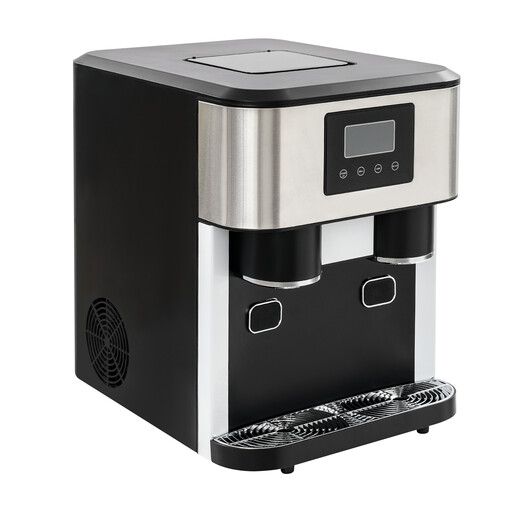
This countertop model could suit you if you’re planning to make ice in a temporary location.
The product title describes it as a 3-in-1 model for home, café and bar use.
 No image available
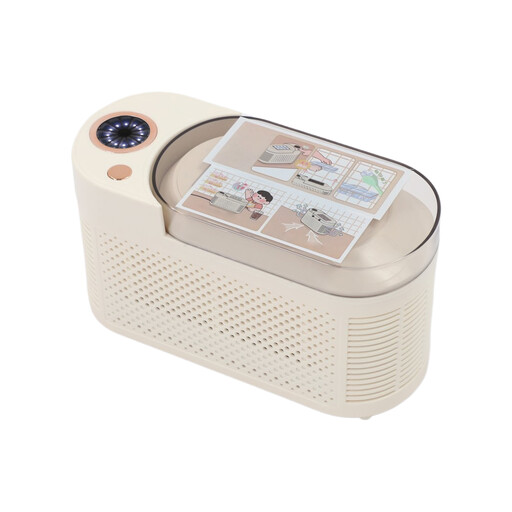
This portable model is designed to move between your home and car.
The product title lists 120 W and says it can be used at home and in the car.
 No image available
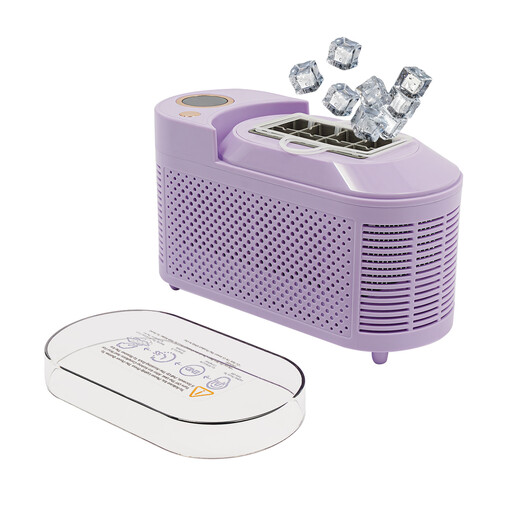
This portable model is designed for making ice on the move.
The product title lists 8 ice cubes and says it can be used at home, in a car or in a motorhome.
 No image available
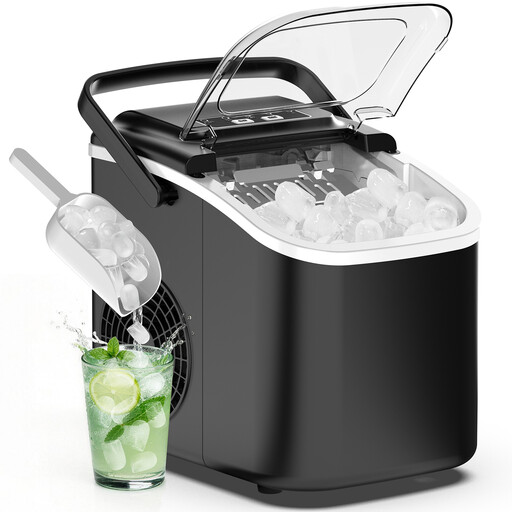
The stated output could be useful if you’ll be making ice repeatedly during a party; it shouldn’t be confused with the amount of ice stored at one time.
The product title lists 8 ice cubes in 6 minutes, up to 12 kg in 24 hours, two ice sizes, a self-cleaning function, a food-grade inner container and an ice scoop.
No. This figure describes the amount produced over a day, not how much can be stored at one time. MEDION points out that the full amount can’t be kept inside the machine, so plan how you’ll remove the ice and whether you’ll need a separate freezer compartment.
For ice intended for consumption, use fresh water from the cold tap, provided your domestic plumbing is suitable. The German Environment Agency recommends fresh cold water for food preparation. Clean the appliance according to its instructions and check that the accessible parts are easy to reach.
Your statutory rights are against the seller and are separate from any voluntary guarantee. If there’s a fault, you should first ask the seller to put it right, either by repairing the appliance or providing a replacement. The Verbraucherzentrale explains that the seller must cover the necessary transport, labour and material costs.
Goods sold in the EU must comply with the relevant product safety regulations. If CE marking is required for a product, its absence is a warning sign; the mark is not an independent quality assessment. End-of-life electrical appliances shouldn’t go in household rubbish. Take them to a separate collection point, such as a recycling centre.