Hosts who need ice at short notice
If you’re making several fruit drinks while your kitchen is being renovated, think about how long the first batch will take and when you’ll need to make more.


If you’re making several fruit drinks while your kitchen is being renovated, compare how long a countertop ice maker takes to produce its first batch and how much its basket holds, rather than looking only at its daily output. If worktop space is limited, check the appliance’s dimensions along with the required ventilation clearances. For frequent use, easy access to the water drain and clear care instructions are important. If you only need ice occasionally, a tray in an accessible freezer may be enough.
If you’re making several fruit drinks while your kitchen is being renovated, think about how long the first batch will take and when you’ll need to make more.
For a temporary spot, check not only the appliance’s dimensions but also the ventilation clearances required for that particular model.
If you take ice out frequently, check whether you can easily reach and clean any leftover water and the parts you touch.
First decide whether you’ll be making drinks regularly for several people during the renovation, or only need ice occasionally. An ice cube tray may be enough for the odd drink, provided your freezer is accessible. If you’ll need ice repeatedly, compare the first-batch time, basket capacity and space required.
| What you need | What to look for when buying | Who it matters most to |
|---|---|---|
| Ice at short notice | Compare the cycle time, number of cubes per batch and basket capacity separately. Klarstein states that the Caldwell makes nine cubes in 6–12 minutes; daily output doesn’t tell you how much ice will be in the basket straight away. | If I’m serving several fruit drinks one after another, I want to know when the first batch will be ready and how much ice the basket holds. Around 33% of consumers prioritise a quick supply of ice. |
| Space and positioning | Allow for the appliance’s dimensions and the ventilation clearances specified in the instructions for that particular model. The Rosenstein & Söhne EWM-100 requires at least 20 cm of clearance all around. | If I only have a small amount of free space during the renovation, the appliance needs to fit along with the required clearance for ventilation. Around 27% of consumers prioritise a compact footprint. |
| Cleaning and leftover water | Check for an easily accessible drain, removable parts and clear cleaning instructions. A rinse function doesn’t necessarily mean you can skip all manual care. | If I regularly make ice for drinks, I want to be able to reach and clean leftover water and the parts I touch easily. Around 20% of consumers prioritise easy care. |
| The right type of ice | Check what kind of ice the specific model makes and whether it offers different sizes; different types of ice aren’t interchangeable. | If I prefer a particular type of ice for my fruit drinks, I want to know what the appliance actually makes before I buy. Around 20% of consumers prioritise their preferred type of ice. |
Daily output, cycle time and basket capacity describe different things. If you’re serving several drinks at once, the first thing to check is how much ice is in the basket.
Compare these figures for the same model and consider when you’ll need to empty the basket.
An appliance may fit into a gap but still lack the clearance needed for ventilation. The required distance varies by model.
Before choosing where to put it, check the dimensions and positioning instructions for the specific version of the appliance.
A cleaning programme doesn’t automatically tell you how to care for the basket or deal with leftover water.
Read the care instructions for the specific model and check which parts are accessible or removable.
The 2-litre ice maker is a countertop appliance that makes bullet-shaped ice in two sizes.
The Caldwell is a compact bullet ice maker with two size options.
The Freeze 48935 combines a 1.6-litre water tank with a leftover-water drain and rinse function.
The EWM-100 is listed as offering two ice sizes, a removable basket and a cleaning programme.
The KB14 is aimed at people looking for three ice size options and a 2.1-litre tank.
These Joybuy products are designed for making ice for drinks. Depending on the model, compare the listed ice sizes, tank capacity and cycle times.
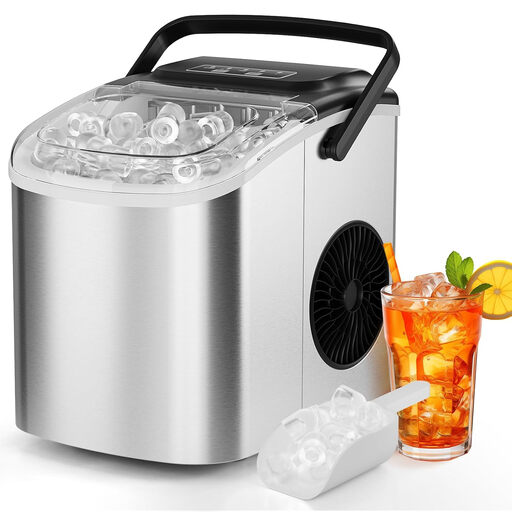 No image available
An option if you’d like to choose between two ice sizes.
9 ice cubes in 6 minutes; two sizes; stainless steel; self-cleaning function; scoop and basket included.
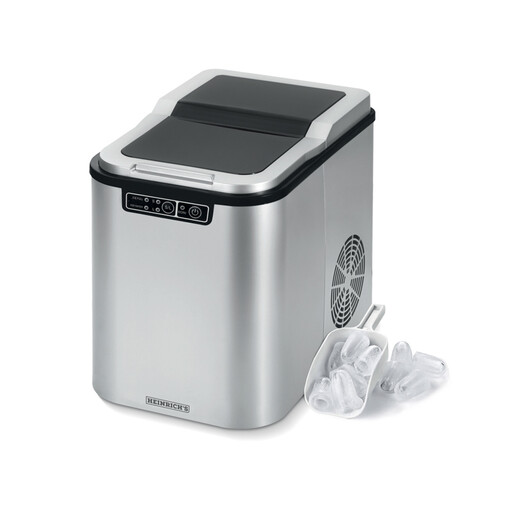 No image available
An option if you’re looking for two ice sizes and a 2.2-litre water tank.
120 W; 9 ice cubes in 9 minutes; daily output 12 kg; self-cleaning function.
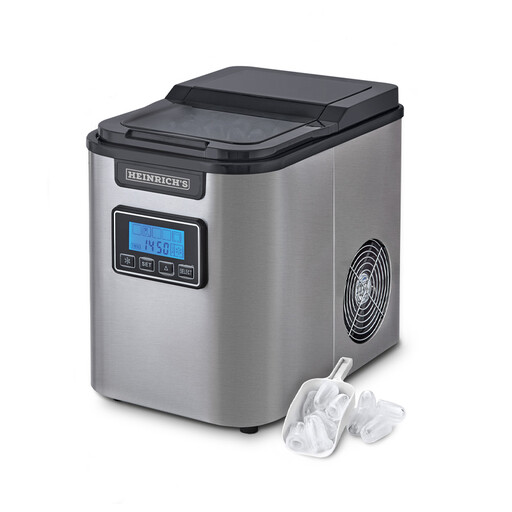 No image available
An option if you’d like to choose between three ice sizes.
120 W; 9 ice cubes in 9 minutes; daily output 12 kg; self-cleaning function.
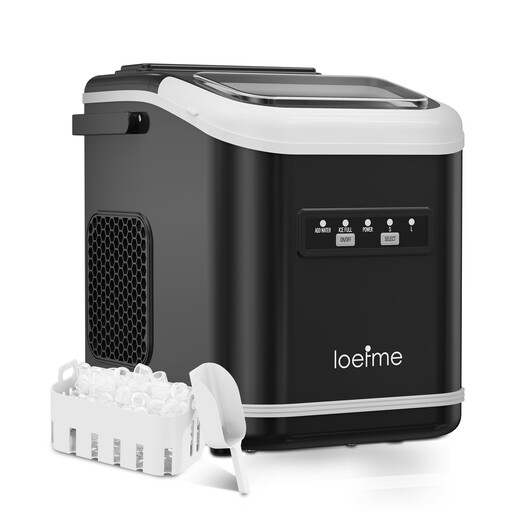 No image available
An option if you’d like bullet-shaped ice in S and L sizes.
9 ice cubes every 6–13 minutes; daily output 12 kg; automatic cleaning function.
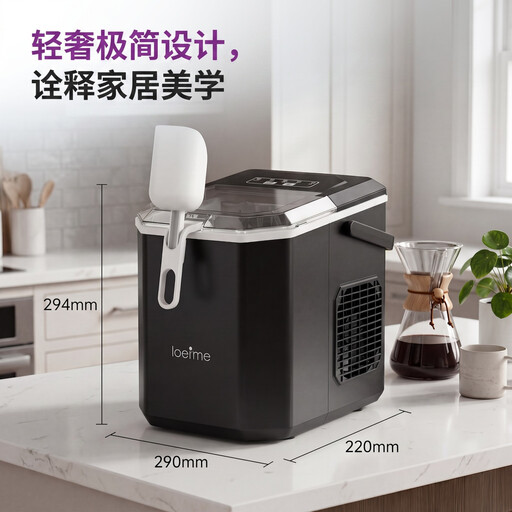 No image available
An option if you’re looking for bullet-shaped ice in two sizes and a 1.2-litre tank.
9 ice cubes every 6–13 minutes; daily output 12 kg; automatic cleaning function.
Measure the available space and add the ventilation clearances specified in the instructions for the particular model. The Rosenstein & Söhne EWM-100 requires at least 20 cm of clearance all around; this distance doesn’t apply as a general rule to other appliances.
No. A self-cleaning programme doesn’t prove that all manual care steps can be skipped. Check the instructions for the model you buy to find out how to care for the basket, leftover water and water circuit. Unold describes the Freeze’s function as rinsing the water circuit.
In Germany, your statutory rights against the seller are separate from a voluntary guarantee. If a product is faulty, the first remedy may be repair or replacement; check any additional guarantee against its own terms and conditions. The Verbraucherzentrale (German consumer advice centre) also explains this.
No. In Germany, old electrical appliances must be collected separately and can be taken to municipal collection points, among other places. Retailers have take-back obligations in certain circumstances, as explained by the Federal Ministry for the Environment.
No. For products that must carry a CE marking under the relevant EU rules, the manufacturer uses it to declare that the product meets the applicable requirements. The mark says nothing about the taste of the ice or how quickly it is made. The EU’s Your Europe information page explains that there is no general, central EU certificate for this.