Key things to consider
When making ice for guests in a temporary kitchen, the main question is whether you prioritise a steady supply, worktop space, hygienic handling or cleaning up afterwards. These percentages relate to consumers choosing an ice maker for this hosting scenario.
| Criteria |
What to check before buying |
Who will find this particularly important? |
| Making more ice in time |
Compare the cycle time, the manufacturer’s output figure in kg/24 h and the basket size separately. CASO Design gives a preparation time of 6–13 minutes and around 12 kg/24 h for the IceMaster Pro; GASTROBACK lists a basket capacity of around 1.5 kg for the Bartender Pro 41143. |
If I want to serve ice over several rounds, I look at how quickly it can be replenished and how much ice is ready at once. Around 36% of consumers prioritise ice production for their visit. |
| Space in your temporary kitchen |
Check the appliance’s dimensions, as well as the space needed to fill it and remove the ice. The manufacturer gives dimensions of around 400 × 240 × 430 mm for the GASTROBACK Bartender Pro 41143; these apply to this model. |
If I only have limited worktop space, I want to position the appliance safely while still being able to refill it and remove the basket. Around 29% of consumers prioritise the space available. |
| Handling water and ice hygienically |
Check access to the tank and basket, and read the cleaning instructions for the specific model. The Lower Saxony State Office for Consumer Protection and Food Safety notes that inadequate cleaning can be a possible cause of problems identified during tests of ice from catering establishments; these findings are not a failure rate for domestic machines. |
If the ice is going into drinks, I want to be able to keep the water and basket clean, and handle the ice hygienically. Around 21% of consumers prioritise hygienic handling. |
| Maintenance after your guests leave |
Check for a drain for leftover water, access to the basket and the care instructions. UNOLD lists a drain for leftover water on the Freeze 48935; Klarstein lists an automatic cleaning programme for the black version of the IceCraft 10046189. |
If the appliance is only being used temporarily, I want to be able to empty, clean and store it afterwards without hassle. Around 14% of consumers prioritise ease of maintenance. |
Joybuy product selection
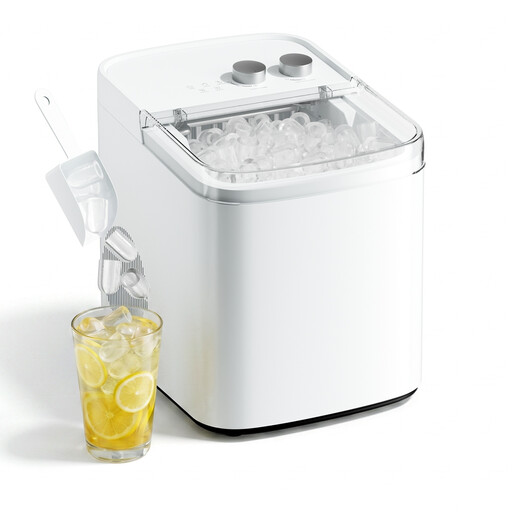
This selection features countertop ice makers with water tanks for making ice in batches. Cycle time, tank and basket capacity, and cleaning features vary by model.
 No image available
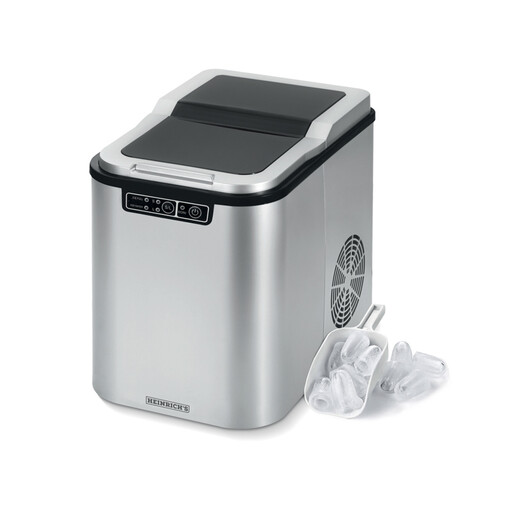
Countertop ice maker, 120 W, two ice sizes
For making ice in batches when guests visit; the title states that it makes 9 ice cubes in 9 minutes.
2.2 l water tank; the title states that it makes up to 12 kg of ice in 24 hours. The description gives dimensions of 36.0 × 24.9 × 32.7 cm.
View at Joybuy
 No image available
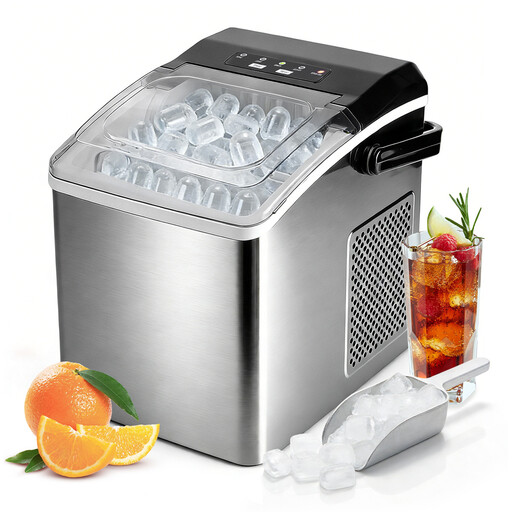
Countertop ice maker with handle, two ice sizes
For guests when you need to make more ice in short cycles; the title states that it makes 9 ice cubes in 6 minutes.
1.3 l water tank; the title states that it makes up to 12 kg of ice in 24 hours and has a self-cleaning mode.
View at Joybuy
 No image available
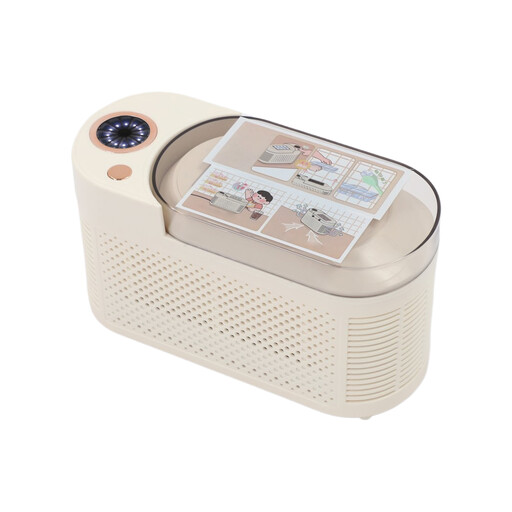
Portable countertop ice maker, 120 W, white
For making ice on a worktop; the description states that it makes 8 ice cubes per cycle.
The description lists 100–230 V AC and 12 V via a car cable as power supply options.
View at Joybuy
 No image available
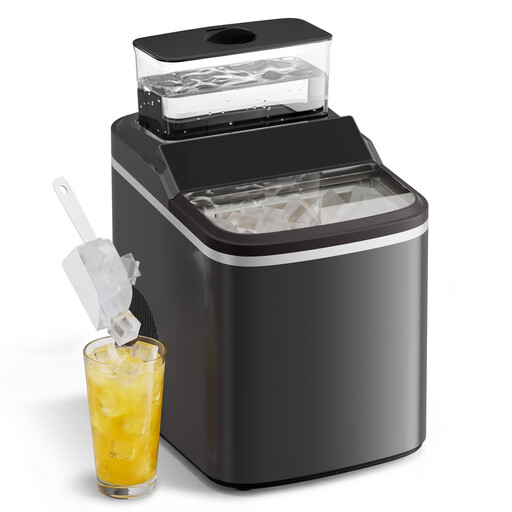
Countertop ice maker with external 1.5 l tank
For a steady supply when hosting several guests; the description states that it makes 12 ice cubes per cycle in 8 to 15 minutes.
Up to 18 kg in 24 hours; the external water tank holds 1.5 l and the ice basket holds 0.75 kg. Daily output therefore isn’t the same as the amount of ice available in the basket at once.
View at Joybuy
 No image available
Countertop ice maker with 1.2 l tank
For making ice in batches for guests; according to the description, it makes 9 ice cubes in 6 to 10 minutes.
Up to 14 kg in 24 hours, a 1.2 l water tank and a 0.5 kg ice basket. Daily output isn’t the same as the amount of ice available in the basket at once; an automatic cleaning function is also listed.
View at Joybuy
Frequently asked questions
Is 12 kg/24 h enough for an evening with friends?
This figure refers to the manufacturer’s stated output over 24 hours, not the amount of ice immediately available. Also check the cycle time and basket capacity, and plan where you’ll store removed ice so it stays frozen until serving.
Do I need a mains water connection while my kitchen is being renovated?
Not every countertop model needs a mains water connection; some have their own water tank. You’ll still need a suitable place to position the appliance, access to power and a way to fill the tank in line with the care instructions.
Does a self-cleaning programme take care of all the maintenance?
No, you can’t assume that from the feature name alone. Follow the cleaning and emptying instructions for your model, and check whether the tank and ice basket are easy to access. The Lower Saxony State Office for Consumer Protection and Food Safety cites inadequate cleaning as a possible cause of problems identified in ice samples from catering establishments; this isn’t a statement about the failure rate of domestic appliances.
What consumer rights apply when buying online in Germany?
According to information from Your Europe, purchases from a trader are generally covered by a legal guarantee of at least two years from the date you receive the goods. Distance sales contracts generally come with a 14-day right to cancel from the date of delivery; exceptions and the terms for return postage should be checked in each case. A voluntary manufacturer’s guarantee is not the same as the statutory legal guarantee.
What should I check for electrical product safety?
The German Federal Network Agency lists points to check, including correct CE marking, an identifiable product, manufacturer details and German instructions with the necessary warnings. This general guidance does not confirm that a specific appliance complies with the relevant requirements.


