
Lieferung heute & morgen

Qualitätsgarantie

Willkommens-Angebote freischalten: KOSTENLOSE Lieferung | Bis zu 80 % RABATT | Kostenlose 30-Tage-JoyPlus-Testphase
App herunterladen
Whether it's for a last-minute garden party, a perfectly chilled after-work cocktail, or simply to meet your daily needs on hot days, a reliable supply of ice cubes is often crucial. Using ice cube trays in the freezer is slow and impractical, while store-bought bags of ice take up valuable space. A dedicated home ice maker promises a solution. However, the market can be overwhelming, and many devices don't live up to their advertising claims. Before you make a decision, you should know the most common pitfalls that can lead to buyer's remorse.
Many buyers rely on marketing promises that often don't hold up in practice. Pay close attention to these three points to avoid disappointment:
To make the right choice, focus on objective, technical features that match your actual needs.
A rating like 12kg ice maker per day is a good benchmark for the needs of a family or a small party. However, the time it takes for the first cycle of ice is more important. Good machines produce the first batch of ice in 6 to 10 minutes. Also, pay attention to the water tank size (typically 1.3 to 2 litres), as a larger tank means less frequent refilling.
Carefully measure the available space on your countertop. A small ice machine with a compact footprint will blend seamlessly into your kitchen. If you want to use the device flexibly, such as an ice maker for camping or in an RV, a portable ice maker with a low weight (under 8 kg) and an integrated carrying handle is a smart choice.
Simple operation with just a few buttons and clear indicator lights for "Add Water" and "Ice Full" are standard. However, an ice maker with self-cleaning is the most important convenience feature. It flushes the system at the touch of a button, ensuring basic hygiene. The ability to choose between two different ice cube sizes offers added flexibility for various drinks.
Here are some models tailored to specific use cases that successfully avoid the pitfalls mentioned above.
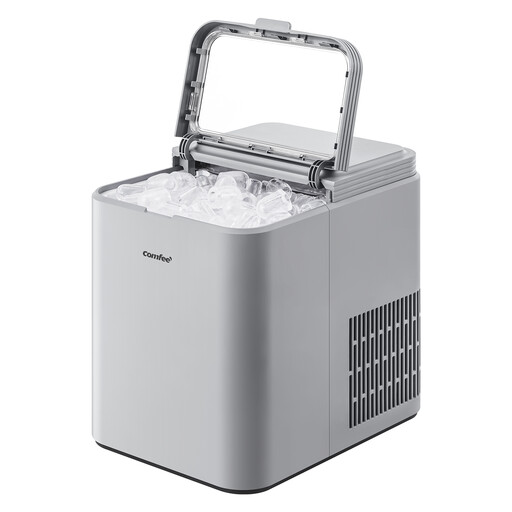
Why This Fits Their Persona: Ideal for small kitchens or occasional use. The machine focuses on core functions and delivers solid performance for daily needs without inflating the price with unnecessary extras.
The integrated self-cleaning function prevents the hygiene trap that is often a problem with cheaper models. The production time of 6 minutes per cycle is an honest and practical figure.
Very compact dimensions (29.6 x 21.3 x 29.5 cm) and simple operation. Offers two selectable ice cube sizes.
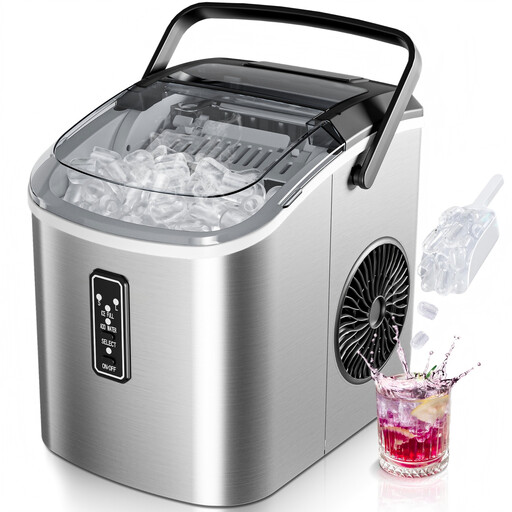
Why This Fits Their Persona: Perfect for anyone who regularly entertains guests or has high ice consumption. The fast production time and convenient carrying handle allow for flexible use, whether on the patio or in a party room.
It directly addresses the noise trap with a rating of under 45 dB, which corresponds to quiet operation. The "9 cubes in 6 minutes" claim is a realistic performance metric for party planning.
Fast production cycle, a carrying handle for high mobility, and an automatic self-cleaning function.
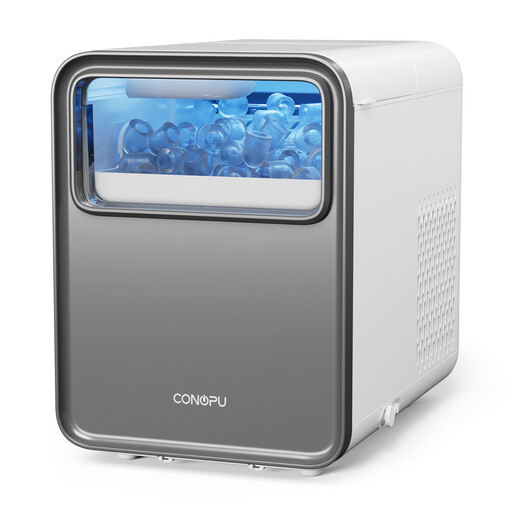
Why This Fits Their Persona: Weighing just 6.9 kg and featuring compact dimensions, this unit is an excellent portable ice maker. It fits easily into an RV or can be taken to a campsite, ensuring you don't have to go without cold drinks on the move.
The self-cleaning function is especially valuable for mobile use, as manual cleaning on the go is often difficult. The transparent viewing window helps you monitor ice production without having to open the unit.
Very low weight for maximum portability. Features a drain plug on the side to easily and completely empty out any residual water.
We have compiled a complete, up-to-date list of products that fully meet these strict selection criteria.
Even for models with a self-cleaning function, it's recommended to perform a manual cleaning with a mild detergent every few weeks or after a long period of inactivity. The automatic cleaning cycle should ideally be run after each intensive use or before storing the device to ensure proper hygiene.
Most home ice makers have an operating noise level between 40 and 55 decibels (dB). A value below 45 dB is considered quiet and is comparable to the noise level of a modern refrigerator. Pay attention to the manufacturer's specifications if quiet operation is a priority for you.
No, the collection basket in a typical ice maker is generally not refrigerated. It only serves to collect the freshly made cubes. Any ice that isn't removed will slowly melt, and the meltwater flows back into the water tank to be reused in the next production cycle. These machines are designed for continuous production and immediate consumption, not for long-term ice storage.