What should you look for when buying?
First measure the available space, including access to the appliance. Then decide whether ongoing ice production, a larger supply of ice or easy maintenance matters most to you.
| Priority |
What to check before buying |
Who is this important to? |
| Space and access |
Compare the width, depth and height with the space available. Also leave room to fill the appliance and remove the ice. Ask for confirmation of the exact external dimensions of the IceChef Compact 3401. |
If I need room to fill the appliance and remove ice on a small worktop, I’ll check that it really fits first. Around 38% of consumers put available space at the top of their list. |
| Ongoing ice production |
Look at figures per hour or per cycle separately from daily output. Don’t assume that the manufacturer’s figures guarantee the same performance in warm summer conditions. |
If drinks will be served for several hours during the party, ongoing ice production matters to me. Around 31% of consumers say it’s their main priority. |
| Ice available straight away |
Check the ice basket capacity separately from the water tank and daily output. If needed, make ice in advance and plan where to store it. |
If lots of drinks need ice at the same time, I want to know how much I can take out straight away. Around 16% of consumers put the immediately available supply first. |
| Cleaning and water |
Check whether the ice basket and residual water drain are easy to reach, and what maintenance steps the instructions recommend for the specific model. |
If I want cleaning to be as straightforward as possible after the party, I look for accessible parts and clear care instructions. Around 15% of consumers put ease of maintenance first. |
Ice makers at Joybuy
These product suggestions cover countertop ice makers for party planning, with different specifications for ice production, ice storage and cleaning features.
 No image available
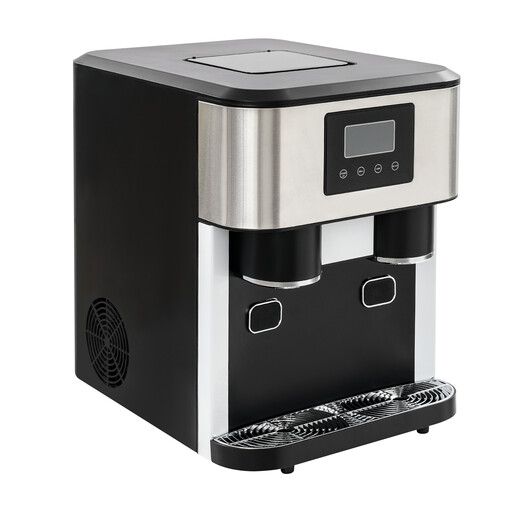
3-in-1 countertop ice maker
An option if you want crushed ice and chilled water as well as bullet ice.
The product description says it makes 16 bullet ice cubes every 7–9 minutes at room temperatures below 77°F.
View at Joybuy
 No image available
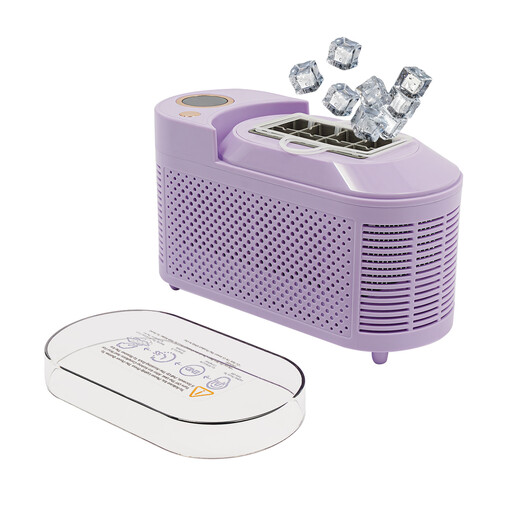
Portable ice maker with 8 cubes, purple
Suggested uses include home and travel, including motorhomes and car journeys.
The description lists 8 ice cubes per cycle, a 12 V car cable and an EU plug adaptor.
View at Joybuy
 No image available
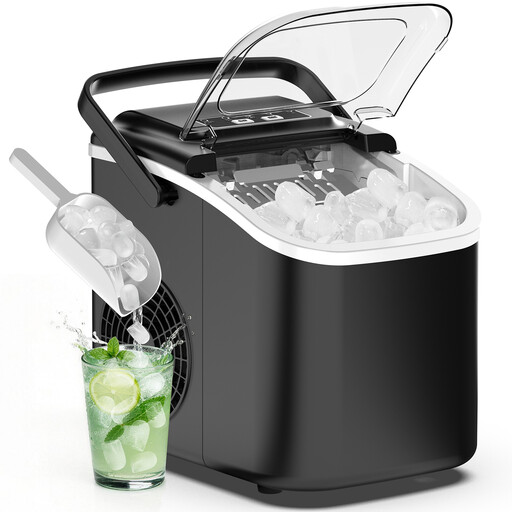
Self-cleaning ice maker, 12 kg/24 h
The product description lists ice-making features and a self-cleaning function.
Specifications include 8 ice cubes in 6 minutes, up to 12 kg in 24 hours and two ice sizes. The cleaning function doesn’t necessarily replace every maintenance task.
View at Joybuy
 No image available
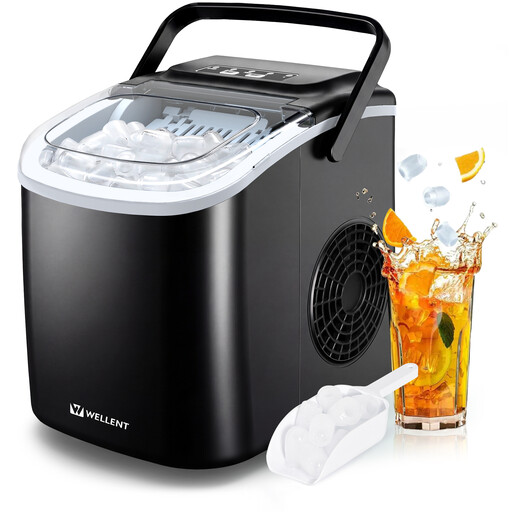
Black ice maker with carry handle, 12 kg/24 h
The stated dimensions may help when planning for a small worktop. Also check how much room you’ll need to operate and fill the appliance.
The description gives dimensions of 20.2 × 28.1 × 26.4 cm, a 0.8-litre water tank and an ice basket capacity of 0.45 kg. It also lists up to 12 kg of ice in 24 hours, two ice sizes and a self-cleaning function.
View at Joybuy
 No image available
Ice maker with external 1.5-litre tank, 18 kg/24 h
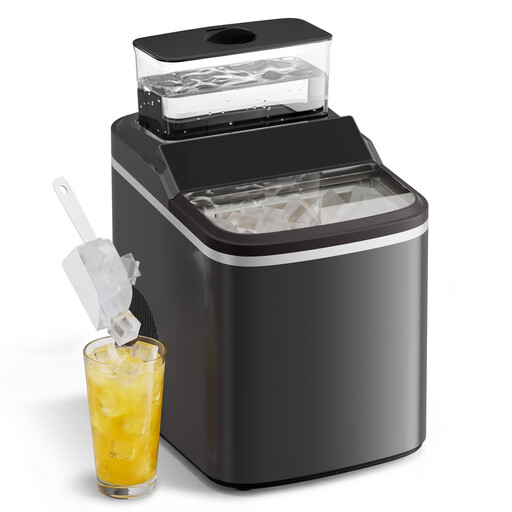
The specifications may appeal to hosts who want to consider ongoing ice production and an external water tank.
It’s listed as producing up to 18 kg in 24 hours, with 12 ice cubes every 8–15 minutes and an ice basket capacity of 0.75 kg. The external tank needs extra space when setting up the appliance. An automatic cleaning function is also listed.
View at Joybuy
Frequently asked questions
Is 12 kg of ice a day enough for a party?
Not on its own. Also compare the output per hour or per cycle and the ice basket capacity. CASO lists an output of 500 g/h for both the IceChef Compact 3401 and IceMaster Pro 3301, even though their water tanks are different sizes.
What should I clean after the party?
Follow your model’s instructions for the water tank, ice basket and water-carrying parts. An automatic rinse doesn’t necessarily replace all other cleaning tasks. The German Federal Institute for Risk Assessment explains the importance of hygienic water handling at home.
Who is responsible if the appliance develops a fault: the seller or the manufacturer?
If a product is faulty, your statutory rights are against the seller and are separate from any voluntary guarantee. The Verbraucherzentrale lists repair or replacement as the first remedies. Any additional guarantee is subject to its own terms and conditions.
Is CE marking relevant for an electric countertop ice maker?
The relevant requirements of the EU Low Voltage Directive apply to mains-powered appliances with a rated voltage between 50 and 1,000 V AC. The manufacturer must carry out the conformity assessment procedure, issue an EU Declaration of Conformity and affix the CE marking. The marking is not an independent approval. Check the voltage and documentation for the specific appliance.
How should I dispose of an old ice maker?
Take the electrical appliance to an authorised collection point or a retailer that is required to take it back. Don’t put it in household waste. The German Federal Ministry for the Environment explains that in-store take-back depends on certain conditions, including the retailer’s and appliance’s size.


