Hosts with limited worktop space
If you want to make ice for guests but can only clear a small, easily accessible area, the usable space matters more than a high daily output.


First, measure the usable space, including room to open, fill and ventilate the machine. Then compare how much ice it can make during your preparation time. A smaller machine takes up less room, but may need topping up more often. Larger tanks and ice baskets can make serving easier, but they need more space. Production times and quantities are manufacturer figures, not a guarantee for every room and water temperature.
If you want to make ice for guests but can only clear a small, easily accessible area, the usable space matters more than a high daily output.
If you want the first portions ready soon after switching the machine on, check how long it takes to make the first batch. Also consider how much ice it can produce during your entire preparation time.
If you’ll be serving drinks for a while, a larger water tank and ice basket can mean less frequent topping up and emptying. However, you’ll need to allow for more worktop space.
First, measure the entire usable space, including room to open and ventilate the machine. Then compare preparation time, capacity and the effort needed to clean it.
| What to consider | What to look for | Who it matters most to |
|---|---|---|
| Space and access | Check the width, depth and height, as well as the room needed to open, fill and ventilate the machine. If space is tight, confirm the measurements of the exact model. | If I can only clear a small area of worktop, I want to be sure the machine will fit and be easy to use in the space I’ve chosen. Around 36% of consumers put available space first. |
| First batch and preparation time | Distinguish the stated time to the first batch from the hourly production rate, and compare both with the time you have available. | If guests are arriving soon, I need a realistic idea of when the first cubes will be ready and how much ice will be made by then. Around 29% of consumers prioritise getting ice quickly. |
| Keeping up while serving | Compare the tank capacity, ice basket and production rate separately: they each describe a different capacity. | If I’m serving drinks for a while, I want to refill the water or empty the basket less often. Around 21% of consumers prioritise a steady supply. |
| Cleaning and noise | Check the cleaning instructions and how easy the basket is to access. Only compare noise levels for the specific model and under comparable test conditions. | If the machine will be near my guests, I’ll consider how noisy it is in use and how easy it is to clean afterwards. Around 14% of consumers give particular importance to cleaning and noise. |
The 24-hour output, the time to the first batch and the basket capacity are three different things. A high daily output doesn’t tell you how much ice will be ready when your guests arrive.
Plan separately for the first batch, hourly production and storage capacity. Manufacturer estimates for production times aren’t a guarantee under every set of conditions.
Depending on how much ice you need, you may have to spend extra time preparing and operating the machine while guests are there.
Depth, height and the clearance needed to use and ventilate the machine all matter too. CASO lists different dimensions for the IceChef Compact on the same product page.
Measure the entire space, and if clearance is tight, confirm the dimensions of the exact model before deciding where to put it.
A machine that appears to fit on paper may not work in your chosen spot if you haven’t allowed for opening and handling it.
A cleaning function doesn’t automatically replace all the cleaning steps specified for that model. A removable basket doesn’t mean you can skip the care instructions either.
Check the cleaning guidance in the model’s manual, and make sure the basket is easy to remove and access.
Allow time to clean the machine as instructed after use.
The IceChef Compact and IceMaster Pro offer different trade-offs between footprint and tank capacity.
A 2-l machine is one option to consider if you’re interested in getting the first portions ready quickly and choosing between different ice sizes.
The Bartender Pro 41143 is designed to hold a larger supply for serving drinks repeatedly.
The IceVolcano 2G is an option if you want to dispense ice straight into your glass.
The following products are countertop ice makers suited to preparing ice before guests arrive. Compare their dimensions, preparation time and tank size with the space you have and the amount you plan to serve.
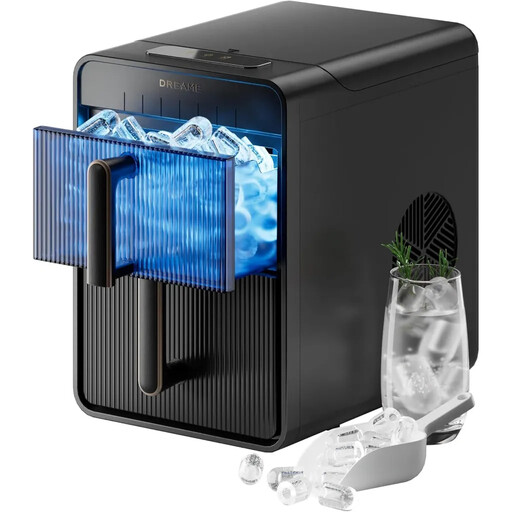 No image available
A possible choice if you want to prepare ice for guests and choose between two types of bullet ice.
The product title lists a daily output of 12 kg, a 900-ml water tank, an ice-making cycle of 6–8 minutes and a self-cleaning function. The smaller tank may need refilling more often when serving drinks for a longer period.
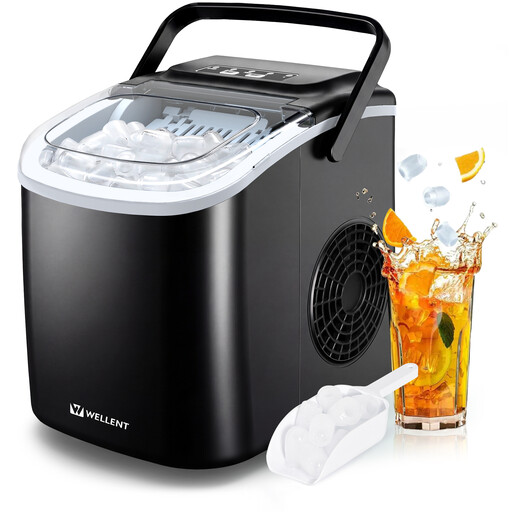 No image available
An option if you’re looking for an ice maker with a carry handle and self-cleaning function.
The product title lists a daily output of 12 kg and a self-cleaning function. Check the tank capacity and dimensions to make sure it suits the space you have in mind.
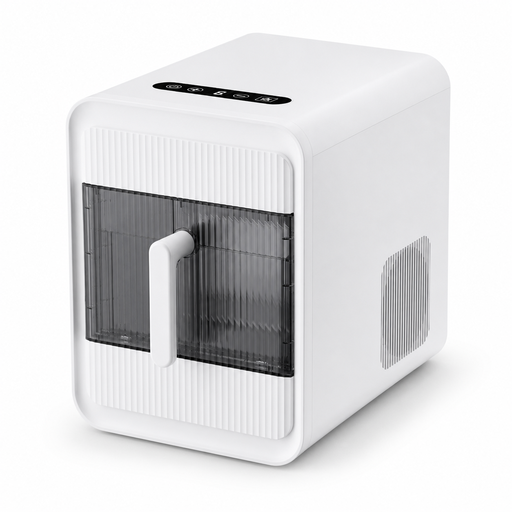 No image available
A possible choice if you’re considering a removable ice basket and a self-cleaning function.
The product title lists a 1.5-l water tank, a touch-control panel and a removable ice drawer. Check that the stated model will fit your available space.
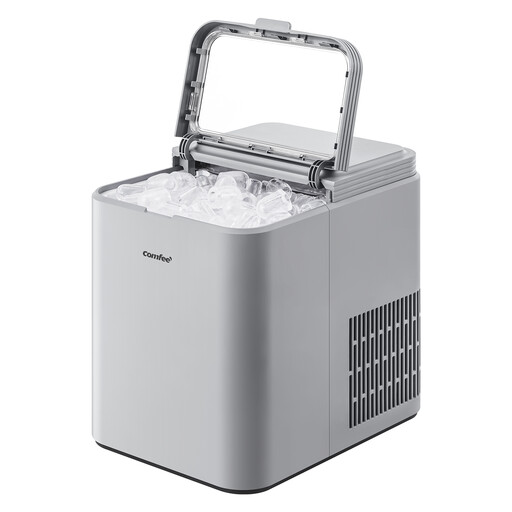 No image available
An option if you’re considering bullet ice in two sizes and a removable ice basket.
The product title lists eight ice cubes in six minutes, a daily output of 12 kg, a 1.3-l water tank and a self-cleaning function. The time given refers to the stated cycle, not the total supply of ice for your guests.
 No image available
A possible choice if a short stated cycle time and two ice sizes matter to you.
The product title lists nine bullet ice cubes in six minutes, a daily output of 12.02 kg and a self-cleaning function. Check how the machine’s dimensions will fit on your worktop.
Compare the time to the first batch with the time you have available, and the hourly production rate with the amount of ice you need. CASO states that the IceChef Compact takes around 6–13 minutes to make its first batch and produces around 500 g per hour. These are manufacturer figures, not the amount available after the first batch.
As well as the machine’s dimensions, check the model-specific guidance on ventilation, opening, power connection and cleaning. CASO lists a removable ice basket and a self-cleaning function for the IceChef Compact. Follow the manual for the specific machine you buy for any additional cleaning steps.
In Germany, consumers who buy new goods that are faulty can generally exercise their statutory warranty rights against the seller for two years from the date of delivery. A manufacturer’s guarantee is separate and is subject to its own terms and conditions.
Look for the CE marking, clear product identification, and operating and safety instructions in German. Germany’s Federal Network Agency lists these points in its market surveillance guidance. The CE marking is based on a declaration of conformity for which the manufacturer is responsible; it is not an independent quality mark.
In Germany, waste electrical appliances are collected separately and can generally be taken to municipal collection points free of charge. Whether a retailer must accept an old appliance free of charge depends on the conditions that apply.