Hosts who need a steady supply of drinks
If you’re serving drinks over several hours, what matters is how quickly fresh ice is ready after some has been used.


If ice is being taken throughout a family meal, look at hourly output and basket capacity together rather than focusing only on the time it takes to make the first batch. Gastroback lists separate figures for daily production and a 1.5 kg ice basket for the Bartender Pro 41143. If you want ice ready at the start, you’ll also need to allow freezer space to make some in advance. Manufacturer specifications don’t guarantee a set amount of ice for a particular number of guests.
If you’re serving drinks over several hours, what matters is how quickly fresh ice is ready after some has been used.
If you want ice ready for the meal, consider the basket size and allow extra freezer space for portions made in advance.
If the machine needs to fit on a small worktop, its dimensions, ease of dispensing and cleaning are important factors alongside its stated production capacity.
First decide whether you need ice continuously throughout the meal or want it ready from the start. Then check the space available and how the machine is maintained.
| What matters | What to check before buying | Who is it important to? |
|---|---|---|
| A steady supply | Compare hourly output, cycle time, tank capacity and dimensions separately. | If drinks are being topped up throughout the meal, I want to know how quickly fresh ice is ready after some has been used. Around 36% of consumers prioritise a steady supply. |
| Ice ready to serve | Check the basket capacity against the amount you want ready at the start; don’t assume daily production means all that ice is available at once. | When guests arrive, I want a larger amount of ice ready without having to rely on the machine’s ongoing production. Around 29% of consumers prioritise having an initial reserve. |
| Worktop space | Check the dimensions and weight of the casing, as well as the set-up instructions for the specific model. | If worktop space is limited, I need a machine that will fit somewhere accessible. Around 21% of consumers focus mainly on the space available. |
| Cleaning | Compare the drainage outlet, removable basket, cleaning function and instructions. | After the meal, I want to know how to clean the tank, basket and water-carrying parts. Around 14% of consumers put clear cleaning instructions first. |
Daily production and the amount of ice available in the basket at any one time are two different figures. For the Bartender Pro 41143, Gastroback lists up to 15 kg per day and an ice basket with a capacity of 1.5 kg.
Plan the amount you want ready at the start of your gathering separately from the machine’s ongoing production.
Making portions in advance takes extra freezer space and preparation time.
A cycle time without the weight of the ice can’t be directly compared with grams per hour. The number of cubes is also difficult to compare without details of their size and weight.
Compare figures only when they use the same time unit and quantity. Consider the first batch separately from ongoing production.
The Bartender Pro is listed in a test under the reference 441143, while Gastroback gives the product number 41143 on its product page. A similar name alone doesn’t confirm that the full model reference is identical.
Before buying, check the full model number and key features against the specific product listing.
The details below apply to the models mentioned and the specifications provided by their respective manufacturers. They don’t necessarily apply to every appliance made by each brand.
The models mentioned have different strengths: the IceMaster Pro 3301 focuses on ongoing production, while the Clear Ice Advanced 3403 lets you choose clear ice cubes.
The Bartender Pro 41143 may suit you if you’ll be taking ice from the machine throughout your gathering and its basket size and footprint meet your needs.
The Freeze 48935 and Erik 48925 have different tank and basket capacities for making ice in batches.
This selection includes countertop ice makers for serving ice with a meal, as well as models with extra features or portable power options. The stated production figures don’t replace planning for a larger reserve at the start of your gathering.
 No image available
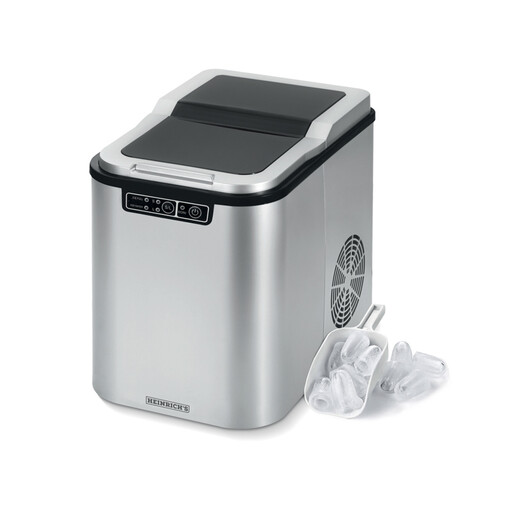
If you need ice in batches throughout a meal, the stated production figures and 2.2-litre water tank are worth considering.
The listing states that it makes 9 ice cubes in 9 minutes and can produce up to 12 kg in 24 hours. Two ice cube sizes and a self-cleaning function are also listed.
 No image available
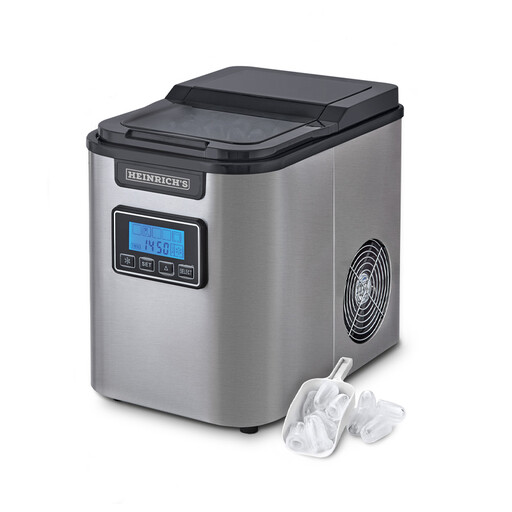
If you want to choose from different ice cube sizes for different drinks, this model offers three options.
It’s listed as making 9 ice cubes in 9 minutes, with production of up to 12 kg in 24 hours, a 2.2-litre water tank and a self-cleaning function.
 No image available
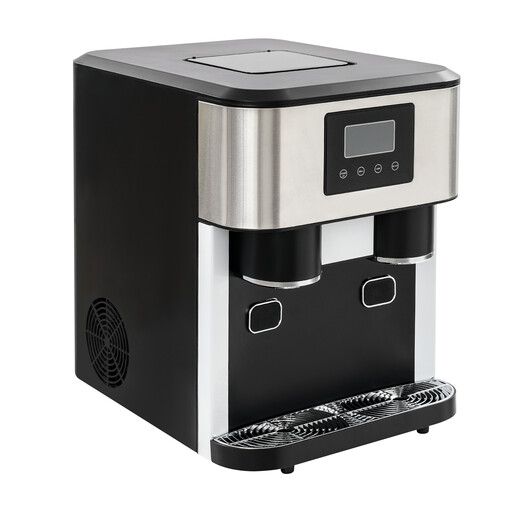
If you need crushed ice and chilled water as well as ice cubes, this model combines all three functions.
The description lists 16 bullet-shaped ice cubes per batch and a cycle time of 7–9 minutes at room temperatures below 77 °F. According to the description, you can fill it manually or connect it to a water supply.
 No image available
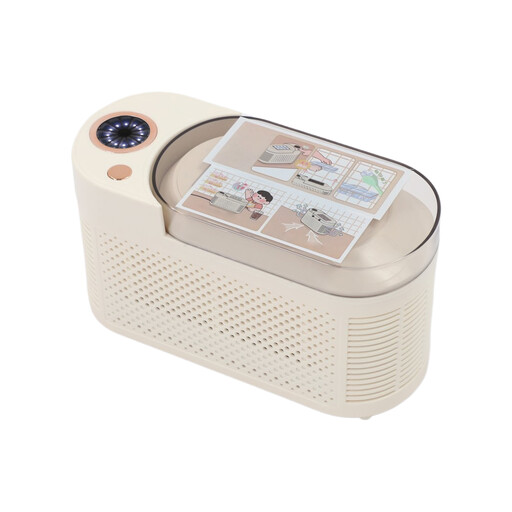
If you want to use the machine in a car or while travelling, the listed power options are important when choosing a model.
The listing gives 8 ice cubes per cycle, a 100–230 V AC adapter or a 12 V car cable, and an operating noise level of 60 dB.
 No image available
If you want to use a choice of pre-set cycles, this model has eight programmes.
Self-cleaning, mixing and restart functions are also listed. The title suggests it can be used on a worktop and in family homes, motorhomes, lorries and cars.
First decide whether you mainly need ice ready at the start or throughout the meal. Then compare the amount available in the basket at any one time with the stated hourly output. Kilograms per day and the time to make the first batch answer different questions. These figures alone can’t tell you how many guests a machine will serve.
Before using the machine, read the instructions for your specific model and follow the guidance on set-up, water and cleaning. Clean accessible parts as directed and check how to drain any remaining water. Unold lists a drain and a water-circuit rinse for the Freeze 48935. The German Federal Institute for Risk Assessment provides general guidance on food hygiene and cleaning, but doesn’t approve any specific appliance.
No. If you buy as a consumer in Germany, you have statutory rights against the seller. A guarantee is an additional, voluntary service subject to its own terms and conditions. Verbraucherzentrale explains that, in the event of a fault, you can generally first ask for the issue to be put right by repair or replacement.
Electrical household appliances running on 220–240 V AC fall within the scope of low-voltage rules for equipment with a rated voltage of 50 to 1,000 V AC. EUR-Lex describes this voltage range. According to information on the German legislation website, the manufacturer must draw up an EU declaration of conformity and apply the CE marking following the relevant conformity assessment procedure. CE marking doesn’t mean that an appliance has performed well in practical testing.
An old ice maker shouldn’t go in your household rubbish. It should be taken to a separate collection point for electrical waste. The German Environment Agency lists local collection points, which generally accept old appliances free of charge. Retailers have take-back obligations in certain circumstances.