Hosts with limited worktop space
If you have little free worktop space, check the appliance dimensions and the clearance required by the manufacturer together. For example, KLAMER specifies a minimum clearance of 20 cm around the Kompakt.


A countertop ice maker can work in a small kitchen if there’s room for both the appliance and the clearance specified by the manufacturer. A more compact model may need refilling more often, though. When you’re entertaining, hourly or per-cycle output and basket capacity are more useful than daily output alone. If you only host occasionally and can plan ahead, it may be more practical to make ice in your freezer than to find space for another appliance.
If you have little free worktop space, check the appliance dimensions and the clearance required by the manufacturer together. For example, KLAMER specifies a minimum clearance of 20 cm around the Kompakt.
If you want to make more ice just before or during a get-together, compare the hourly output or cycle time and the basket capacity. A daily output figure doesn’t tell you how much ice will be ready at a particular time.
If you only use your ice maker occasionally, check how to drain any leftover water and clean the basket and water circuit. A rinse function doesn’t necessarily replace every cleaning step; the consumer advice centre also recommends keeping kitchen utensils hygienically clean.
First, measure the available space, including the ventilation clearance specified for the model. Then compare ice output and basket capacity with when you plan to serve your drinks.
| Buying consideration | What to look for | Who is this important to? |
|---|---|---|
| Worktop space and ventilation | Check the appliance dimensions, room to open it and the installation requirements for the specific model. For the KLAMER Kompakt, the manufacturer specifies a minimum clearance of 20 cm around the appliance. | If my worktop space is limited, the appliance needs to fit along with the required clearance. This is likely to matter most to around 36% of consumers. |
| Having ice ready in time | Compare hourly output or cycle time and basket capacity with when you plan to serve your drinks. CASO gives a nominal output of 500 g/h for both the IceChef Compact and IceMaster Pro. | If friends are arriving soon, what matters to me is whether ice will be ready in time and more can be made. Around 29% of consumers are likely to prioritise ice output above all else. |
| Draining and cleaning | Compare the drain for leftover water, removable basket and cleaning instructions for the specific model. Unold lists a drain and rinse function for the Freeze 48935. | If I only use the appliance occasionally, I want to be able to drain and clean it easily after guests have left. Maintenance is likely to be the main concern for around 21% of consumers. |
| The right ice shape | Check which ice shape and, where applicable, which sizes the specific model offers. Gastroback describes the Bartender Pro as making bullet-shaped ice in two sizes. | If I prefer a particular shape of ice for my drinks, that matters more to me than extra features. Around 14% of consumers are likely to put ice shape first. |
Figures for output per day, output per hour and basket capacity all describe different things. A high daily output doesn’t mean that amount of ice will be in the appliance when your guests arrive.
Compare hourly or per-cycle output with basket capacity, and plan when to start making ice.
Manufacturers may require extra clearance around the appliance. For the KLAMER Kompakt, the manufacturer specifies at least 20 cm on all sides.
Check the instructions for the specific model and measure the space, including the clearance required.
A function that rinses the water circuit doesn’t mean the basket and other parts don’t need separate cleaning.
Check the drain, whether the basket can be removed and the care instructions, then clean the appliance as directed by the manufacturer.
The IceChef Compact 3401 and IceMaster Pro 3301 differ in tank capacity and appliance size.
The Freeze 48935 combines features for draining and maintenance with a comparatively large tank and ice basket.
The Bartender Pro 41143 is an option if a larger tank and ice basket matter more to you than a compact appliance.
The Kompakt version, with its 1 l tank, is designed with a smaller appliance body.
According to the product details, the EWM-100 combines a removable basket with a choice of ice sizes.
This selection of countertop ice makers on Joybuy includes options for entertaining, from more compact appliances to models with a larger tank or basket.
 No image available
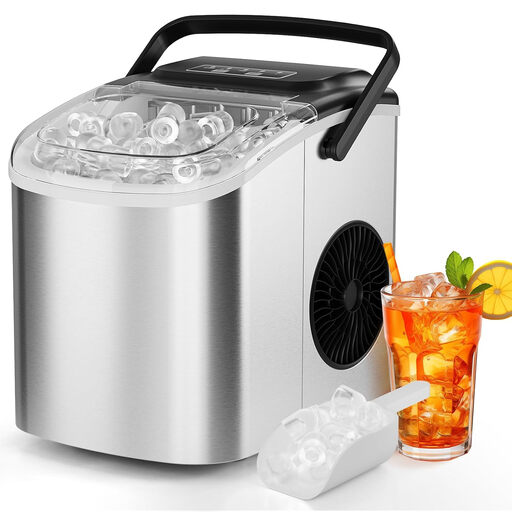
For entertaining, if you’d like to choose between two ice sizes.
The tank holds 1.2 l; a self-cleaning function is listed.
 No image available
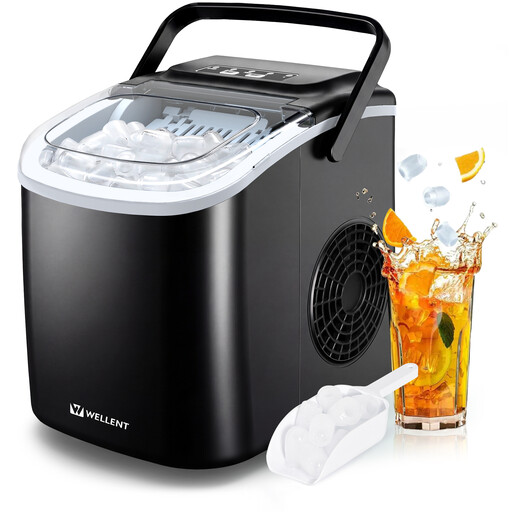
For getting ready in advance, if a larger tank is important to you.
The product title lists 9 ice cubes in 9 minutes, up to 12 kg in 24 hours, two ice sizes and a self-cleaning function. The stated dimensions are 36.0 × 24.9 × 32.7 cm.
 No image available
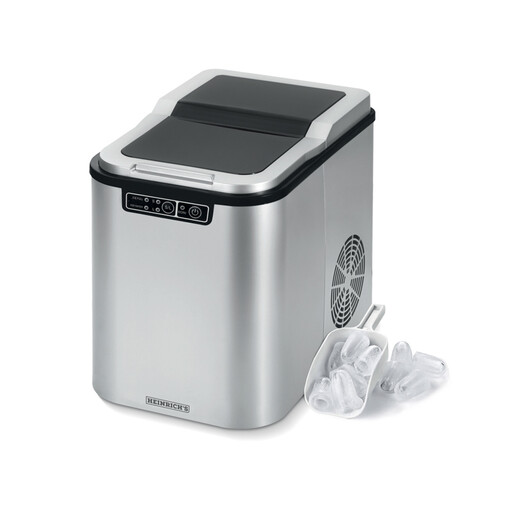
For limited worktop space, if a small tank is enough for your needs.
The first batch of ice is listed as ready after 6 minutes; daily output is up to 12 kg. The ice basket holds 0.45 kg. The dimensions are 20.2 × 28.1 × 26.4 cm.
 No image available
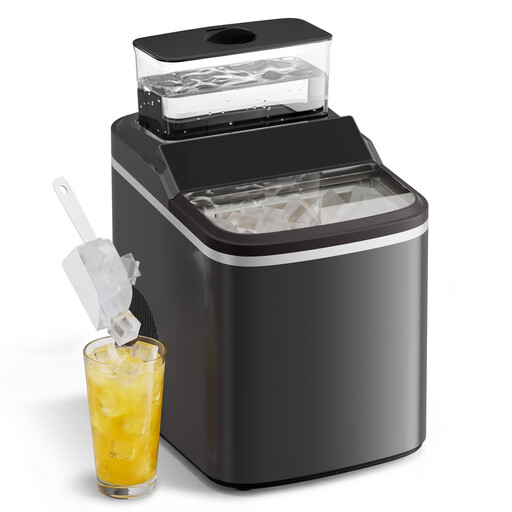
For serving several drinks in a row, if a larger ice basket is important to you.
The external tank holds 1.5 l and the ice basket 0.75 kg. The product title lists 12 ice cubes per cycle in 8–15 minutes and up to 18 kg in 24 hours.
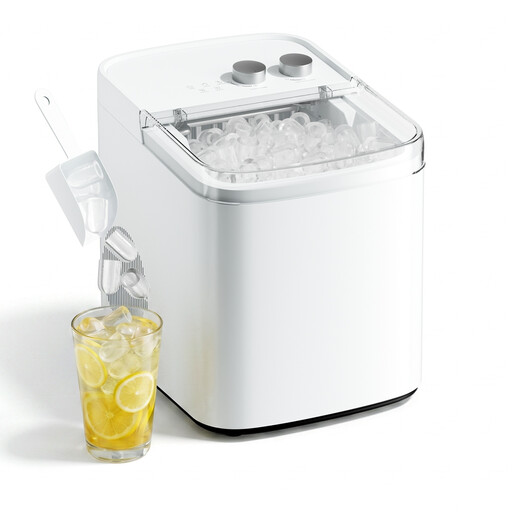 No image available
For entertaining, if you’d like round ice cubes and a manageable basket size.
The product title lists 9 ice cubes in 6–10 minutes, up to 14 kg in 24 hours and two ice sizes. The tank holds 1.2 l and the basket 0.5 kg.
Don’t rely on the daily output figure as if it were ice ready to use straight away. Compare the hourly or per-cycle output and basket capacity, and start making ice in good time for your guests; CASO gives a nominal output of 500 g per hour for two specific models.
No, treat it as just one part of looking after the appliance. Drain and clean it according to the manufacturer’s instructions; the consumer advice centre generally recommends keeping kitchen utensils hygienically clean.
When you buy from a retailer, your statutory rights for faulty goods apply against the seller and are separate from any voluntary guarantee. Don’t put an electrical appliance that’s no longer in use in your household rubbish; the Federal Environment Agency lists local collection points and suitable options for returning items to retailers.
Electric ice makers covered by the relevant harmonised EU regulations must carry the required CE marking before they can be sold. The mark alone isn’t independent certification; check the information for the specific model.