Hosts serving guests at several mealtimes
If you want to make ice before your guests arrive and serve it later, compare basket capacity and freezer space separately from daily output.


If guests are arriving at different mealtimes, set aside pre-made ice cubes in the freezer: a countertop machine’s daily output doesn’t tell you how much ice is in the basket at any one time. For a steady supply, check the basket capacity, cycle time, water tank and space required together. A larger machine will take up more room.
If you want to make ice before your guests arrive and serve it later, compare basket capacity and freezer space separately from daily output.
For repeated batches while guests are there, check the cycle time, tank capacity and indicators for a full basket or empty tank.
If you have limited worktop space, check the machine’s dimensions as well as the set-up and ventilation guidance for the specific model.
When meals are served at different times, it’s worth planning your supply for later meals first, then working out how much top-up ice you’ll need. Basket capacity and daily output refer to different quantities.
| What you need | What to look for when buying | Who will find this especially useful |
|---|---|---|
| Ice for later meals | Check the basket capacity in g or kg and make sure you have enough freezer space. | If I want to save ice for a later meal, I check the basket capacity and freezer space separately. Around 36% of consumers put setting aside ice for later mealtimes first. |
| More ice while guests are there | Compare the cycle time and number of cubes per cycle, as well as tank capacity and fill-level indicators. | When serving several rounds of drinks, I want to know when the next batch will be ready and whether I’ll need to refill the tank. Around 29% of consumers prioritise making fresh batches while entertaining. |
| Water and cleaning | Check how to fill the machine, how to drain any remaining water and the cleaning steps for the specific model. | If the machine will be used repeatedly for drinks, I want to plan water changes and maintenance into my routine. Around 21% of consumers pay particular attention to water handling and cleaning. |
| Space and set-up | Consider the machine’s dimensions, the available worktop space and the model-specific ventilation clearances. | With limited worktop space, I need to know whether the machine will fit in the intended spot with enough clearance around it. Around 14% of consumers prioritise the space required and set-up. |
Daily output describes how much ice the machine can make, not how much is in the basket at a given time. For example, Gastroback lists the Bartender Pro as having an ice container with a capacity of 1.5 kg.
For meals served at different times, check the basket capacity first and plan to store pre-made batches separately.
You may need freezer space for ice for later meals. Alternatively, you’ll need to empty and refill the basket repeatedly.
Cycle times vary by model. A full basket or an empty tank can also affect the ongoing supply of ice.
Check the cycle time, basket and tank together rather than comparing only the time it takes to make the first batch.
If you need more ice later, you may have to allow extra time for waiting and operating the machine.
Unold describes the Freeze’s function as rinsing the water circuit; this doesn’t necessarily replace all the usual cleaning steps.
Read the cleaning instructions for the specific model and plan water changes and maintenance accordingly.
Following the cleaning instructions takes time, particularly if you use the machine repeatedly.
For its 120-watt model, KLAMER requires at least 20 cm of clearance around the machine.
Check the dimensions and ventilation guidance for your chosen model in the intended location. Don’t assume KLAMER’s guidance applies to other machines.
The Freeze 48935 could suit smaller batches and a more compact worktop.
The Bartender Pro 41143 is designed for serving drinks over a longer period, provided you have enough space for it.
The IceMaster Pro 3301 is a countertop machine for making repeated batches, with a choice of two cube sizes.
According to the manufacturer, the 120-watt ice maker offers two cube sizes and a timer.
The EWM-100 is a countertop ice maker that could be suitable for smaller batches.
This selection includes countertop ice makers for preparing batches in advance and making more ice as you entertain.
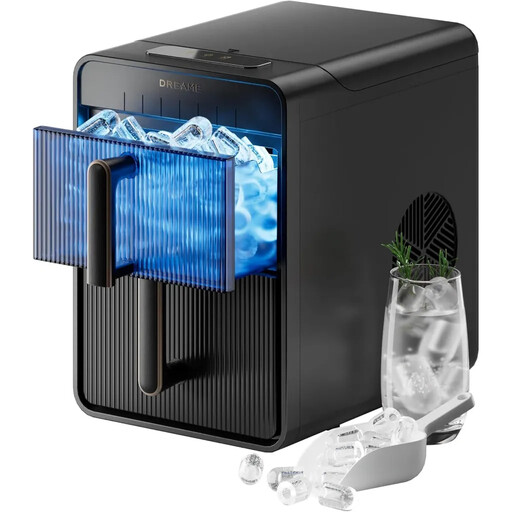 No image available
For batches made in advance and a steady supply; the product details list an ice container with a capacity of 0.8 kg.
Features a 900 ml water tank and, according to the product name, daily output of up to 12 kg. Two ice sizes and a self-cleaning programme are also listed.
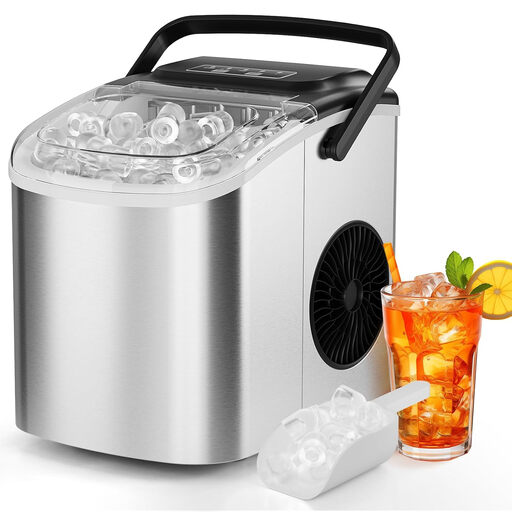 No image available
For making repeated batches while guests are there; the product details list 9 cubes per cycle in 6–12 minutes.
Features two ice sizes, a self-cleaning programme and indicators for a full basket and low water level.
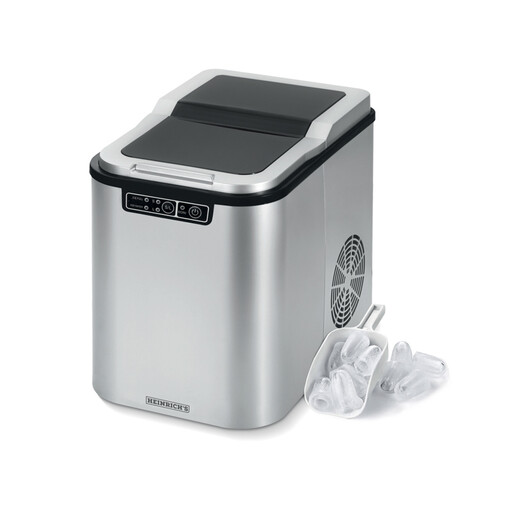 No image available
For making repeated batches: the product name lists 9 cubes every 9 minutes and a 2.2-litre water tank.
The product details list up to 12 kg of ice cubes in 24 hours, two ice sizes and indicators for the basket and water levels.
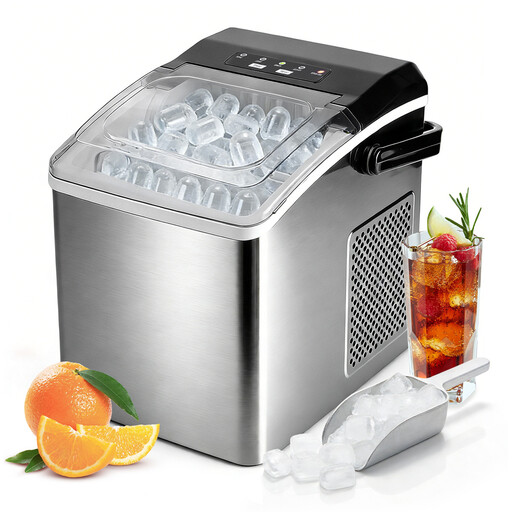 No image available
For several mealtimes when you need to make fresh batches repeatedly; the product details list 9 cubes per cycle in around 6 minutes.
Features a 1.3-litre water tank, two ice sizes and an output of up to 12 kg of ice in 24 hours.
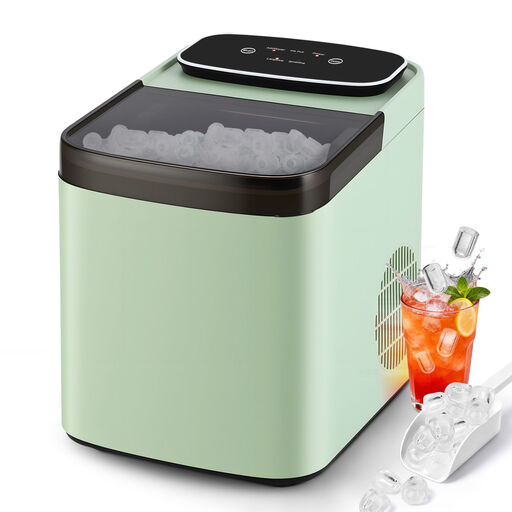 No image available
For smaller batches made in advance: the product details list an ice container with a capacity of 0.5 kg and a 1.3-litre water tank.
Features 9 cubes per cycle in around 6 minutes, two ice sizes and indicators for a full container or empty tank.
Plan how much ice you’ll need for each mealtime, then check basket capacity and the ongoing supply separately. For the Gastroback Bartender Pro, the manufacturer lists a container with a capacity of 1.5 kg and output of up to 15 kg a day. These are two different figures.
According to their manufacturers, the Caso, Unold and Gastroback models mentioned have refillable water tanks. Check this feature for the specific model you’re considering; it shouldn’t be taken as a claim about all ice makers.
Use drinking water and follow the machine’s cleaning instructions. The German Environment Agency advises against using tap water for food and drinks if it has been standing in the drinking water system for more than four hours. The Unold Freeze function is described as rinsing the water circuit.
If a new product is faulty, you can exercise your statutory rights against the seller. These are separate from any voluntary guarantee. The Verbraucherzentrale (German consumer advice centre) states that these rights generally apply for two years from the date the product is handed over or received.
No. The German Federal Ministry for the Environment explains that waste electrical equipment must be taken separately to authorised collection points. Whether retailers are required to take it back depends on the legal conditions.