Hosts short on worktop space
If you want to keep your only hob clear, you’ll need a suitable spot on the worktop and enough room to access the machine. CASO Design, Unold and KLAMER provide model-specific dimensions to help you plan.


If you regularly serve drinks to several guests, start by checking the space needed to place and use the machine. Then compare the time to the first batch, along with the tank and basket capacities. A larger tank can save you from refilling, but may take up more space, depending on the model. For occasional small gatherings, an ice cube tray prepared in advance may be enough. Daily output doesn’t tell you how much ice is immediately available in the basket.
If you want to keep your only hob clear, you’ll need a suitable spot on the worktop and enough room to access the machine. CASO Design, Unold and KLAMER provide model-specific dimensions to help you plan.
If you need to serve the first drinks soon, the time per batch is more useful than a daily output figure on its own. F.A.Z. Kaufkompass and CASO Design’s manufacturer information give timings for specific machines and models.
If you’ll need more ice throughout your guests’ visit, consider the tank, ice basket and refilling involved, as well as the space required. Gastroback and KLAMER provide model-specific capacities and dimensions.
If you only have one hob, first check that the machine will fit on your worktop and that you can use it there. Then compare cycle time, storage capacity and care requirements to find the right balance.
| Buying criterion | What to check | Who will find this particularly important? |
|---|---|---|
| Space and access | Check the machine’s dimensions and allow room for the lid, tank, basket and drain at the chosen spot. KLAMER lists its compact model as 29 × 22 × 28 cm. | If I have limited worktop space, I want to be able to use the machine without blocking my only hob. Around 29% of consumers prioritise the space needed and access to the machine. |
| Time to the first batch | Compare the number of minutes and cubes per cycle for the specific model. F.A.Z. Kaufkompass measured 6 minutes and 22 seconds per batch for the Arendo 2-litre machine it tested; Gastroback says the Bartender Pro 41143 makes nine cubes in 7–15 minutes. | If guests arrive at short notice, I want to serve the first drinks without waiting too long for ice. Around 29% of consumers prioritise the time to the first batch. |
| Keeping the ice coming during your guests’ visit | Consider the tank and ice basket separately, and factor in the cycle time. Gastroback lists a 2.8-l tank, a 1.5-kg ice basket and up to 15 kg per day for the Bartender Pro 41143. The daily figure doesn’t mean that amount is immediately available. | If several drinks are needed over a longer period, I want to know how often I’ll need to refill the water and take out the ice. Around 24% of consumers focus on ongoing supply. |
| Cleaning and residual water | Check the drain and cleaning instructions for the specific machine. Unold lists a drain and a rinse cycle for the water circuit on the Freeze 48935; the Verbraucherzentrale notes the potential hygiene issues of water left standing for a long time. | If I only use the machine occasionally, I want to be able to empty the remaining water easily after my guests have left and follow the care instructions. Around 18% of consumers prioritise cleaning and residual water. |
For the Gastroback Bartender Pro 41143, the manufacturer lists up to 15 kg per day, a 1.5-kg ice basket and batches taking 7–15 minutes. The daily figure alone doesn’t show how much ice will be ready for your first round.
To work out when more ice will be ready, compare the number of cubes and the time per batch. The tank and ice basket also matter if you’re serving more drinks.
Depending on how your gathering goes, you may need to allow time for batches prepared in advance or made during the visit.
The dimensions vary between models: the KLAMER compact model measures 29 × 22 × 28 cm, while the Gastroback Bartender Pro 41143 is approximately 400 × 240 × 430 mm. You’ll also need space to access the machine.
Before choosing, check the full area needed to place and use it, including access to the lid, tank, basket and drain.
Unold describes a rinse cycle for the water circuit on the Freeze 48935. This doesn’t automatically replace the rest of the machine’s care; according to the Verbraucherzentrale, water left standing in containers for a long time can become contaminated with germs.
Check the drain and cleaning instructions for the specific model, and empty any remaining water as directed.
Worth considering if you’re comparing machines with different ice cube sizes or a short wait for the first batch.
The IceMaster Pro 3301 has manufacturer information on dimensions, tank capacity and ice-making time to help you plan where to put it.
The Bartender Pro 41143 is an option if you’re weighing up tank and ice basket capacity for longer drinks gatherings.
The Freeze 48935 is worth considering if you want to factor a residual-water drain and water circuit rinse into your cleaning routine.
The manufacturer’s information on a compact model and a 120-watt model can help you compare footprint and tank size.
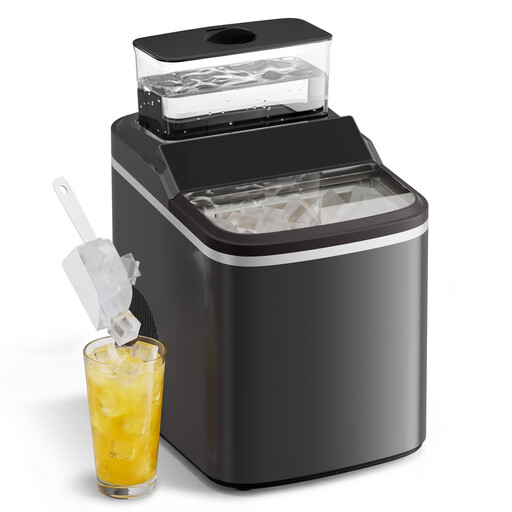
The Joybuy models below are countertop ice makers for entertaining. Compare their footprint, first batches and storage capacities with the space you have available in your kitchen.
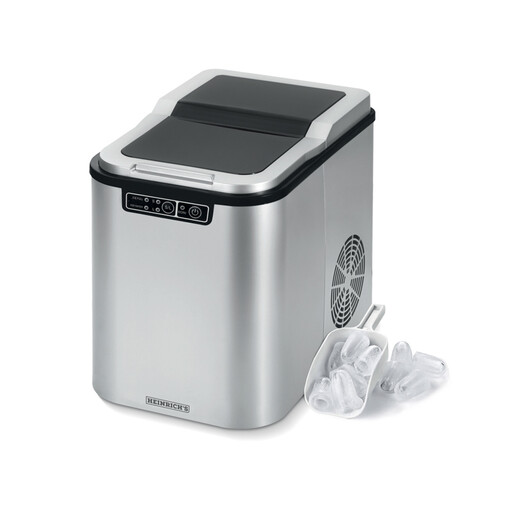 No image available
If you’re planning a first batch and more ice later for your guests, cycle and tank details are useful points of comparison.
The product title lists nine ice cubes in nine minutes, a 2.2-l water tank, two ice cube sizes and a self-cleaning function. The stated output of up to 12 kg in 24 hours is a daily figure, not the amount immediately available.
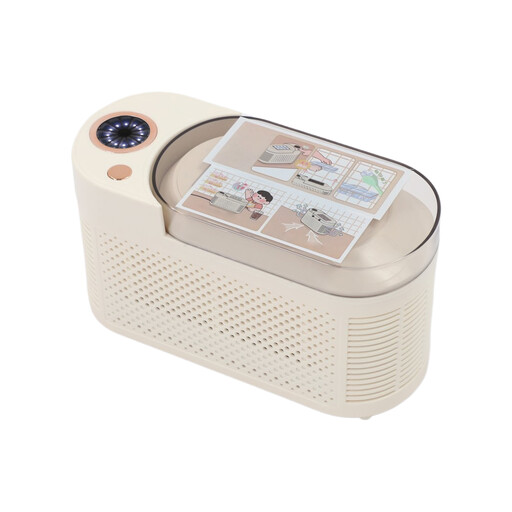 No image available
If you’re planning a specific number of cubes for the first drinks, the number made per cycle is a useful point of comparison.
The product title lists 120 W and eight ice cubes per cycle. The description lists two power options for use indoors and on the go.
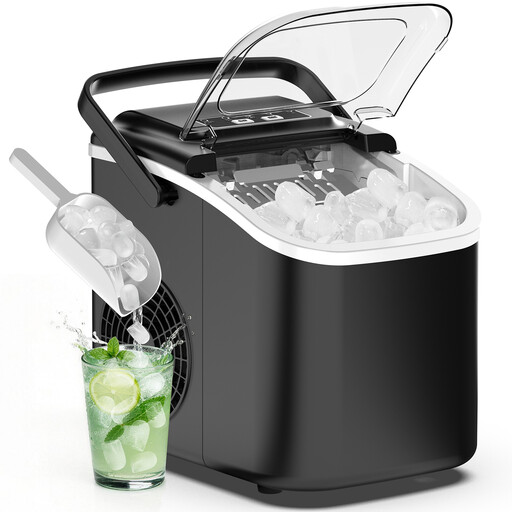 No image available
The stated time per batch is a useful point of comparison when planning your first round of drinks.
The product description lists eight ice cubes in six minutes, two ice sizes and up to 12 kg in 24 hours. The self-cleaning function doesn’t automatically replace the rest of the care routine in the instructions.
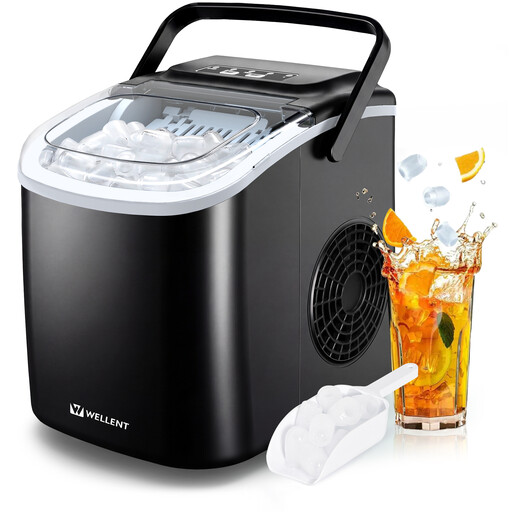 No image available
If space is limited, compare the stated dimensions with the room you have available, and take the basket capacity into account too.
The description lists dimensions of 20.2 × 28.1 × 26.4 cm, a first batch after six minutes, a 0.8-l water tank and a 0.45-kg ice basket. The stated output of 12 kg in 24 hours is a daily figure.
 No image available
If you’ll need ice repeatedly while your guests are visiting, details on batch size, tank and ice basket can help you plan.
The product title lists twelve ice cubes per cycle in 8–15 minutes and up to 18 kg in 24 hours. The description lists an external 1.5-l water tank and a 0.75-kg ice basket; the daily figure isn’t the amount in the basket.
Compare the number of cubes and minutes per batch, not just the daily output in kilograms. F.A.Z. Kaufkompass measured 6 minutes and 22 seconds per batch for the Arendo 2-litre machine it tested; this test result applies to that specific machine.
Use drinking water and follow the filling instructions for the specific machine. The German Federal Office of Consumer Protection and Food Safety describes German drinking water as being subject to strict controls. From a hygiene perspective, the Verbraucherzentrale generally considered an additional water filter unnecessary.
Empty and clean the machine according to its instructions. For the Freeze 48935, Unold lists a residual-water drain and a rinse cycle for the water circuit; these features apply to that specific model. The Verbraucherzentrale notes that drinking water left standing in containers for a long time can become contaminated with germs.
If a product is faulty, statutory rights against the seller are separate from any voluntary guarantee. In Germany, consumers generally have a 14-day right to cancel an online purchase; the relevant legal requirements and exceptions apply. The Verbraucherzentrale explains both rights in its information on statutory rights and cancellations.
For electrical appliances covered by EU rules requiring CE marking, the manufacturer uses the marking to declare that the relevant requirements have been met; it isn’t an independent quality mark. Parts intended to come into contact with water or ice are subject to the relevant EU requirements for food contact materials. The German Environment Agency notes that end-of-life electrical appliances must be collected separately.