Advance planners
If you want ice ready when the party starts, it’s important to distinguish production capacity from actual storage. MEDION points out that the machine’s basket can’t hold a full day’s production.


If you need ice repeatedly during a summer party, a countertop ice maker is most useful when a steady supply matters more than having a large batch ready at the start. If you want ice ready when the party begins, make it in advance and leave room to transfer it to the freezer: the kg/24 h figure doesn’t tell you how much ice is available at once. For the occasional drink, ice cube trays may be enough, as the F.A.Z. Kaufkompass points out.
If you want ice ready when the party starts, it’s important to distinguish production capacity from actual storage. MEDION points out that the machine’s basket can’t hold a full day’s production.
If you need small amounts for individual drinks throughout the party, the production cycle is a useful point of comparison. F.A.Z. Kaufkompass and CASO list cycle times for specific appliances.
If worktop space is limited, compare the appliance’s dimensions with the space you have and think about how often you want to refill the water. CASO publishes the dimensions and tank capacities of specific models.
For a summer party, your choice of ice maker mainly depends on whether you prioritise having ice ready in advance, a steady supply, a compact footprint or easy cleaning.
| Buying criterion | What to look for | Who it matters most to |
|---|---|---|
| Having ice ready at the start | Check the basket capacity and full-basket indicator. If you’re making ice in advance, leave room in the freezer too. | If I want ice ready to hand as soon as the party starts, the actual amount stored matters more than the daily output. Around 36% of consumers put the immediately available supply first. |
| A steady supply | Compare the cycle time and number of ice cubes per cycle for the specific model. | For individual drinks during the party, I want to know when the next batch will be ready. Around 29% of consumers prioritise a quick, repeatable supply. |
| Counter space and refilling | Check the width, height and depth against the space available, and match the tank capacity to how often you want to refill it. | If my worktop is short on space, I want to choose an appliance that fits and avoid frequent refills. Around 21% of consumers prioritise a compact footprint. |
| Cleaning and ease of use | Check the cleaning instructions, whether the basket is removable and whether the specific model has a self-cleaning function. | After the party, I want to be able to clean the parts that come into contact with water easily, following the instructions. Around 14% of consumers prioritise easy cleaning. |
A kg/24 h figure describes how much ice the machine can produce over a day, not how much is ready in the appliance at any one time. MEDION points out that the machine can’t store a full day’s production.
Check the basket capacity, make ice in advance and, if needed, transfer it to the freezer.
For the occasional chilled drink, ice cube trays may be enough, as F.A.Z. Kaufkompass points out.
Think about whether you need a steady supply during the party or can prepare the amount you need in advance and keep it in the freezer.
Before buying the Klarstein IceAge with article number 10033478, check the tank capacity for the exact variant, as the published figures differ.
Check the article number and the details that matter to you against the documentation for the specific listing.
The Arendo ice maker, listed with a 2-litre capacity, is an option for a steady supply.
The documented IceChef Compact and IceMaster Pro models differ in tank capacity and dimensions, among other features.
The LIFE MD 100117 is a documented model with a water tank, two ice sizes and a self-cleaning function.
The IceAge range includes appliances with adjustable ice sizes.
The following Joybuy models are designed to keep ice coming throughout the party. Production cycles and tank capacities don’t automatically tell you how much ice the appliance can store at once.
 No image available
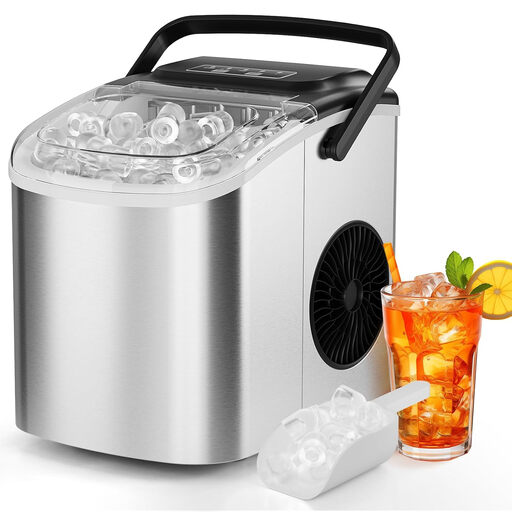
For a steady supply in small batches: the title states that it makes 9 ice cubes in 6 minutes.
The description lists two ice sizes, a self-cleaning function, a removable basket and a scoop.
 No image available
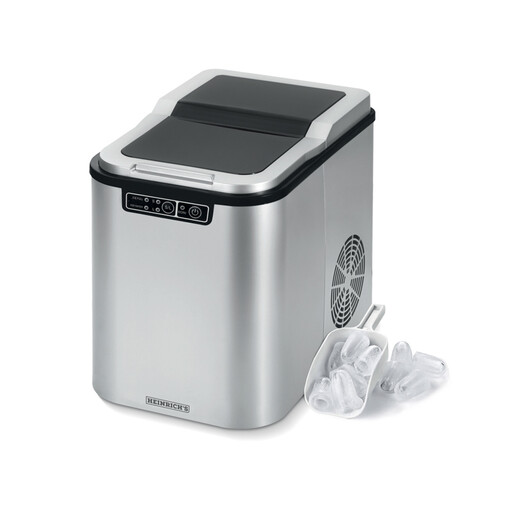
If a larger water tank suits your routine, the product title lists a capacity of 2.2 l.
The title states that it makes 9 ice cubes every 9 minutes, with two ice sizes, a self-cleaning function and a production capacity of 12 kg in 24 hours. Daily output isn’t a measure of how much ice is available at once. The description lists dimensions of 36.0 × 24.9 × 32.7 cm, plus alerts for a full basket or empty tank.
 No image available
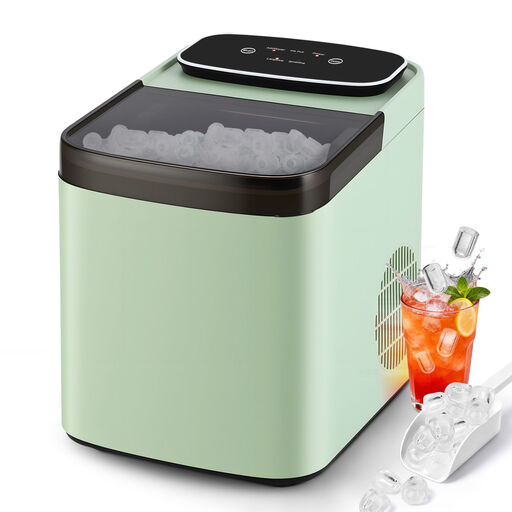
For serving drinks repeatedly, the description states that it makes 9 cubes per cycle, with each cycle taking around 6 minutes.
It also lists a 1.3-litre water tank, a basket with a capacity of 0.5 kg and dimensions of 23.5 × 30.5 × 30.2 cm. The description mentions an empty-tank alert and an automatic stop when the basket is full.
 No image available
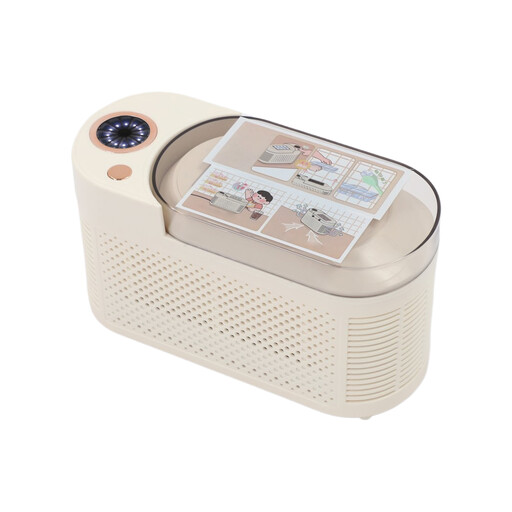
If you’re looking for an appliance to make individual top-up batches, the description states that it makes 8 ice cubes per cycle.
The title and description list use at home and on the go. The description also mentions two power options, without specifying them here.
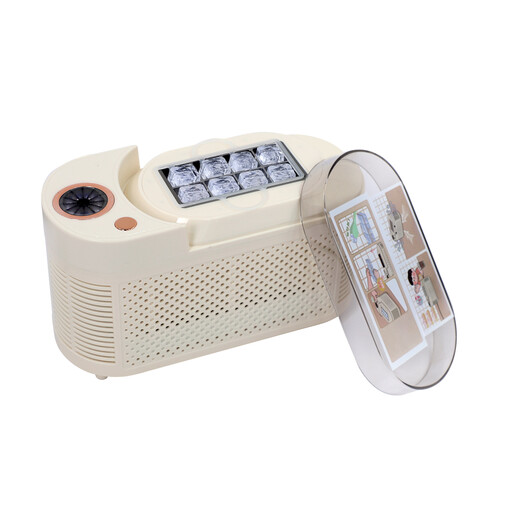 No image available
For a compact option, the description states that it makes 8 square ice cubes per cycle.
According to the description, the first batch is ready after at least 15 minutes. Suggested uses include the home kitchen, motorhomes and travel.
No. 12 kg/24 h is a measure of production over a day, not how much ice the machine’s basket can hold. Make ice in advance and transfer it to the freezer if needed; MEDION points out that the machine can’t store a full day’s production.
Check the dimensions of the specific model against the space you have, and follow its operating and cleaning instructions. Use clean, hygienic water and remember that a self-cleaning function doesn’t replace the rest of the care described in the instructions.
If the appliance is faulty, you have statutory consumer rights against the seller. Any additional warranty on offer is voluntary and comes with its own terms. The Verbraucherzentrale explicitly distinguishes between statutory rights and a warranty. If you’re considering a warranty, check exactly what it covers.
CE marking is required for products covered by harmonised EU rules that call for it. Your Europe explains that the marking doesn’t mean the advertised ice-making performance has been independently tested.
An old ice maker should be disposed of separately as waste electrical and electronic equipment. The Umweltbundesamt explains that electrical appliances must be collected separately; contact your local council to find out where to take yours.