Loaf cake bakers short on space
You have a loaf tin for lemon cake and need to check both its external dimensions and the clearance required around the oven at the chosen spot.


First, measure your loaf tin and check that the oven, with the required ventilation clearances, will fit safely in the space available. Only then is it worth comparing capacity and heating modes: Steba publishes internal dimensions of 31 × 25,5 × 23,5 cm for the KB M19, while Rommelsbacher specifies, among other things, a 4 cm side clearance and 1 m of space above the BG 1055/E. Your recipe matters too: LECKER recommends 150 °C fan oven and around 50 minutes for a lemon cake baked in a loaf tin.
You have a loaf tin for lemon cake and need to check both its external dimensions and the clearance required around the oven at the chosen spot.
You can make a smaller batch or use a smaller tin, and are looking for a countertop oven with heating modes to suit your recipe.
You want to be able to choose between fan oven and conventional heat, depending on the recipe, rather than relying on the appliance name alone.
| What you need | What to look for | Who is it important to? |
|---|---|---|
| Tin size and height | Compare the tin’s external dimensions with the usable internal dimensions and the height available on the chosen shelf level. | If my loaf tin needs to fit, including its rim, and I want the cake to rise, the usable space inside the oven matters. Around 31% of consumers are likely to put tin fit first. |
| A safe spot for the oven | Check the appliance dimensions, door clearance and the specific model’s ventilation clearances at the intended location. | With limited worktop space, I want to be sure there’s room to keep the required clearances too. Around 31% of consumers are likely to focus above all on finding a suitable, safe spot. |
| Heating mode for your recipe | Check that the appliance offers the heating mode you need, then set the temperature and cooking time according to your chosen recipe. | If I bake different kinds of cake, I want to be able to choose the heating mode that suits each recipe. Around 25% of consumers are therefore likely to prioritise recipe flexibility. |
| Cleaning and everyday use | Look for accessible parts, such as a removable crumb tray; compare electricity costs only for similar baking tasks. | If I use the oven frequently, I want it to be easy to clean and to be able to compare its energy use meaningfully. Around 13% of consumers are likely to place particular importance on cleaning and running costs. |
Required ventilation clearances vary by model. Rommelsbacher specifies a 4 cm side clearance and 1 m of space above the BG 1055/E; Severin gives different clearances for the TO 2068.
Before you decide, compare the installation requirements for your chosen model with the space available. If you can’t maintain the required clearances there, you’ll need a different location or a different appliance.
A maximum size for round cake tins doesn’t tell you whether a rectangular loaf tin will fit. The height available on the shelf level matters too.
Measure your tin, including the rim, and check its width, length and height against the usable oven cavity. You may need to use a smaller tin.
Lemon cake recipes call for different heating modes. The fan function is no substitute for following your chosen recipe or checking that the cake is cooked through.
Set the heating mode according to the recipe, then test the cake with a wooden skewer at the right time.
The rated power alone doesn’t tell you how much electricity a particular baking session will use. Baking time also affects energy consumption.
Compare actual consumption in kWh only for similar baking sessions, and factor in your electricity tariff.
Rommelsbacher offers countertop ovens in a range of cavity sizes, including models with a fan function.
The KB M19 is a countertop oven with a switchable fan function and published internal dimensions.
The TO 2068 combines a fan function with switchable top and bottom heat.
According to CASO, the TO 20 SilverStyle offers a fan function, as well as separate and combined top and bottom heat.
This selection includes countertop ovens and compact baking appliances that, according to their product details, are designed for baking or making cakes. Before buying, check especially that the appliance dimensions, heating modes and cavity suit your tin and the space available.
 No image available
Worth considering if you’re looking for a small oven for cakes and can check that its external dimensions suit the space available.
10 l; temperature range 100–230 °C; 60-minute timer; top and bottom heating elements.
 No image available
A larger-capacity option if you have room for a bigger appliance and can check that your loaf tin will fit inside.
28 l; temperature range 100–230 °C; three heating modes: top heat, bottom heat and combined; temperature control and timer.
 No image available
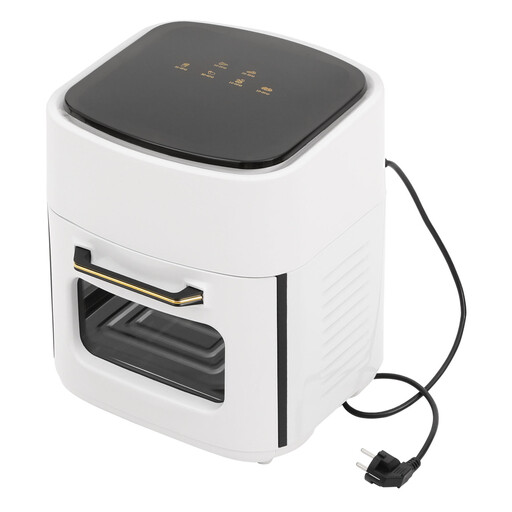
The product details mention 360° fan circulation; check that the heating mode and interior suit your recipe and tin.
15 l; 1400 W; touch controls; preset programmes; viewing window.
 No image available
Check the stated footprint carefully if your worktop space is limited; choose this size only if you have enough room.
32 l; 1600 W; temperature control from 100–250 °C; timer; crumb tray.
The stated external dimensions are 52,3 × 36 × 32,2 cm.
 No image available
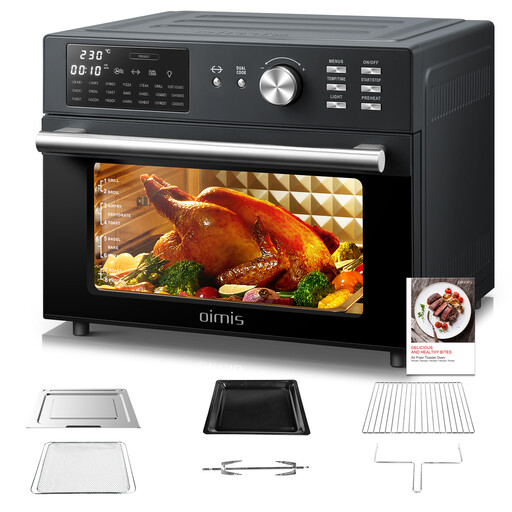
The product details list baking and 360° air circulation heating. Compare the appliance dimensions with the space available.
30 l; 1800 W; 21 presets; rotisserie; stated to fit a 13-inch pizza.
The stated dimensions are 456 × 430 × 365 mm.
No. Compare your tin’s length, width and height with the usable oven cavity and the shelf level you plan to use. A manufacturer’s stated size for round tins doesn’t automatically tell you whether a loaf tin will fit.
Only if the installation requirements for that particular model allow it. Rommelsbacher specifies 1 m of space above the BG 1055/E, while Severin specifies 30 cm for the TO 2068. These requirements are specific to each model and don’t apply to all countertop ovens.
Follow your recipe and check which heating modes your oven offers. For a lemon cake baked in a loaf tin, LECKER recommends 150 °C fan oven and around 50 minutes; also test the cake with a wooden skewer.
You can’t tell just from the appliance size or wattage. To compare costs, you need the actual consumption in kWh for similar baking sessions, as well as your electricity tariff.
In LECKER’s recipe, the baked cake is left to cool in the tin, then pierced and drizzled with lemon juice. The stated baking temperature and time apply to this recipe; also check whether the cake is cooked through with a wooden skewer.