Households with different mealtimes
If you prepare couscous in advance and want to heat individual portions later, look for straightforward time and power settings. Safe storage until reheating is a separate consideration.


For individual portions of couscous eaten at different times, an easy-to-use solo microwave is a natural choice. If you use square food storage containers, consider a model with a flat cooking surface and no turntable. The key is to use suitable, microwave-safe containers and heat the food carefully. A microwave cannot make up for improper storage.
If you prepare couscous in advance and want to heat individual portions later, look for straightforward time and power settings. Safe storage until reheating is a separate consideration.
If you portion couscous into square containers, make sure their dimensions fit the usable cooking space. A flat cooking surface without a turntable may be a good option.
If you heat individual portions regularly, you can choose between direct manual controls and electronic operation. Programmes are no substitute for stirring and checking the food.
First, check which containers and controls suit your everyday needs. A high wattage or extra features cannot replace safe storage and careful reheating.
| Priority | What to check before buying | Who is it important to? |
|---|---|---|
| Easy portion heating | Controls, time settings and available power levels. | If I want to heat individual portions without navigating complicated menus, straightforward controls matter. Around 33% of consumers are likely to prioritise easy portion heating. |
| Safe storage | Refrigerate portions appropriately and ensure they can be heated through before eating. | If the couscous is being kept for a later meal, safe storage matters more to me than an extra programme. Around 27% of consumers are likely to prioritise this. |
| Containers that fit | Compare container dimensions with the available space and, if applicable, the turntable diameter. | If I want to use the square food containers I already own, they need to fit in the cooking space. Around 20% of consumers are likely to focus mainly on whether their containers will fit. |
| Controlled reheating | Power levels and time settings; check the container's guidance on the maximum permitted power. | If portions vary in size, I want to adjust the time and power and stir the food part-way through. Around 20% of consumers are likely to prioritise controllable heating. |
The German Federal Institute for Risk Assessment (BfR) recommends cooling cooked food and keeping it refrigerated until it is reheated. For reheating, the BfR recommends at least 70 °C for two minutes throughout the food. Stirring it part-way through can help you spot and correct uneven heating.
The wattage describes a feature of the appliance, not the temperature at every point in a particular portion of couscous.
Choose time and power settings that are easy to use, stir the food part-way through and check that it is heated all the way through. The BfR recommends at least 70 °C for two minutes throughout.
The stated capacity alone does not tell you whether a square container will fit or whether a plate can rotate freely on the turntable.
Measure your usual containers and compare their dimensions with the appliance's internal measurements, available space and, if applicable, the turntable diameter.
If a container you already own does not fit, you may need a different microwave-safe one.
The BfR notes that cereulide, produced by certain Bacillus cereus bacteria, can be heat-stable and is not destroyed by reheating.
Cool prepared portions appropriately and keep them refrigerated until reheating. Do not rely on the microwave to make up for improper storage.
A grill is an additional feature for browning or finishing food under the grill; the solo models in this selection are described as being for reheating.
Choose a grill function only if you also want to use it for other foods. The manufacturer's stated microwave power for the SEVERIN MW 7771 is inconsistent, so check the figure before deciding to buy.
The models covered include solo microwaves with different cooking surfaces and controls.
The M 20 Cube Ceramic is a solo microwave with a flat cooking surface and no turntable.
The R-242BKW is an example of an electronically controlled solo microwave with a turntable.
This selection includes solo microwaves with manual or electronic controls for reheating individual portions.
 No image available
The manual controls are a good fit if you want to set the time and power directly for individual portions.
19 l capacity, 700 W and six power levels. The product description lists two dials and a 30-minute timer.
Keep cooked couscous refrigerated until reheating; reheating does not destroy cereulide produced as a result of improper storage.
 No image available
The dials offer manual controls for heating individual portions and setting a time you use regularly.
20 l capacity, 700 W, six power levels and a 30-minute timer; the product description also lists a turntable.
Keep cooked couscous refrigerated until reheating; reheating does not destroy cereulide produced as a result of improper storage.
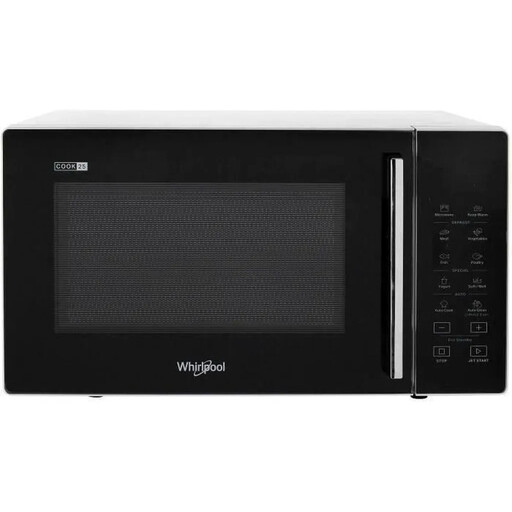 No image available
The electronic controls are an option if you want to adjust the time and power using touch controls.
25 l capacity, seven power levels, a 27 cm turntable and a digital timer. The product title lists 900 W.
Keep cooked couscous refrigerated until reheating; reheating does not destroy cereulide produced as a result of improper storage.
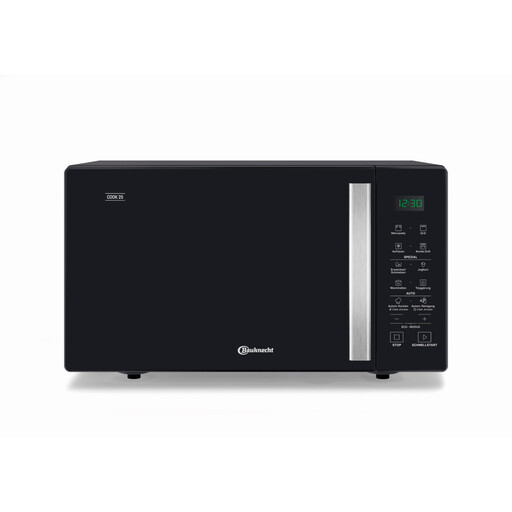 No image available
Automatic programmes and quick start offer extra options for reheating food regularly.
20 l capacity and 700 W; the product description lists automatic programmes, quick start and a keep-warm function.
Keep cooked couscous refrigerated until reheating; reheating does not destroy cereulide produced as a result of improper storage.
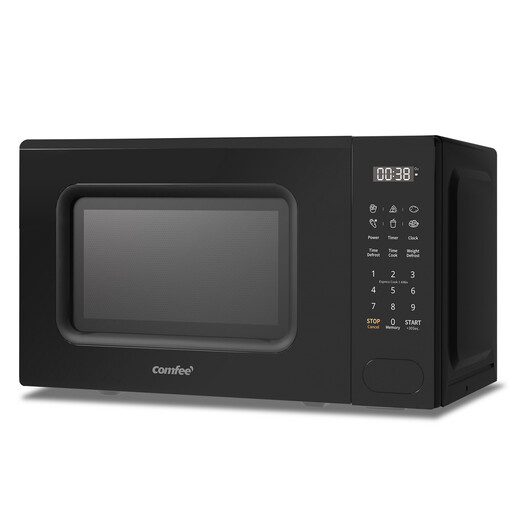 No image available
Digital settings and the Express Cook function are listed as options for reheating portions regularly.
20 l capacity, 700 W and eleven power levels; the title also lists Express Cook and a memory function.
Keep cooked couscous refrigerated until reheating; reheating does not destroy cereulide produced as a result of improper storage.
No. A microwave is no substitute for appropriate storage. The German Federal Institute for Risk Assessment recommends cooling cooked food and keeping it refrigerated until just before reheating for consumption. If stored improperly, Bacillus cereus can produce a heat-stable toxin that reheating will not destroy.
Stir the food part-way through heating and check that it is hot enough throughout. The BfR recommends at least 70 °C for two minutes throughout; if in doubt, you can check the temperature with a food thermometer. This is a food hygiene recommendation, not a guarantee of performance from any particular microwave model.
No. Check the container's instructions for microwave suitability, permitted temperature and maximum power. Check the instructions for lids too, as not all lids are suitable for microwave use.
Compare the container's dimensions with the usable space and internal measurements of the specific appliance. If it has a turntable, the container must also sit securely on it and be able to rotate freely. The stated capacity alone is not enough to check this.
Mains-powered household appliances covered by the EU Low Voltage Directive must meet the relevant safety requirements. The directive applies to equipment with an AC voltage of 50 to 1,000 V. The required CE marking is a declaration by the manufacturer, not an independent quality mark. Check the labelling and product documentation for the appliance actually being offered.