
Lieferung heute & morgen

Qualitätsgarantie

Willkommens-Angebote freischalten: KOSTENLOSE Lieferung | Bis zu 80 % RABATT | Kostenlose 30-Tage-JoyPlus-Testphase
App herunterladen
Choosing the right CPU cooler affects your desktop PC’s temperatures, noise levels and long-term usability. Product names such as ‘High Performance’, high fan speeds and eye-catching RGB lighting don’t automatically mean a cooler is right for you. What matters is your processor’s specifications, your case dimensions and compatibility with your motherboard.
A cooler may be advertised as suitable for ‘AMD and Intel’ without supporting every socket. For an AMD CPU cooler, for example, AM4 and AM5 are relevant, while an Intel CPU cooler for LGA1700 won’t necessarily fit LGA1200 or LGA1851. Before buying, check:
This is especially important with used motherboards or older processors.
A large tower cooler can clash with your memory, graphics card or side panel. With a CPU water cooler, you’ll also need space for the radiator at the front or top of the case. A 240 mm radiator usually requires two 120 mm fan positions; a 360 mm water cooler requires three.
For Mini-ITX and small form factor systems, compact models with a low profile are often more practical. The ARCTIC Alpine 23 CO, for example, is 65 mm high and designed for AMD AM4, AM5 and AM3(+). The ARCTIC Alpine 17 is listed as 77 mm high and compatible with LGA1700 and LGA1851. You should still check the case manual to make sure there’s enough clearance.
A low quoted noise level may be based on specific test conditions. In a real PC, the fan curve, case airflow, dust and CPU load all affect noise levels. A high maximum fan speed doesn’t automatically make a cooler better suited to everyday use either.
Look for:
A quiet CPU cooler is usually the result of all these factors working together, not a single specification.
A CPU air cooler consists of a heatsink, heat pipes and one or more fans. It doesn’t need a pump connection and contains no liquid. This design is straightforward to install in compact PCs, typical gaming systems and many work computers.
An AIO water cooler transfers heat from a cold plate through a pump and tubes to a radiator. It can be a good choice for powerful processors, but it needs enough radiator space and additional connections. During installation, make sure the tubes aren’t kinked. Check the connections and tubing before switching on the PC for the first time.
Aluminium fins increase the surface area available for dissipating heat. Copper heat pipes or a copper contact plate transfer heat from the processor to the heatsink. A 120 mm CPU cooler often offers more headroom than a 92 mm model, but it also takes up more space.
According to its product specifications, the ARCTIC Freezer 36 has four heat pipes, two 120 mm P fans and a height of 159 mm. The GAMDIAS Boreas M2-51D Digital has a single tower heatsink and a 120 mm fan, and supports AM4, AM5 and LGA1700, among other sockets.
A 4-pin PWM connector lets your motherboard automatically adjust fan speed. With RGB models, you’ll need to distinguish between 5 V 3-pin ARGB and 12 V 4-pin RGB connectors. They aren’t interchangeable. Using the wrong connector can damage the lighting.
An RGB CPU cooler is therefore mainly a design choice. Check beforehand that your motherboard has the required connector and whether you’ll need a separate controller.
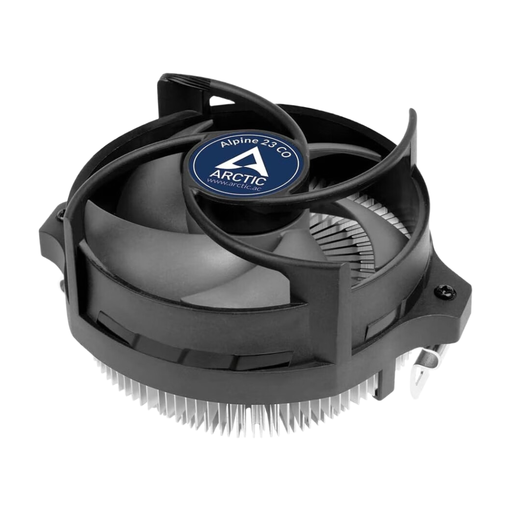
Why it suits this profile: This compact AMD cooler is designed for AM4 and AM5 and uses the existing AMD retention module. It comes with pre-applied MX-2 thermal paste for straightforward installation.
At 65 mm high, with a 90 mm fan, it’s easier to fit in smaller cases. Compatibility is clearly limited to specific AMD sockets.
Compact dimensions, a 4-pin PWM connector and dual ball bearings for the continuous operation specified by the manufacturer.
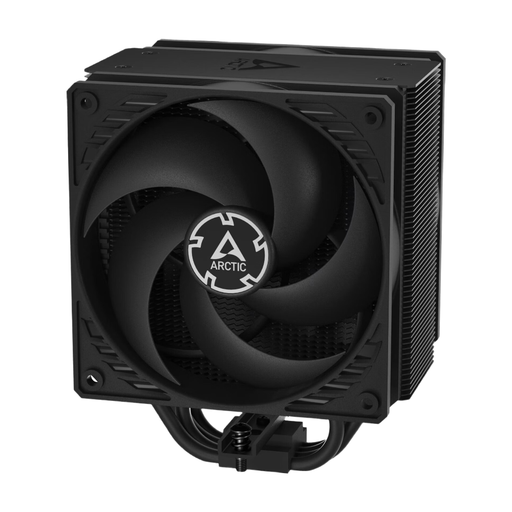
Why it suits this profile: This single-tower cooler is for anyone looking for air cooling with two 120 mm fans and broad compatibility with Intel and AMD processors.
The specifications list a height of 159 mm, four copper heat pipes and support for AM4, AM5 and LGA1700. This makes it easier to check whether it will fit your case before you buy.
Push-pull design with two 120 mm fans, a speed range of 200–1800 rpm and a 4-pin PWM connector, according to the product description.
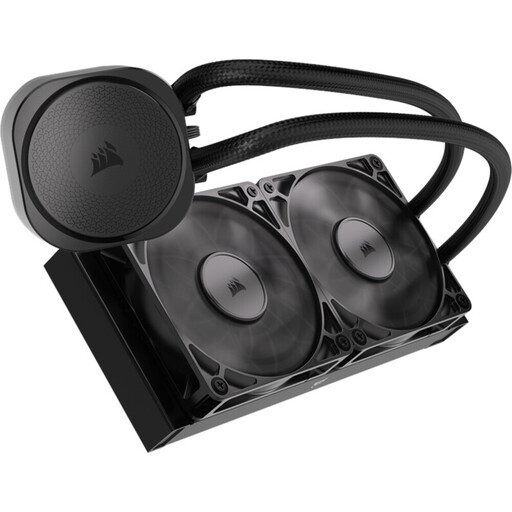
Why it suits this profile: This 240 mm AIO water cooler is designed for performance-focused systems, provided your case supports a radiator with space for two 120 mm fans.
The specifications list LGA1851, LGA1700, AM5 and AM4, as well as precise radiator dimensions of 277 × 120 × 27 mm. This helps reduce the risk of an unexpected clash with your case.
Two PWM fans with a speed range of 300–2100 rpm, a copper contact plate and a direct connection to the motherboard, with no extra controller needed.
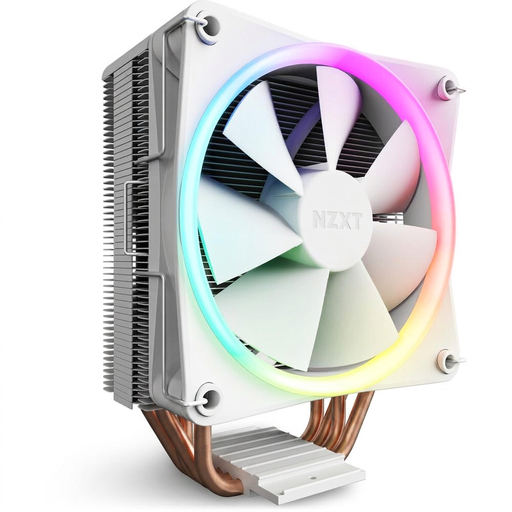
Why it suits this profile: This 120 mm CPU cooler combines a tower design with ARGB lighting, making it a good choice if you want to pair classic air cooling with eye-catching looks.
The mounting hardware for Intel and AMD platforms and four copper heat pipes are clearly specified. Your motherboard will need a compatible connector for the lighting.
Direct-contact technology, a 120 mm fan that reaches up to 1800 rpm and support for an optional second fan.
We’ve put together a complete, regularly updated list of products that meet these strict selection criteria and fully comply with the safety regulations in force in the EU.
First, check the maximum cooler height supported by your case. Compact top-down coolers with 92 mm fans are often a better fit than large tower coolers. For water cooling, you’ll also need to consider the radiator’s length and width, as well as the position of the fan mounts.
An air cooler has relatively few parts that can wear out, mainly the fan. Regularly remove dust with compressed air, taking care not to get liquid into the motor. An AIO water cooler also contains a pump, tubes and a coolant loop. Before installation and during maintenance, check the tubing for damage or signs of moisture.
Running costs depend on fan speed, pump power and daily usage time. A PWM-controlled fan slows down when the CPU is under a light load. An AIO water cooler also has a pump running. For a realistic estimate, compare the stated power consumption with your daily usage time and electricity tariff.