Anyone keeping an eye on sugar
You’d like to have crackers with your coffee and compare their sugar content per 100 g. If a product is labelled ‘reduced sugar’, you’ll also want to know what it is being compared with.


If you’re choosing crackers to have with your coffee and are keeping an eye on sugar, start by comparing the ‘of which sugars’ figure per 100 g. A claim such as ‘reduced sugar’, on the other hand, describes a comparison with other products and says nothing by itself about energy, fat or salt. Also check the ingredients and allergen information on the specific pack.
You’d like to have crackers with your coffee and compare their sugar content per 100 g. If a product is labelled ‘reduced sugar’, you’ll also want to know what it is being compared with.
You’d rather have a plain or salty cracker with your coffee than a sweet pastry. So, as well as the flavour, the sugar, salt and seasoning in each variety matter.
If you need to avoid certain ingredients or allergens, the nutrition table alone isn’t enough. The ingredients list, highlighted allergens and any precautionary ‘may contain’ information on the specific pack are essential.
A good choice if: You’re specifically looking for a product whose sugar reduction is measured against comparable products.
Bear in mind: The claim alone doesn’t tell you anything about energy, fat or salt.
A good choice if: You want to compare specific varieties using the ‘of which sugars’ figure per 100 g.
Bear in mind: A lower figure than another cracker’s doesn’t prove that it has a declared sugar reduction compared with a comparable product range.
| Criteria | What to check when buying | Who it matters to |
|---|---|---|
| Sugar content and claim | Compare ‘of which sugars’ per 100 g; for ‘reduced sugar’ claims, check what comparable products are being used as a reference. | If I want to choose crackers with less sugar to have with my coffee, I need a comparable figure, not just a claim on the front of the pack. Around 50% of consumers would put sugar content or a clearly explained sugar reduction first. |
| Flavour and salt | Check the flavour and salt per 100 g, especially for salted and pretzel-style varieties. | I’d like a savoury contrast with my coffee, but also want to choose the right level of seasoning. This flavour profile would be the main consideration for around 30% of consumers. |
| Ingredients and allergens | Read the ingredients list, highlighted allergens and any precautionary ‘may contain’ information on the pack. | If I need to avoid certain ingredients, the information on the specific pack will determine whether the cracker is suitable. This would be the top priority for around 20% of consumers. |
A claim about sugar doesn’t also tell you the energy value or the amounts of fat and salt. The German Food Federation makes this point in its guidance on nutrition claims.
Compare the nutritional values that matter to you per 100 g, rather than assuming one claim tells you about the whole product.
A cracker can contain less sugar than another without being labelled ‘reduced sugar’. The claim depends on what it is being compared with.
Decide whether you want to compare specific sugar figures or look for a product with this claim, then check the information for the product you choose.
A savoury flavour doesn’t tell you the sugar content, and it doesn’t make the salt figure any less important. For a 150 g variety of Saltletts Laugen Crackers, ALDI SÜD lists 2.1 g of salt per 100 g and notes that values may vary by supplier.
Check the nutritional information on the specific pack when buying salted, pretzel-style or seasoned crackers.
A cracker’s name doesn’t tell you all of its ingredients or possible traces. A suitable sugar figure doesn’t replace this check either.
Before buying, check the ingredients list, highlighted allergens and any precautionary ‘may contain’ information on the pack.
The specific cracker varieties listed below offer a starting point for comparison. Information about one variety doesn’t necessarily apply to other products from the same brand.
REWE lists Ritz Crackers 200 g as a salted cracker.
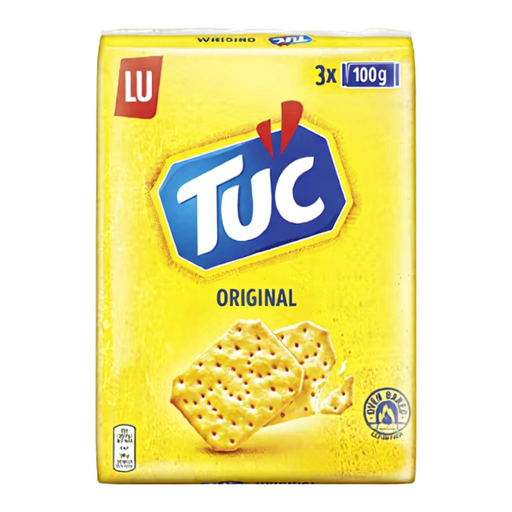
REWE’s cracker range includes TUC Original and other varieties.
REWE stocks Wasa Delicate Crackers in varieties including Sea Salt and Paprika.
Saltletts Laugen Crackers and PausenCracker are savoury alternatives to compare.
This selection features a salted cracker for anyone who’d like something savoury with their coffee. When comparing sugar content, use the nutritional information on the specific pack.
 No image available
An option if you’d prefer salted crackers with your coffee rather than sweet pastries.
Before buying, compare ‘of which sugars’ and salt per 100 g, as well as the ingredients and allergen information on the specific pack.
The claim refers to a reduction in sugar content compared with comparable products, not just any low absolute sugar figure. The German Food Federation explains that the comparison is with a corresponding product range. Check what the claim refers to on the specific cracker.
No. A sugar-reduction claim doesn’t tell you the product’s energy value. Also compare energy, fat and salt per 100 g. The German Food Federation points out that a claim about sugar doesn’t tell you about the product’s overall composition.
Compare the ‘Carbohydrate, of which sugars’ figure per 100 g. Using the same quantity makes it easier to compare packs of different sizes. Then check any other nutritional values that matter to you.
Read the ingredients list, highlighted allergens and any precautionary ‘may contain’ information on the specific pack. You can’t reliably work out the ingredients of a particular variety from its brand name, flavour or sugar content.
Use the information on the specific pack when deciding what to buy. For the listed 150 g variety of Saltletts Laugen Crackers, ALDI SÜD notes that nutritional values may vary by supplier.