Planners keeping an eye on sugar
You want to compare crackers for your meeting based on their declared sugar content, without treating a sugar-reduction claim as a general statement about their nutritional value.


If you’re looking for crackers with as little sugar as possible for a work meeting, start by comparing the ‘of which sugars’ figure per 100 g, rather than relying on a claim such as ‘reduced sugar’. Then check the salt, ingredients and ‘may contain’ information, as well as whether the crackers work on their own, with a dip or with a topping. A low sugar figure alone doesn’t make a variety suitable for every meeting.
You want to compare crackers for your meeting based on their declared sugar content, without treating a sugar-reduction claim as a general statement about their nutritional value.
You’re looking for crackers to serve on their own or with a dip or topping. Pack size and the preparation of any other ingredients also matter.
You’re providing snacks for a group and checking the ingredients, highlighted allergens and ‘may contain’ information for the specific variety. A gluten-free label doesn’t answer every allergy question.
For your meeting, start by comparing sugar and salt using the same measure. Then decide which ingredient and pack details matter, based on who’s attending and how you plan to serve the crackers.
| Consideration | What to check | Who it matters to |
|---|---|---|
| Sugar content | Compare ‘of which sugars’ per 100 g. For ‘reduced sugar’ claims, check which food it is being compared with. | If I want to keep sugar low for the meeting, I need a comparable figure on the pack. This is a top priority for around 36% of consumers. |
| Serving | Check whether the variety works on its own, with a dip or with a topping alongside the food you’re planning to serve. | If I’m putting out nibbles and dips, I want to choose crackers to go with them. Serving options are the main consideration for around 29% of consumers. |
| Allergens | Read the ingredients list, highlighted allergens and ‘may contain’ information on the specific pack. | If guests need to avoid certain ingredients, I check their requirements before putting out snacks. This check takes priority for around 21% of consumers. |
| Quantity and salt | Compare pack weight and salt per 100 g; plan the quantity based on the number of attendees and any other snacks. | For a larger group, I want to make sure I have enough crackers without overlooking the salt content. This is the main consideration for around 14% of consumers. |
The claim describes a comparison; it doesn’t tell you the absolute sugar content on its own. Lebensmittelklarheit, run by the Verbraucherzentrale, explains that ‘reduced sugar’ means at least 30% less than a comparable food.
Also check ‘of which sugars’ per 100 g and what the reduction claim is based on.
A low sugar figure can come with a higher salt content: REWE lists Alnavit Bio Parmesan Crackers as containing less than 0.5 g sugar, but 2.7 g salt per 100 g.
Compare both figures per 100 g before choosing a variety for your group.
The Alnavit Bio Parmesan Crackers described by REWE are labelled gluten-free, but contain cheese; possible traces of other allergens are also listed.
Check for any relevant allergies among your meeting attendees, then read the ingredients and ‘may contain’ information on the specific pack.
The details below apply to the specific varieties listed, not to every product from each brand. Compare their nutritional values using the same measure.
Bio Parmesan Crackers are an option if a low declared sugar content is your priority.
TUC Original is a classic cracker to consider if you’re also planning to serve dips or toppings.
The Ritz variety described by REWE is intended as a snack or a base for small nibbles.
According to REWE’s product description, Clubs Crackers can be served on their own, topped or with a dip.
Tasty Snacks Paprika is a thin cracker option to enjoy on its own or with dips.
This selection includes crackers for different kinds of meeting catering: a variety with sesame, a three-pack of TUC and a seaweed-flavoured snack. Compare the nutritional and ingredient information on the specific packs before serving them together.
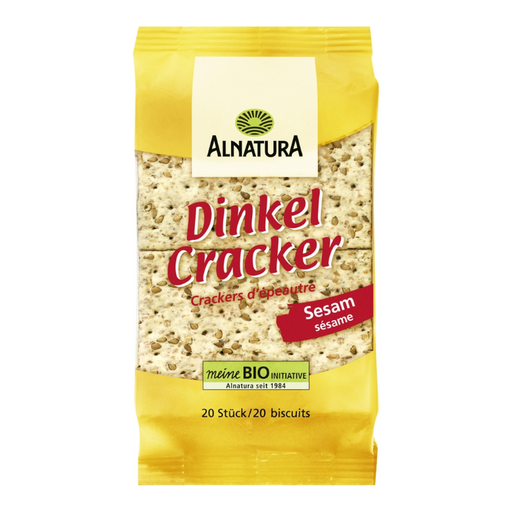 No image available
This 100 g pack could be a good choice for your meeting if you’d like to serve crackers with sesame. Before buying, check the ingredients and allergen information on the specific pack particularly carefully: the details about spelt and buckwheat are inconsistent.
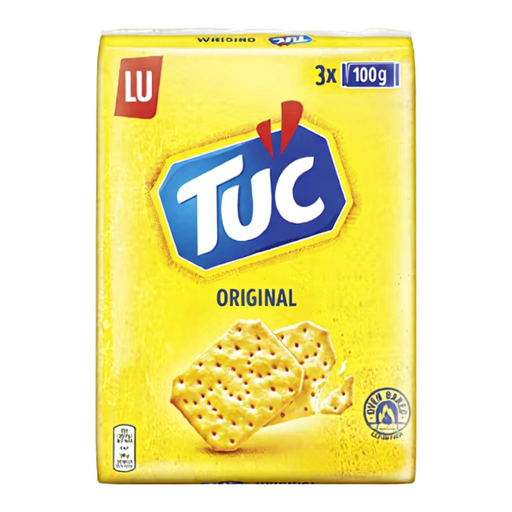 No image available
The three 100 g packs can be set out separately for your meeting. If sugar content or allergens are important to your choice, check the details on this multipack: don’t assume the figures for a differently packaged TUC variety apply to it.
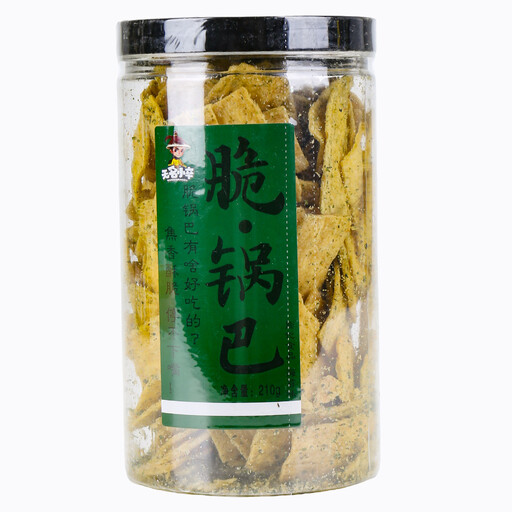 No image available
This 210 g pack could work as a sharing snack if seaweed flavour suits your planned selection. The product description also categorises it as a rice crust snack, so don’t automatically plan to use it as a base for toppings or dips. Check the allergen information on the pack.
No. The claim describes a comparison and doesn’t tell you how much sugar the cracker contains overall. Lebensmittelklarheit, run by the Verbraucherzentrale, explains that ‘reduced sugar’ means at least 30% less sugar than a comparable food. Also check ‘of which sugars’ per 100 g.
Base the quantity on the number of attendees and whether you’ll be serving other snacks, dips or toppings. For the TUC and Ritz varieties described by REWE, 30 g is about eight crackers. This serving guide isn’t a substitute for planning the amount you’ll need for the whole group.
No. A gluten-free label doesn’t answer questions about other ingredients or allergens. The Alnavit Bio Parmesan Crackers described by REWE contain cheese and may contain traces of other allergens. Check your guests’ requirements and the label on the specific pack.
Yes. Sugar and salt are separate nutritional values. REWE lists Alnavit Bio Parmesan Crackers as containing less than 0.5 g sugar and 2.7 g salt per 100 g. So, if both matter for your meeting selection, compare both figures on the pack.