What to consider when choosing
For long craft interviews, first decide whether both people need their own microphones, then plan for the length of the take and any movement at the recording location.
| Consideration |
What to check before buying |
Who is it important to? |
| Recording both voices |
Check the number of microphones and channels, separate recording options and compatible connections; test both microphones before the conversation. |
If I want to follow the story and questions separately later, I’ll plan for each person to have their own microphone. Around 36% of consumers prioritise clear voices recorded separately. |
| Long take |
Check the power supply for each device separately from its storage capacity; record a full-length test take and check the file afterwards. |
If a conversation can’t easily be repeated, I want to plan for power and the recording path to last for the entire session. Around 29% of consumers prioritise recording a long take without interruption. |
| Freedom of movement |
Check that the recording device’s connections suit the area you’ll be moving around; test the setup in the actual workshop and listen back to the recording. |
If I move between stages of work and recording locations, I don’t want a cable to restrict me unnecessarily. Around 21% of consumers prioritise freedom of movement. |
| Simple single-person setup |
Check the USB-C or USB/XLR signal path and compatibility with your recording device and app; check whether you need headphone monitoring. |
If I’m mainly recording one voice in a fixed spot, I want a straightforward connection and as little setup as possible. Around 14% of consumers prioritise a simple single-person setup. |
Joybuy products for interviews and on-location recording
This selection includes wireless lavalier sets for two-person conversations, as well as a portable recorder with built-in microphones.
 No image available
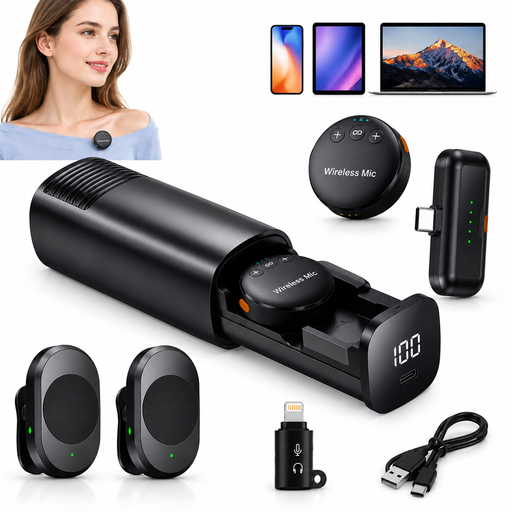
Wireless lavalier microphone set with 2 transmitters
According to the product description, the two transmitters are designed to record two speakers at the same time.
Connections: USB-C and Lightning. Stated range: up to 40 m. Battery life: up to 6 hours per transmitter and up to 18 hours with the charging case.
View at Joybuy
 No image available
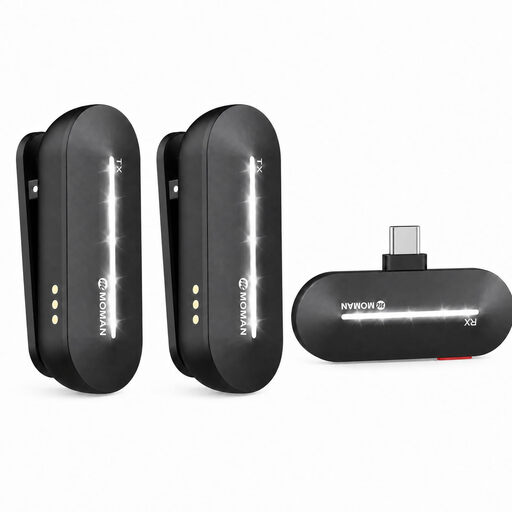
Moman M1CXT Wireless Lavalier Microphone
According to the product description, this set is designed to record two people at the same time using two transmitters, making it suitable for interviews on the move.
Connection: USB-C. Stated range: up to 150 m in open areas. Stated operating time: up to 6 hours.
View at Joybuy
 No image available
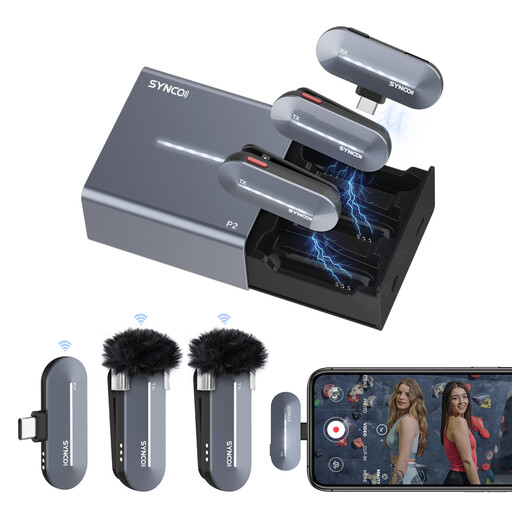
SYNCO P2ST Wireless Lavalier Microphone, USB-C
The product description lists two microphones for interviews with multiple speakers.
Connection: USB-C. Stated operating time: up to 5 hours per full charge; according to the description, the charging case provides two additional charges.
View at Joybuy
 No image available
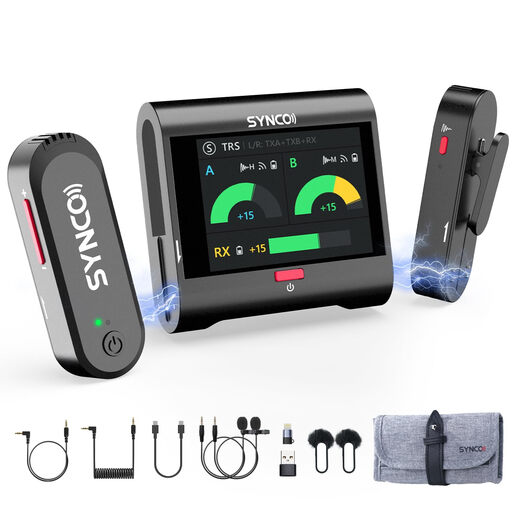
SYNCO G3PRO Wireless Lavalier Microphone System
The product description lists two transmitters and simultaneous recording of two people; level control and monitoring may be useful when setting up on location.
Connections: TRS, TRRS and USB-C. Stereo, mono and safety channel modes are also listed.
View at Joybuy
 No image available
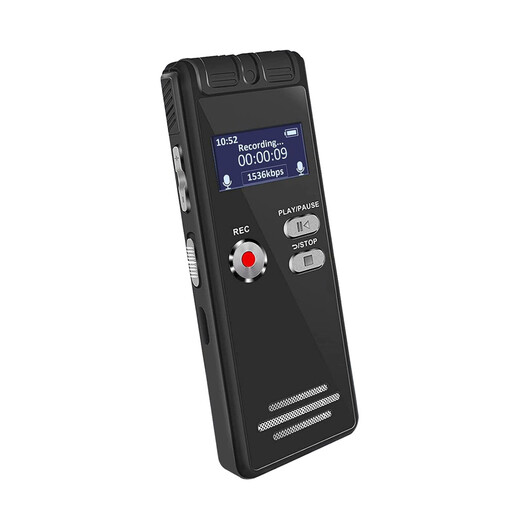
Rexsun L15 Digital Voice Recorder, 16 GB
According to the product description, this portable recorder is designed for interviews and has built-in microphones.
Features include two omnidirectional microphones, a 16-GB TF card supplied with the recorder and up to 22 hours of continuous recording.
View at Joybuy
Frequently asked questions
Do I need two microphones for a long interview?
Not always. If you want both people to be heard clearly and, where possible, recorded separately, planning for one microphone per person is a good option. If you’re using a central recorder, make a test recording to check that both voices are clear at the actual recording location.
How should I prepare for a long take?
Before you start, test both microphones you need, their connections and the power supply. Record a test take under the planned conditions and listen back; with wireless systems, storage time and battery life are separate things to check.
What additional equipment should I plan for?
Depending on your setup, you may need a compatible recording device, another microphone, cables, batteries or an additional power supply. Before buying, compare what’s included and what your specific recording device supports with your planned setup.
Can I simply record a private conversation about craft work in Germany?
No, not without the necessary authority: under § 201 StGB, it is a criminal offence to record another person’s non-public spoken words on an audio device without authorisation. This provision applies here to non-public speech, not automatically to every background sound. Check that you have authorisation before recording.
Does permission to record also cover archiving or publication?
Not automatically. Processing personal data requires an applicable legal basis, as explained by the Federal Commissioner for Data Protection and Freedom of Information. If consent is to be the legal basis, it must be freely given, informed and specific to the purpose. So make sure you also clarify how the recording will be stored and made accessible. The legal basis that applies in a particular case depends on the circumstances of the project.


