
Lieferung heute & morgen

Qualitätsgarantie

Willkommens-Angebote freischalten: KOSTENLOSE Lieferung | Bis zu 80 % RABATT | Kostenlose 30-Tage-JoyPlus-Testphase
App herunterladen
Crafting can be a practical activity for children at home, on the go or as a gift. However, not every kit suits every age or routine. Some products contain more individual parts than expected, while others require additional materials or can leave marks on clothing and furniture. As a Joybuy Product Recommendation Officer, I assess the key selection criteria objectively, helping parents, grandparents and education professionals distinguish marketing claims from verifiable product features.
A kit for “children aged 3 and over” is not automatically suitable for every three-year-old. The size of the parts, the hand strength required and the complexity of the instructions are also important. Small beads, charms or decorative elements can pose a choking hazard. Adult supervision is particularly important for products containing these components.
A DIY craft kit for older children can also be overwhelming if it involves several stages, tools or very precise movements. So check not only the recommended age, but also the child’s stage of development and whether they can use the kit independently.
A painting set for children containing liquid ink may work well on paper but leave stains on textiles or furniture. For markers, details such as water-based ink, washability and suitable surfaces are therefore relevant. With craft kits, it should also be clear whether glue, scissors or additional paper are required.
A high number of pieces may look appealing, but many can remain unused if the colours are barely distinguishable or there is no storage solution. It is more useful to look at the specific contents: number of projects, included tools, number of colours, spare parts and packaging size.
For children aged 3 and over, simple drawing, writing or reusable tablet products are generally suitable. For kits with small decorative elements, pay attention to the relevant warning. The CLEMENTONI IDEA Message Pen Atelier, for example, is intended for children aged 6 and over and highlights the presence of small parts. The product description recommends adult supervision for children under 8.
For pens, ink base, odour, drying time and bleed-through are important factors. Water-based ink can be practical for many paper crafts, but it does not replace checking the manufacturer’s instructions. Even paint labelled as washable is not necessarily guaranteed to come off every fabric without leaving residue.
For drawing and writing sets, also look out for:
The CE marking is not a quality rating. Within the intended area of use, it indicates that the manufacturer has declared conformity with relevant EU requirements.
For travel, compact dimensions, low weight and secure storage are useful. An LCD writing tablet can be used without paper or pens, while a foil art set contains several prepared projects. For frequent use, it is worth choosing a kit with clear organisation or with replacement parts that can be reordered or are included in the pack.
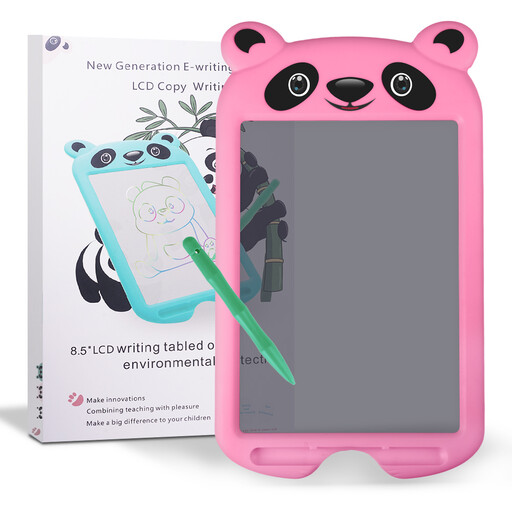
Why this product suits this profile: The LCD tablet is intended for children aged 3 to 8, weighs 0.17 kg according to the product information and requires neither paper nor colouring pencils. This makes it a simple creative activity without a conventional screen, as well as a practical travel toy for children.
The one-button erase function reduces the need for consumables and avoids additional purchases of refills. Before buying, parents should check the preferred screen size and usage instructions.
8.5-inch writing surface, low weight of 0.17 kg and erasable use according to the product description.
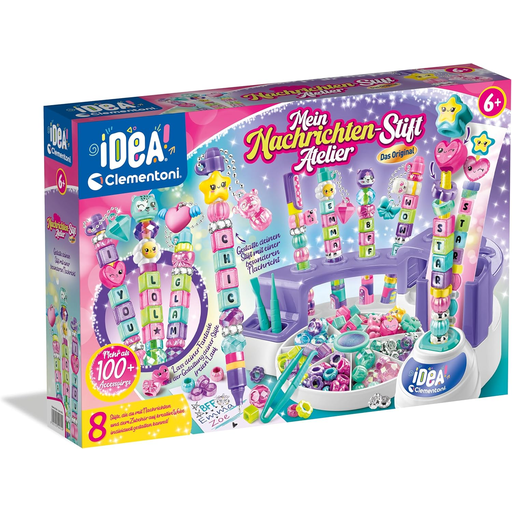
Why this product suits this profile: This set is designed for children aged 6 and over and includes a workstation, tools, letters, beads, stickers and pen holders. It is suitable for families looking for a structured craft project with a useful end result.
The included station provides a dedicated workspace and makes the contents easy to check. Because the set contains small parts, the age recommendation is particularly important.
Personalised pens, pen holders and packaging measuring 29,3 × 42,6 × 8,3 cm according to the product information.
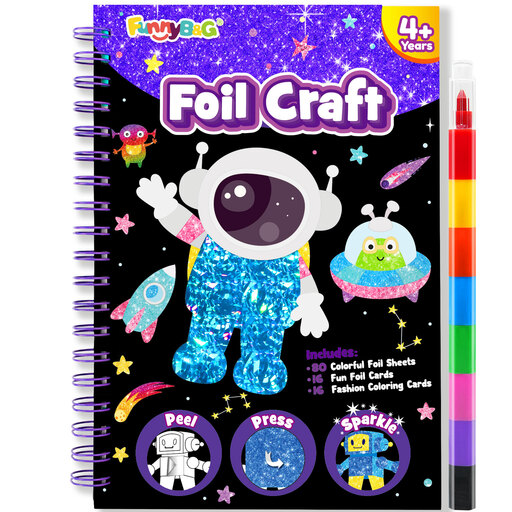
Why this product suits this profile: The set is specified for children aged 4 to 10 and includes 16 foil pictures, 16 colouring cards, 80 foil sheets and a rotating pen with eight colours. According to the product description, it is used by peeling, placing and pressing.
The designs and steps involved are included in the kit; according to the description, no glue or scissors are required. Nevertheless, foils and packaging should be put away completely after use.
112 pieces, compact dimensions of approximately 18,5 × 26,0 × 1,8 cm and use without digital devices according to the product information.
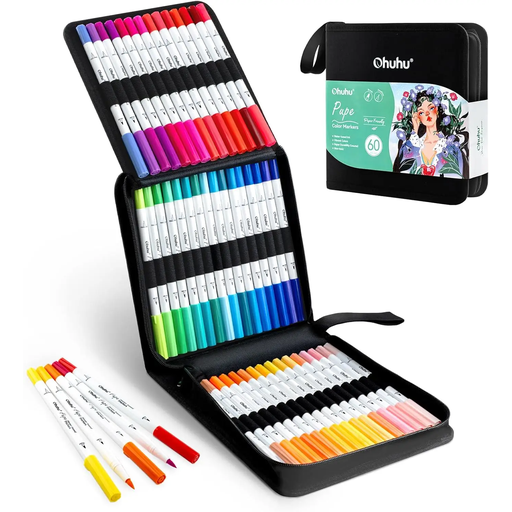
Why this product suits this profile: The set combines a 0,4-mm fine tip with a flexible brush tip measuring 1 to 5 mm. It is therefore suitable for journalling, drawing, shading and simple hand-lettering exercises.
The tip types and number of colours are clearly specified. As the ink may bleed through paper, the product description recommends using thicker paper.
59 coloured pens plus a colourless blender, storage case and water-based ink according to the product data.
We have put together a complete, regularly updated list of products that fully meet these strict selection criteria and the safety regulations applicable in the EU.
For this age group, simple reusable writing tablets, large wax crayons and straightforward colouring sheets are obvious choices. The specific warning and part size are more important than the general product category. An adult should be present when small parts are involved.
Durability depends on the materials and how the kit is used. LCD writing tablets can be used repeatedly, while paper cards or foil pictures are used up once completed. Markers dry out if the caps are not closed fully. Storing them in a dry place away from light and following the manufacturer’s instructions can help extend their usable life.
The price depends, among other things, on the number of pieces, whether it is a branded product, the materials and how reusable it is. Do not compare only the purchase price; also consider the contents and any potential follow-up costs for paper, replacement tips or additional colours. This makes it easier to judge whether a kit is suitable as a birthday present for children or as a regular activity.