
Lieferung heute & morgen

Qualitätsgarantie

Willkommens-Angebote freischalten: KOSTENLOSE Lieferung | Bis zu 80 % RABATT | Kostenlose 30-Tage-JoyPlus-Testphase
App herunterladen
The quality of any creative project is fundamentally determined by the materials used. Selecting the right craft supplies is therefore not a secondary consideration, but a crucial first step. Factors such as material composition, tool precision, and component durability define the final outcome. This guide focuses on the technical specifications and practical applications of essential DIY accessories to provide a solid basis for making an informed decision.
Analysing crafting materials requires a close look at their technical properties. Different criteria are critical depending on the application, whether it's scrapbooking, card making, or drawing.
For paper crafts, especially when it comes to scrapbooking accessories, the choice of adhesive is critical. Liquid glues can cause paper to warp and require drying time. Glue sticks often lack the necessary bond strength for multi-layered projects.
An adhesive roller presents a superior technical alternative. It applies a thin, dry film of adhesive, creating an instant, permanent bond with no waiting time. Key features to consider are:
For pens used for decorative purposes, ink specifications and tip quality are paramount. A gel pen set should be evaluated based on the following criteria:
Cutting dies and stamps significantly expand creative possibilities. Their quality depends on the material and craftsmanship.
Based on the technical criteria mentioned above, we present a selection of products that stand out for their specific features, making them suitable for various applications.

Why We Recommend This Product This set from Deli includes four adhesive rollers, each containing 8 metres of double-sided tape. The design allows for clean and precise application, optimised for paper and photo projects. The dry adhesive film ensures an instant bond without causing the paper to wrinkle.
Pros
Who It's For This product is ideal for individuals who regularly engage in card making, scrapbooking, or other paper crafts and value a clean, fast, and precise bonding solution.
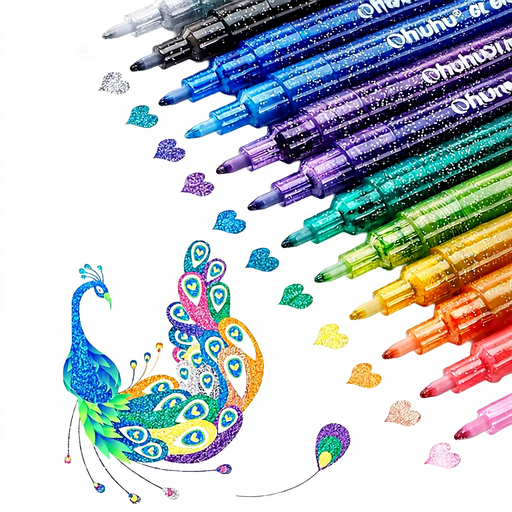
Why We Recommend This Product This set consists of 12 gel pens with an extra-fine 0.8 mm metal tip. The water-based metallic ink features high opacity, making it ideal for use on dark and black paper. According to the manufacturer, the ink is water-resistant, quick-drying, acid-free, and certified non-toxic under ASTM D-4236.
Pros
Who It's For This set is aimed at artists, illustrators, and crafters who create detailed drawings or want to add accents to dark paper. It is also an excellent choice for scrapbooking and journaling.

Why We Recommend This Product This set combines clear stamps with matching metal cutting dies. This combination allows you to first stamp a design with precision and then cut it out perfectly. This opens up complex design possibilities, such as layering effects for card making and scrapbooking.
Pros
Who It's For Ideal for advanced crafters and beginners alike who want to create professional-looking cards, album pages, and other paper decorations with precise, repeatable designs.
The products featured here cover specific applications. For projects that require a broader range of coordinated materials, a complete kit can be an excellent foundation. You can find an extensive selection of thematically organised materials in our Scrapbooking Kit category.
1. What belongs in a basic craft supply kit? A functional basic kit typically includes a cutting mat, a craft knife or scissors, a ruler, various papers and cardstocks, and suitable adhesives like an adhesive roller or all-purpose glue. Depending on the project, pens, paints, and decorative elements such as stamps or cutting dies are also added.
2. What should you look for in an adhesive for scrapbooking? For scrapbooking, it is crucial to use an adhesive labelled as "acid-free" or "archival-safe." This prevents photos and papers from yellowing or becoming damaged over time. Dry adhesives like adhesive rollers are often advantageous as they do not warp the paper and provide an instant bond.
3. How do you use cutting dies correctly? A cutting die is placed with the paper between two cutting plates. This "sandwich" is then run through a compatible die-cutting and embossing machine. The pressure from the machine forces the sharp edges of the die through the paper, precisely cutting out the design.