Lieferung heute & morgen

Qualitätsgarantie

Willkommens-Angebote freischalten: KOSTENLOSE Lieferung | Bis zu 80 % RABATT | Kostenlose 30-Tage-JoyPlus-Testphase
App herunterladen
The transition from a digital sketch to a tangible object is a quiet, almost meditative process. In the tranquility of the home studio or workshop, creativity unfolds not through loud machinery, but through precision tools that act as an extension of one's own thoughts. The challenge lies in creating a space where technology enhances focus rather than disrupting it. A place where the physical manifestation of an idea occurs with the same elegance and clarity as the original design on the screen.
The modern workshop is no longer a place of noise and dust. It is a curated space where every tool serves a purpose and integrates harmoniously into the living environment. This is about the balance between functionality and aesthetics, between the ability to produce complex prototypes and the need to maintain a quiet, orderly living space.
Additive manufacturing for home use has undergone a remarkable evolution. Early models required patience and a high degree of technical understanding. Today's instruments follow a different philosophy: they are designed to support the creative process by minimising technical hurdles. A central aspect of this development is the synthesis of speed and precision. A fast 3D printer is only valuable if its high speed does not compromise detail fidelity and surface quality.
The physical basis for this lies in the stability of the motion system. Innovative architectures like the CoreXZ structure are gaining prominence. In this design, the movements of the X and Z axes are controlled by a synchronised belt system. This reduces the moving mass of the print head and allows for high acceleration with minimal vibration. The result is clean layer lines and sharp edges, even at speeds that can reach up to 600 mm/s according to manufacturer specifications. Additional support rods, forming a rigid triangular structure, further minimise Z-axis vibrations and ensure the stability essential for a 3D printer large print volume.
Another crucial factor for a smooth workflow is the material feed. A Direct Drive Extruder sits directly on the print head, pushing the filament along a short path into the hot end. This principle offers more precise control over extrusion, which is particularly advantageous with flexible materials and rapid changes in direction. It reduces the risk of clogging and ensures a consistent material flow. Combined with an automated calibration process, known as 3D printer auto-leveling, the need for manual adjustments is eliminated. The system measures the print bed independently and compensates for the slightest unevenness. This allows the user to concentrate on what is essential: the design.
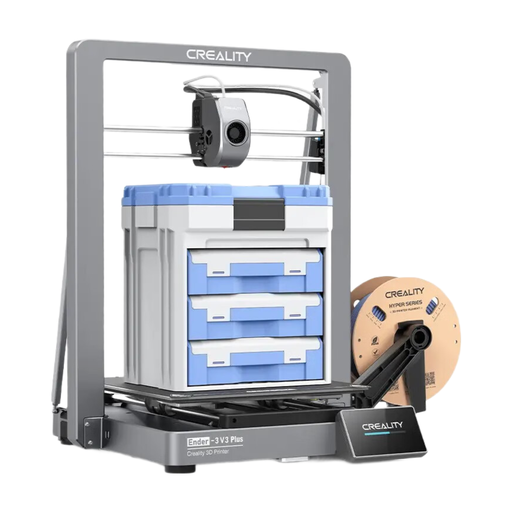
Choosing the right tool is a personal decision that depends on one's own projects and available space. For ambitious 3D printers for hobbyists and prototypers who want to create large, single-piece objects or small batches, the build volume is a decisive criterion. The Creality Ender 3 V3 Plus, with a build volume of 300 x 300 x 330 mm, offers the capability to produce even large-scale models in a single piece. Its stable metal frame construction, combined with the aforementioned CoreXZ kinematics, creates the conditions for precise results at high speeds. The thoughtful design, which includes extensive pre-assembly, simplifies setup and integrates unobtrusively into an existing workspace.
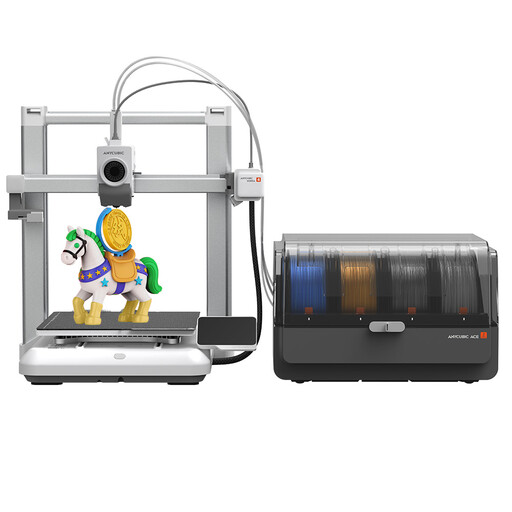
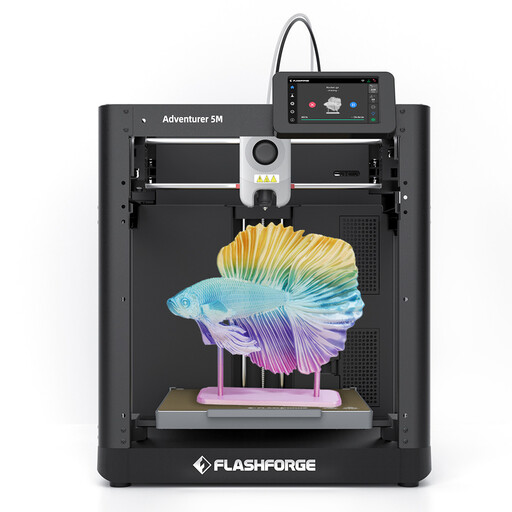
For creators focused on producing multi-colour models, systems like the ANYCUBIC Kobra 4 Combo offer an integrated solution. Such devices enable automatic switching between different filaments, opening up new design possibilities without the need for manual post-processing or painting. Conversely, those working in a more compact environment who value an enclosed design will find an alternative in the FlashForge Adventurer 5M. Its CoreXY setup and enclosed chassis are well-suited for materials that require a constant ambient temperature, while also reducing noise emissions. Each of these instruments represents a specific approach to bridging the gap between digital vision and physical form.
For those wishing to explore an expanded selection of tools for modern manufacturing, the directory for new 3D printers offers further inspiration.