
Lieferung heute & morgen

Qualitätsgarantie

Willkommens-Angebote freischalten: KOSTENLOSE Lieferung | Bis zu 80 % RABATT | Kostenlose 30-Tage-JoyPlus-Testphase
App herunterladen
The introduction of high-speed 3D printers has drastically reduced manufacturing times for prototypes and models. But the printer's speed is only half the battle. Choosing the right filament is crucial to fully unlock the potential of these machines and avoid costly failed prints, wasted material, and frustration. Many users invest in a fast printer, only to use unsuitable material and then wonder why their results are poor.
As your Joybuy Product Recommendation Officer, I'm here to filter the essential information from the marketing hype. In this guide, I'll show you the most common pitfalls when buying high-speed filaments and which technical parameters you need to look for to make an informed decision.
The temptation to complete print jobs in a fraction of the time is immense. However, this advantage can be quickly negated by the following, often overlooked, problems.
To avoid the problems mentioned above, you should check the following technical specifications before buying a 3D Printer Filament PLA for high-speed applications.
A true high-speed PLA filament like Creality Hyper PLA has a modified composition. It is characterised by higher fluidity, meaning it melts faster at high temperatures and flows more easily through the nozzle. At the same time, rapid cooling and hardening (crystallisation) are required so that the freshly printed layer retains its shape and is not distorted by the speed of the print head. Only this combination enables sharp details and clean overhangs at speeds of up to 600 mm/s.
For reliable high-speed printing, strict control of the filament diameter is essential. Look for a specified dimensional accuracy of +/- 0.02 mm. This value ensures that the material flow remains constant across the entire PLA Filament 1kg spool. This is the most important prerequisite for preventing nozzle clogs and achieving a uniform surface quality. A PLA Filament 1.75mm with this precision is a fundamental requirement for repeatable and reliable results.
High-speed PLA is often reinforced with additives that increase its impact resistance and tensile strength compared to standard PLA. This not only makes the printed parts more durable but also reduces the risk of cracking from rapid cooling. Also, look for manufacturer specifications on winding, such as automated, neat spooling. This minimises the risk of tangles and ensures a smooth printing process from start to finish.
Based on the criteria above, we have selected a few options from the Creality range that are suitable for different user profiles.
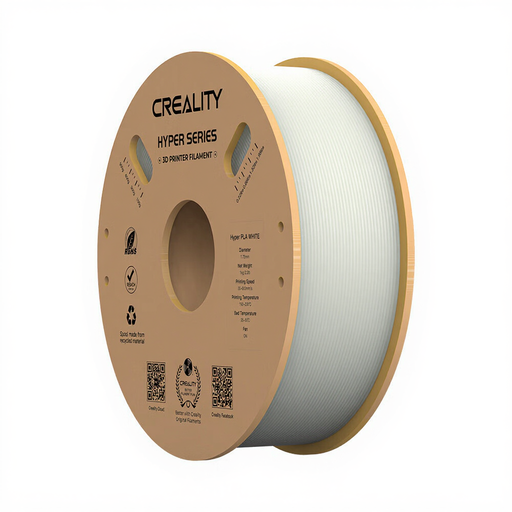
Why This Fits Their Persona: For users who produce functional prototypes or small batches daily, reliability is paramount. This filament is designed as a workhorse that delivers consistent results and minimises downtime. The neutral white colour is ideal for design iterations.
The formulation for high flowability and rapid cooling directly addresses the pitfall of "fake" high-speed labels. The specified dimensional accuracy of +/-0.02mm reliably prevents nozzle clogs caused by inconsistent diameter.
Engineered for print speeds up to 600 mm/s; high toughness for durable functional parts.
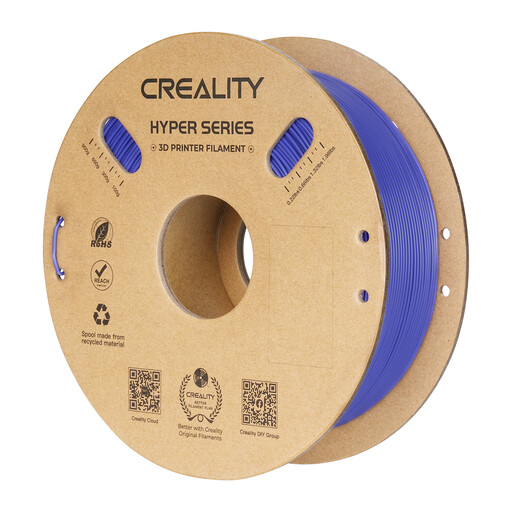
Why This Fits Their Persona: For makers printing cosplay parts, decorative objects, or visually appealing models, it's not just about speed, but also surface quality and colour vibrancy. This filament offers a balance of both.
The special material blend minimises stringing and blobs even at high speeds, resulting in a clean surface straight off the printer and reducing the need for extensive post-processing.
Combines high print speed with an appealing, matte surface finish; vibrant and uniform colouration.
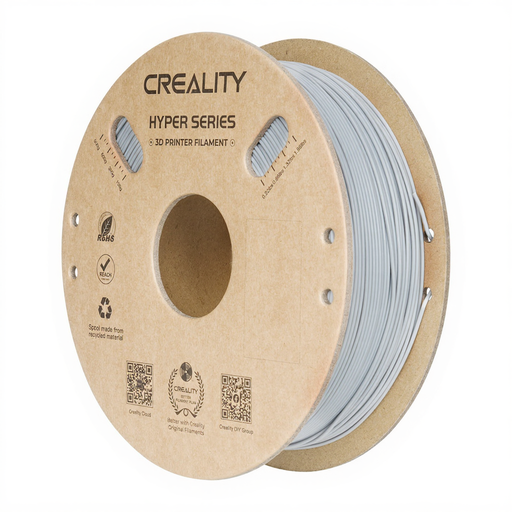
Why This Fits Their Persona: This user needs a reliable everyday filament for a variety of projects, from technical parts to test prints. Grey is an ideal colour for easily spotting surface details and potential print defects.
Offers the same professional specifications (+/-0.02mm tolerance, neat winding) as the other Hyper PLA variants, protecting against the typical failures of cheaper filaments that end up costing more through failed prints.
High reliability and speed in a versatile, neutral colour; great value for everyday use.
We've compiled a complete, up-to-date list of products that fully meet these strict selection criteria and UK safety regulations.
According to the manufacturer, Creality Hyper PLA is recommended to be printed with a nozzle temperature between 190°C and 230°C. The print bed temperature can range from 25°C to 60°C or be turned off entirely, depending on the build surface. The print speed is highly dependent on the printer model. On compatible devices like the Creality K1 series, speeds of up to 600 mm/s are possible. It is advisable to start with the manufacturer's preset profile and fine-tune from there.
PLA is hygroscopic, meaning it absorbs moisture from the air. Damp filament becomes brittle and leads to poor print quality (e.g., bubbling, poor layer adhesion). Therefore, always store your FDM Filament in a cool, dry place. It's best to keep the spool in the resealable vacuum bag with the included desiccant when not in use. A dedicated filament dry box is an even better solution for long-term storage.
Yes. As a PLA Filament 1.75mm, it is fundamentally compatible with most FDM 3D printers on the market that use this filament diameter. However, to achieve maximum print speeds, a printer designed for high-speed printing is required. This includes a powerful high-flow hotend, efficient part cooling, and stable mechanics.