
当日/次日达

品质保障

开启新人专享福利: 全场免邮 | 低至 2 折 | 免费试用 30 天 JoyPlus 会员
下载 Joybuy
The search for a high-performance 3D printer often leads advanced users and professionals to models promising high speeds and material versatility. However, this segment is fraught with pitfalls that can lead to a poor investment. Anyone considering a high-speed 3D printer like the Creality K1C 3D Printer should look beyond the raw speed specifications. Common issues include filament incompatibilities that cause print failures at high speeds, or printers that are fast with PLA but struggle with technical materials like carbon fibre filament.
This guide highlights the critical technical features that truly define a high-speed printer, helping you distinguish the truly capable models. We will focus on the parameters essential for achieving reliable, high-quality results on demanding projects.
Before making a purchase, it's important to understand the technical fundamentals that qualify a printer for high speeds and advanced materials. Three aspects are of central importance here.
A 3D printer's reliability at high speed depends heavily on its extruder. A direct-drive extruder, where the feed motor is located directly on the hotend, offers more precise filament control and is better suited for flexible and abrasive materials. According to the manufacturer, the Creality K1C uses a clog-free extruder with an additional spring to enhance its grip. The nozzle is also crucial: a standard brass nozzle wears out very quickly when processing carbon fibre filament. The K1C addresses this with a "Unicorn" nozzle made from a tri-metal combination (copper tip with steel, titanium heatbreak), designed to handle such abrasive materials.
For high print speeds, the printer's mechanical design is critical. A CoreXY 3D printer like the K1C moves the printhead in the XY plane using two stationary stepper motors. This reduces the moving mass compared to printers where the entire print bed moves (so-called "bed slingers"). The result is higher acceleration with fewer vibrations, leading to cleaner prints without "ghosting" (shadowing on edges). A stable frame construction is essential to absorb the high forces during rapid changes in direction.
Many users overlook the importance of an enclosed build chamber. However, a 3D printer with an enclosure is essential for processing materials with a high shrinkage rate, such as ABS, ASA, or PA (Nylon). The enclosure ensures a constant and elevated ambient temperature, which minimises model warping and improves layer adhesion. The Creality K1C features such an enclosure and a hotend that reaches temperatures up to 300°C, ensuring compatibility with a wide range of technical filaments.
Choosing the right product depends on your individual requirements. Here are some recommendations tailored to specific user profiles.
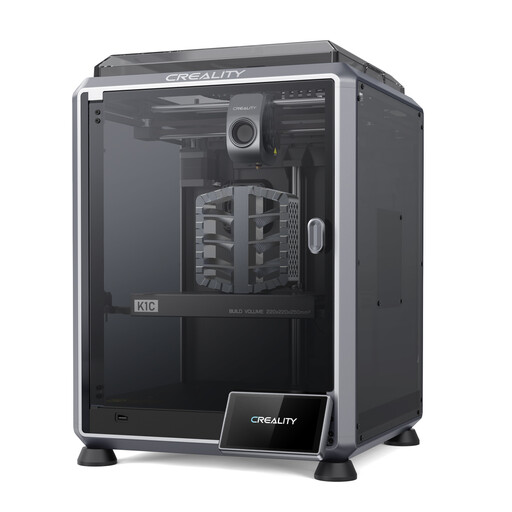
Why this product is a good fit: Ideal for engineers and designers who need to produce functional prototypes and small-batch parts quickly. The combination of high speed, automatic calibration, and the ability to process technical materials maximises productivity.
This model bypasses the trap of limited material compatibility. Thanks to its 300°C hotend, hardened nozzle, and enclosure, it is prepared out of the box for printing carbon fibre filaments (PLA-CF, PA-CF).
The integrated AI camera enables remote monitoring and error detection, which increases reliability for long print jobs and reduces material waste.
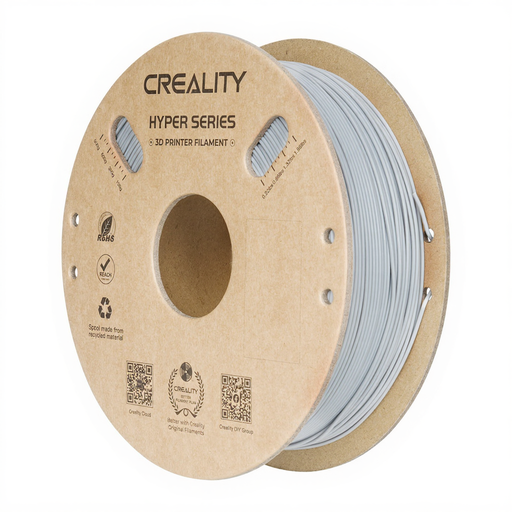
Why this product is a good fit: For users who already own a fast printer and want to unlock its full potential. This filament is specifically designed for the high flow rates and rapid cooling times of high-speed printers.
Solves the problem of filament incompatibility. Standard PLA often leads to underextrusion or poor layer adhesion at speeds above 150 mm/s. Creality Hyper PLA is formulated for speeds up to 600 mm/s.
Its high fluidity and rapid curing enable stable extrusion at extreme speeds without compromising dimensional accuracy (tolerance ±0.02 mm) or surface quality.
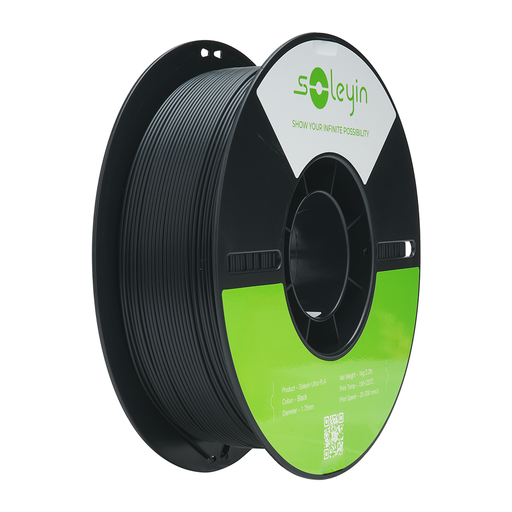
Why this product is a good fit: For users who value a high success rate and reliability in everyday printing projects. This 1.75mm FDM filament is a solid all-rounder for a wide variety of FDM printers.
Addresses the hidden costs of failed prints. The neat winding (EPC technology) prevents tangling, while the vacuum packaging with desiccant secures material quality and prevents bubbling caused by moisture.
The material's low shrinkage rate and precise diameter control (±0.02 mm) contribute to a high print success rate and minimise warping, even on printers without an enclosure.
We have compiled a complete, up-to-date list of products that meet these strict selection criteria. Discover filaments suitable for your next high-speed project.
1. Is the Creality K1C suitable for beginners? While features like fully automatic levelling make it easier to get started, the K1C's speed and ability to process technical materials are aimed primarily at advanced users or those with prior experience. The learning curve can be steeper for absolute novices than with entry-level models.
2. What filaments can the Creality K1C print? According to the manufacturer, the printer supports a wide range of materials thanks to its 300°C hotend and hardened steel nozzle. This includes standard materials like PLA, PETG, and TPU, as well as more demanding polymers like ABS, ASA, PC, and especially fibre-reinforced filaments like PLA-CF, PA-CF, and PET-CF.
3. How loud is the Creality K1C during operation? The K1C features a "Silent Mode." According to Creality, this can reduce the operating noise level to below 45 dB. This makes the printer suitable for use in offices or living spaces where low noise disturbance is important.