
Lieferung heute & morgen

Qualitätsgarantie

Willkommens-Angebote freischalten: KOSTENLOSE Lieferung | Bis zu 80 % RABATT | Kostenlose 30-Tage-JoyPlus-Testphase
App herunterladen
For advanced and professional users in the 3D printing space, selecting the right equipment is crucial. Requirements often extend beyond hobbyist use, demanding high speeds, reliability, and the ability to process engineering-grade materials. This article highlights the features of the Creality K1C, a printer designed specifically for these demanding tasks. We will analyse its technical specifications to provide you with a solid foundation for your purchasing decision.
As your Joybuy Product Recommendation Officer, my mission is to provide you with objective, practical information to help you make an informed choice.
Choosing a 3D printer in the prosumer or professional segment depends on specific technical parameters. Here are three key aspects to consider during your selection process.
Printing speed is a critical factor for the rapid production of prototypes and small batches. A high-speed CoreXY 3D printer offers inherent design advantages in this regard. In this system, the X and Y axes are controlled by the coordinated movement of two stationary stepper motors. This significantly reduces the moving mass of the printhead, enabling higher acceleration and speeds with less vibration. The result is more precise prints, even at a high tempo.
The ability to process fibre-reinforced filaments is a clear differentiator. Printing with abrasive materials like carbon fibre 3D printer filament (e.g., PLA-CF, PETG-CF) requires specialised components. These include a hardened nozzle that can withstand abrasion and a high-temperature 3D printer hotend capable of reaching up to 300°C. An enclosed 3D printer is also beneficial, as it maintains a stable temperature in the build chamber, which minimises warping when using demanding materials like ABS or ASA.
A seamless workflow depends on more than just hardware. Features like fully automatic bed levelling eliminate manual calibration steps and ensure a consistently perfect first layer. An integrated camera allows for remote monitoring of the printing process and automatic failure detection. Combined with a mature software ecosystem that simplifies printer management and control, this creates a closed-loop, reliable system that reduces downtime and boosts productivity.
Based on the criteria above, we have curated a selection of products suitable for demanding 3D printing with engineering-grade filaments.
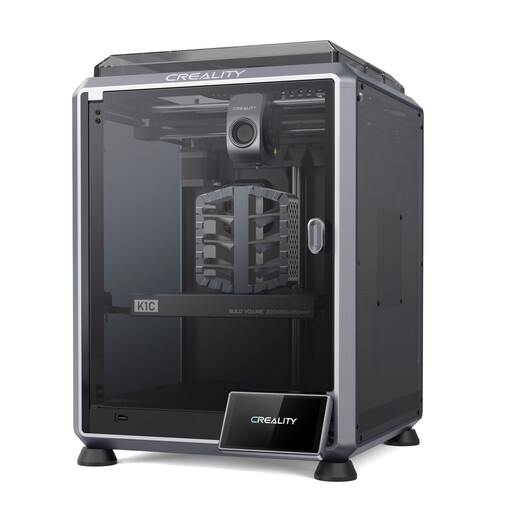
Why It Stands Out
The Creality K1C is an evolution specifically engineered for processing carbon fibre filaments at high speeds. According to the manufacturer, its CoreXY system achieves a maximum print speed of 600 mm/s and an acceleration of 20000 mm/s?. At the heart of its material delivery system is the clog-free direct drive extruder, paired with the tri-metal "Unicorn" nozzle. This nozzle features a steel tip, a copper body, and a titanium alloy heatbreak, making it exceptionally resistant to abrasion from carbon fibres. The standard AI camera and enclosed build chamber complete the package for professional applications.
Pros
Who It's For
This printer is aimed at engineers, small businesses, and advanced hobbyists who need to rapidly produce functional prototypes, jigs, fixtures, or end-use parts from durable materials. When you buy a Creality K1C, you are investing in a device optimised for efficiency and the processing of engineering filaments.
View the Creality K1C on Joybuy.de
A printer's full potential is only realised in combination with the right material. For the K1C, carbon fibre-reinforced filaments are a natural choice.
| Product | Image | Key Features | | :--- | :--- | :--- | | CAILAB PETG Carbon Fiber - Blue | 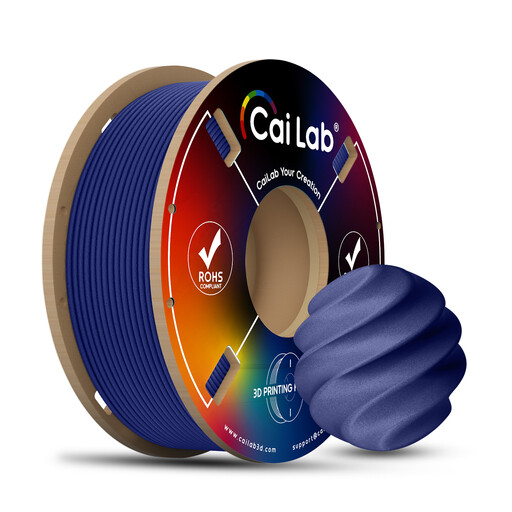 | Combines the printability of PETG with the increased stiffness and strength of carbon fibres. Ideal for lightweight yet robust functional parts. | | CaiLab PETG Carbon Fiber - Black |
 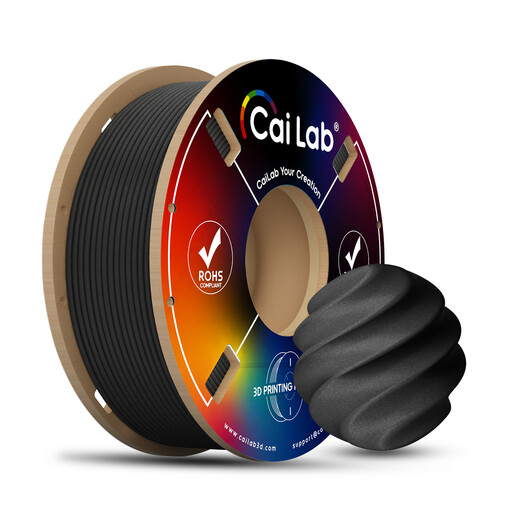 | Offers the same mechanical advantages in a classic black, perfect for professional prototypes and end-use products with a matte finish. |
The world of 3D printing with engineering materials is diverse. If you are looking for other printers, filaments, or accessories optimised for printing with composites, you may find the right product in our broader selection.
Explore our full range of printers and materials for carbon fibre printing on our category page.
The K1C is a targeted upgrade of the K1. The key differences are the improved, clog-free direct drive extruder, the standard tri-metal "Unicorn" nozzle for abrasive filaments like carbon fibre, the included AI camera, and an activated carbon air filtration system. These features position the K1C more firmly for reliable printing with engineering materials.
Thanks to its 300°C hotend and hardened nozzle, the K1C can process a wide range of materials. In addition to standard filaments like PLA, PETG, and ABS, it is specially designed for printing composite materials like PLA-CF, PA-CF, PET-CF, as well as heat-resistant materials such as ASA and PC.
Yes, its technical specifications make it suitable for professional applications such as rapid prototyping, manufacturing aids (jigs & fixtures), and small-batch production. The high speed, reliability from the upgraded extrusion unit, and the ability to print engineering filaments meet the demands of many engineers and small businesses.