
Lieferung heute & morgen

Qualitätsgarantie

Willkommens-Angebote freischalten: KOSTENLOSE Lieferung | Bis zu 80 % RABATT | Kostenlose 30-Tage-JoyPlus-Testphase
App herunterladen
A cream rug complements many interior styles and makes rooms feel brighter and calmer. However, with light-coloured rugs, typical buying issues often only become apparent after laying them out: the size doesn't suit the room, the pile height obstructs doors or the vacuum cleaner, and the care instructions remain unclear.
Before you buy, it's worth looking at specific product details rather than just decorative promises. The key factors are material, dimensions, pile height, backing and suitability for the intended room.
Cream, natural and beige tones can show dust, pet hair and stains. A low-maintenance rug therefore needs clear cleaning instructions. For wool rugs, the product description will specify regular vacuuming or beating out. A faux fur rug made of polyester with a felt backing, on the other hand, may require spot cleaning with a mild detergent and a damp cloth. Machine washing is not automatically possible with this material.
A rug measuring 200 x 80 cm is better suited to a hallway, beside a bed or in a narrow area. A 170 x 120 cm rug offers more space for a small seating area or under a compact table. For a spacious living room, a format such as 230 x 160 cm may be more appropriate.
Before buying, mark out the available space on the floor with masking tape or newspaper. This way you can check that doors, drawers and walkways remain clear.
Suitability depends not only on the top material. The backing, pile height and manufacturer's information are also important. For the My-Flair Shaggy models featured here, suitability for underfloor heating is explicitly stated. For other rugs, this information should be in the product details before you order. An anti-slip underlay must not unnecessarily block heat output and should also be suitable for underfloor heating.
A wool rug or a handwoven wool rug offers a textured surface and a natural look. The product details for the "Suzan" range specify wool for some variants and, for the 200 x 80 cm size, upcycled cotton. So check the individual material specification for each size, even if the model name is the same.
A chindi rug can be made from recycled textile fibres and, thanks to its woven structure, has a unique character. The "Suzan" model is described as reversible and non-shedding, which makes it easier to choose for households where the rug is used regularly.
Polypropylene is suitable if you're looking for a fluffy shaggy rug with a pile height of 4 cm. The longer surface feels soft but requires more care when vacuuming. A faux fur rug made of polyester and felt is light and easy to reposition, but according to the available information should only be spot cleaned and not machine washed.
For a natural living style, a jute rug is an option. Jute is robust and textured, but less soft than a shaggy or faux fur rug. The surface should be kept dry and treated according to the care instructions.
A rug with a 1 cm depth is generally easier to place under furniture than a 4 cm high shaggy rug. Before buying, check the clearance under doors and between furniture legs. For robot vacuum cleaners, a low edge is helpful; the product description for the round "Suzan" variants explicitly states suitability for robot vacuums. This doesn't guarantee compatibility with every device, as the design and rug edge are decisive factors.
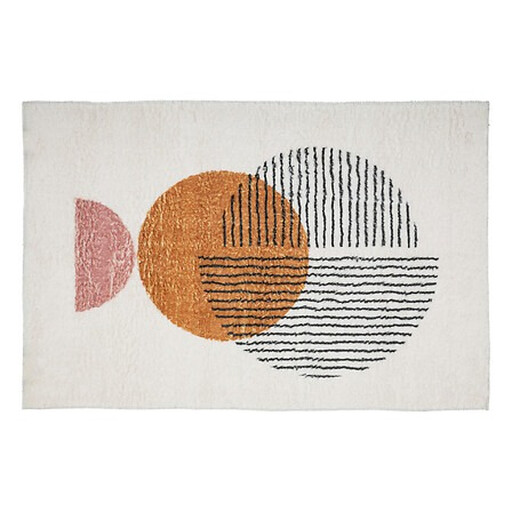
Why this product fits the profile: The compact format works well as a bedroom rug, an accent in a child's room or for a small seating area. The low product weight of 0.720 kg makes it easy to reposition.
The dimensions limit the risk of poor planning. The care instructions specify spot cleaning and rule out machine washing and tumble drying.
Polyester faux fur surface, felt backing and 90 x 60 cm; easy to place and intended for dry, clean floors.
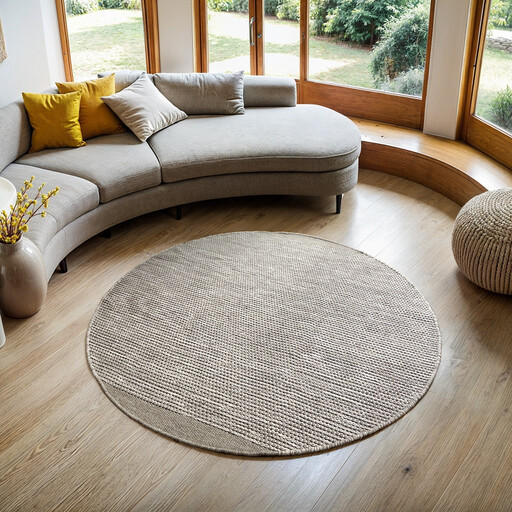
Why this product fits the profile: The round shape and handwoven structure create a clear accent in living rooms, bedrooms, hallways or offices.
The product details state 1 cm depth, 10 mm total height and 2.4 kg/m² total weight. This means the relevant dimensions are clear before purchase.
Handwoven chindi rug from the Suzan range; according to the product description, suitable for underfloor heating and robot vacuums, and reversible.
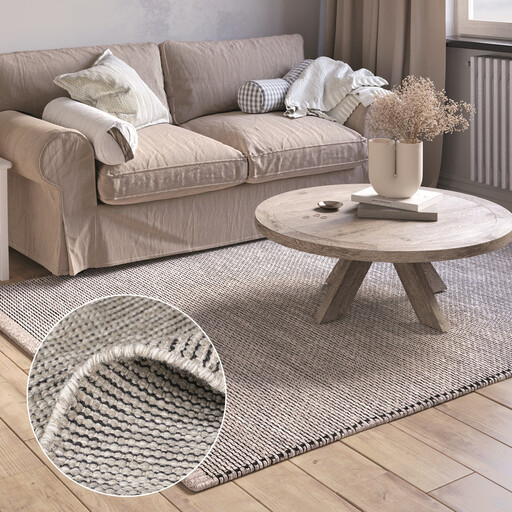
Why this product fits the profile: The medium rectangular format covers a clearly defined area and suits hallways, offices, bedrooms or a smaller living room.
The specification states 170 x 120 x 1 cm and wool. This makes it easier to check against door clearances and existing furniture.
Handwoven look, 1 cm depth and a weight of 5 kg according to the product data; suitable for several living areas.
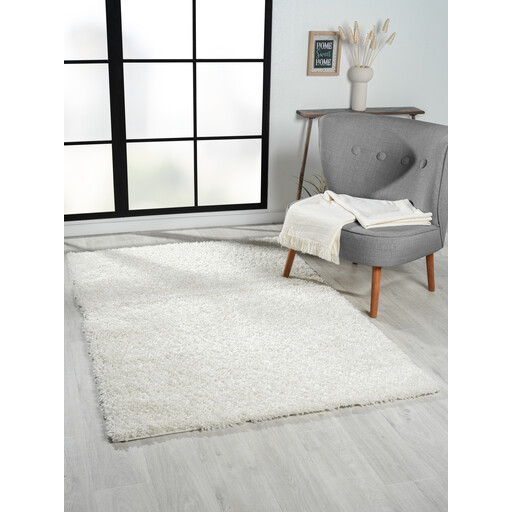
Why this product fits the profile: The larger surface area works well as a living room rug or for a central seating area. Polypropylene and 4 cm height define the soft, voluminous design.
The product description states suitability for underfloor heating. However, you should still check door clearance, rug underlay and robot vacuum compatibility before laying it out.
Cream-coloured polypropylene design, 180 x 120 cm, 4 cm depth and a stated net weight of 3 kg.
We've put together a complete, regularly updated list of products that fully meet these strict selection criteria and the safety regulations in force in the EU.
For a living room, the choice depends on the floor area, furniture layout and desired pile height. A rectangular format such as 180 x 120 cm or 230 x 160 cm can define a seating area. A shaggy rug looks more voluminous, while a flat handwoven rug is easier to place under furniture.
Not every design is automatically suitable. Look for an explicit manufacturer statement about underfloor heating and also check the backing and the underlay you plan to use. For the "My Shaggy" and "Suzan" variants mentioned, this suitability is stated in the respective product description.
The lifespan depends on the material, foot traffic, care and floor surface. Robust woven structures can be suitable for high-traffic areas; a high-pile shaggy rug, on the other hand, needs appropriate cleaning. Regular vacuuming, avoiding standing moisture and a correctly sized underlay can help maintain its everyday usability.