A countertop oven may be enough for a single cream tart, provided your tin is confirmed to fit and the oven offers the heating function required by your recipe. A built-in oven is an option if you have a suitable housing unit and would also like to use its larger cavity for other baking. The recipe method also matters for a crisp base; after baking, a perishable tart needs to be transported chilled, whichever type of oven you choose.
Which type suits whom
Bakers with a large tart tin
If you want to take the tart with you in its tin, compare the tin’s diameter with the specific tin size stated for the oven. Severin and Rommelsbacher give tin size specifications for individual models; Dr. Oetker describes blind baking as a way to achieve a crisp base before adding a moist filling.
Bakers without space for a built-in oven
If you don’t have a suitable housing unit, check both the tin fit and the space available for a countertop oven. Severin and Rommelsbacher’s specifications, along with NEFF’s installation dimensions, can help you compare the different types.
Regular home bakers
If you also use your oven for other bakes, compare the heating functions and cavity capacity. For ovens carrying an energy label, the Verbraucherzentrale also explains energy use per standard cycle.
What to look for when buying
First, measure your tin and the space available for the oven, whether on a worktop or in a housing unit. Then check that the available heating function suits your recipe and whether energy figures are useful for the other ways you’ll use the oven.
| Consideration |
What to check when buying |
Who it matters to |
| Tin fit and tart base |
Measure the tin, including its rim, and compare it with the model’s specifications; check the recipe’s heating function and baking steps. |
If I want to take the tart in its tin, it needs to fit in the oven and the base needs to be baked according to my recipe. Around 36% of consumers prioritise a good fit. |
| Worktop or installation space |
Measure the available worktop space or housing unit and compare it with the appliance’s dimensions and installation requirements. |
If I don’t have a housing unit, a countertop oven could be an option, but I’ll need to allow enough worktop space. Around 29% of consumers prioritise space and oven type. |
| Heating function to suit the recipe |
Compare the available heating functions and temperature range with your recipe and the appliance instructions. |
If my recipe calls for a particular heating function, I want to be able to select it on the oven rather than assume an extra feature will give me better baking results. Around 21% of consumers focus on the heating function. |
| Energy use if you’ll use the oven for other things |
For labelled appliances, compare the kWh per standard cycle for the relevant heating function and cavity capacity. |
If I use the oven regularly, comparable energy-use figures are more useful to me than the energy efficiency class alone. Around 14% of consumers focus on energy use. |
Common misconceptions
-
The capacity in litres tells you whether your tart tin will fit
Countertop ovens with similar stated cavity capacities can still be designed for different tin diameters. Severin specifies tins up to 30 cm for the TO 2067, while Rommelsbacher specifies tins up to 25 cm for the BGS 1400.
Measure your tin and check the specifications for the exact model before choosing an oven.
You may need a smaller tin if your existing one won’t fit.
-
A cleaning function is a baking function
Beko describes SteamShine on the BBIM12300X as a steam-cleaning function, not a function for baking the filling.
Compare the baking programmes and cleaning functions separately against your recipe’s requirements.
-
The energy efficiency class tells you how much energy one tart will use
The Verbraucherzentrale explains that energy use per standard cycle is given for certain heating functions. This figure does not measure the energy used for your particular recipe and baking method.
For appliances with an energy label, compare kWh figures based on the same cycle and consider how often you’ll use the oven for other things.
-
Keeping your tart chilled for a picnic depends on your choice of oven
With a perishable filling, the risk during transport comes after baking. The German Federal Institute for Risk Assessment warns that inadequate temperatures during transport and storage can allow harmful germs to multiply.
If your tart needs to be kept chilled, plan to keep it cool until it’s time to eat, whether you use a countertop or built-in oven.
Key brands at a glance
Severin
Countertop ovens for households without space for a built-in model.
- For the TO 2067, Severin specifies a capacity of around 20 l, tins up to 30 cm in diameter, and top and bottom heat, separately or together.
- The tin size and function specifications apply to this model and cannot automatically be assumed to apply to other Severin ovens.
Rommelsbacher
Compact baking and grill ovens, including models for smaller tart tins.
- For the BGS 1400, Rommelsbacher specifies a capacity of 22 l, tins up to 25 cm, and top/bottom heat with or without fan-assisted cooking.
- The capacity in litres doesn’t prove that a larger tart tin will fit; check the specific tin size stated for the model.
NEFF
Built-in ovens for a suitably sized kitchen housing unit.
- For the B1CCC0AK3, NEFF specifies a 71 l capacity, as well as top/bottom heat and hot air.
- Check the housing unit dimensions against your kitchen and make sure the model’s heating functions suit your recipe.
Beko
Built-in ovens with several heating functions and cleaning features that vary by model.
- Beko specifies a 72 l capacity and eight heating functions for the BBIM12300X.
- According to Beko, SteamShine is a cleaning function. The manufacturer’s description of the hot-air distribution is a manufacturer claim, not an independently verified baking result.
Suitable oven models at Joybuy
The selection below includes countertop and built-in ovens. Compare the type, dimensions and stated functions with your tart tin, recipe and available space.
 No image available
Bosch HBA571BB4 Series 2 built-in oven
For a kitchen with a suitable housing unit; check the installation dimensions against the space available.
71 l cavity; five heating functions, including top/bottom heat and 3D hot air; temperature range 30–275 °C.
According to the product description, installation should be carried out by a qualified professional.
View at Joybuy
 No image available
Comfee built-in oven, 60 cm, 70 l
For a kitchen with a suitably sized housing unit; check that the stated heating functions suit your recipe.
70 l cavity; ten functions, including hot air and grill.
View at Joybuy
 No image available
Woltu BF12sz mini oven, 32 l
A countertop appliance for baking and grilling; before buying, check that your tart tin will fit and the heating function suits your recipe.
Temperature range 100–250 °C; timer; dimensions 52,3 × 36 × 32,2 cm.
View at Joybuy
 No image available
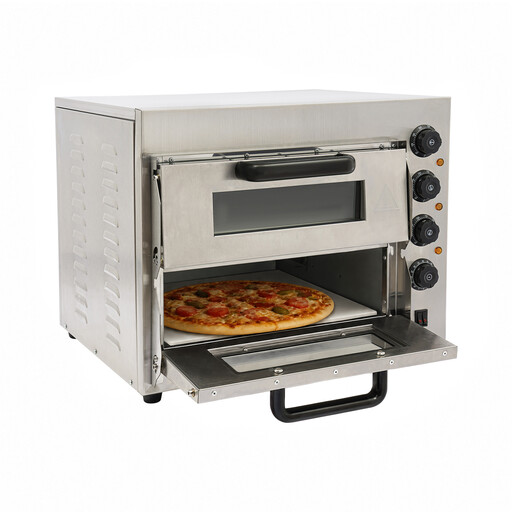
Electric double-decker pizza oven, 20 l
The product description also lists baking as a use. For a cream tart, check the tin fit and recipe requirements particularly carefully against this type of appliance.
3000 W; 50–350 °C; timer from 1–60 minutes; separately adjustable upper, middle and lower heating elements.
According to the product description, preheating is required; the surfaces become very hot during use.
View at Joybuy
 No image available
Haier H6 ID23T3HTB built-in oven, 78 l
For a kitchen with a suitable housing unit; check the housing unit dimensions and electrical connection against the installation instructions.
78 l cavity; nine cooking functions.
View at Joybuy
Frequently asked questions
Does the tart base need to be baked before adding the filling?
Follow your recipe. Dr. Oetker describes pre-baking or blind baking as a way to make the base crisp before adding a moist filling, although blind baking isn’t always necessary. A published NEFF recipe for a chilled cream tart bakes only the base in the oven; it isn’t a guide to every egg custard filling.
Can I transport a ready-made cream tart to a picnic without keeping it chilled?
If the ingredients or finished tart are perishable, plan to keep them chilled until you’re ready to eat. The German Federal Institute for Risk Assessment warns that inadequate temperatures during transport and storage can allow harmful germs to multiply.
Does the EU energy label apply to every countertop oven?
You can’t tell from the absence of a label alone: the European Commission lists small ovens as outside the scope of the ecodesign regulation in question. Check the classification of the specific appliance and the requirements that apply to it; this doesn’t support a blanket claim about every countertop oven.
What does the CE marking mean when buying an appliance?
According to the European Commission, the manufacturer uses the CE marking to declare that the product meets the applicable EU requirements. It isn’t a quality mark awarded by a central EU body, nor is it an independent baking test.


