
Lieferung heute & morgen

Qualitätsgarantie

Willkommens-Angebote freischalten: KOSTENLOSE Lieferung | Bis zu 80 % RABATT | Kostenlose 30-Tage-JoyPlus-Testphase
App herunterladen
Finding the right creative building toy can quickly become overwhelming. The market offers a vast array of options, from classic interlocking bricks to innovative magnetic sets. However, not every product lives up to its promise. Many gift-givers invest in sets that end up gathering dust because they are too fragile, not expandable, or unsuitable for the child's age. This guide will help you avoid common pitfalls and make an informed decision.
Before you make a purchase, it's helpful to know the three most common issues that can significantly diminish a toy's play value:
To avoid these problems, you should check three key parameters. These will help you objectively assess the quality and long-term value of a building set.
Safety is the most important aspect of any toy. Look for the CE marking, which confirms that the product meets the EU's essential health and safety requirements. High-quality building toys, like many LEGO building sets, are often made of ABS plastic. This material is known for its robustness, durability, and dimensional stability. It ensures that building blocks for kids retain their clutch power even after frequent assembly and disassembly, and that no sharp edges develop.
A good educational toy grows with the child. Check if the set is part of an expandable system. Classic brick systems offer the advantage that simple basic sets can later be supplemented with more complex themed sets or technical elements. The variety of included parts—from simple bricks and wheels to special elements like windows or joints—is an indicator of the creative potential. A marble run, for example, is an excellent STEM toy as it playfully teaches fundamental principles of physics like gravity and momentum.
Choose a set that matches the child's current developmental stage.
Instead of making a blanket recommendation, we have curated products for different requirement profiles.
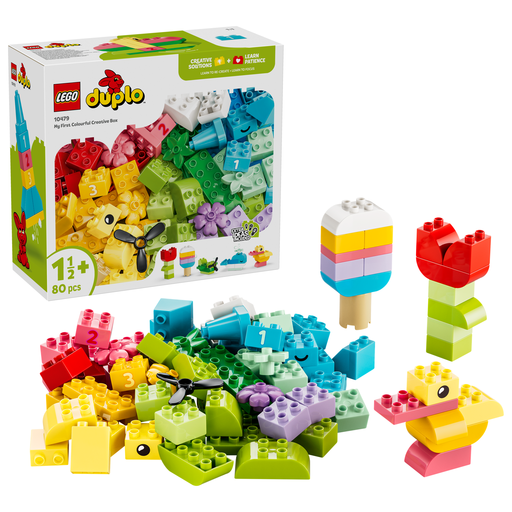
Why it's a great fit: This set is specifically designed for little hands. The 80 large, colourful bricks are easy to grip and connect, which promotes fine motor skills without being overwhelming. It is an ideal starter set for toddlers to learn basic building principles and colour recognition.
The size of the bricks eliminates any choking hazard. As part of the DUPLO system, it is fully compatible with all other LEGO DUPLO sets, thus avoiding the trap of limited expandability.
Specifically promotes fine motor skills and the recognition of colours and numbers through printed bricks. Made from durable ABS plastic for long-lasting safety and fun.
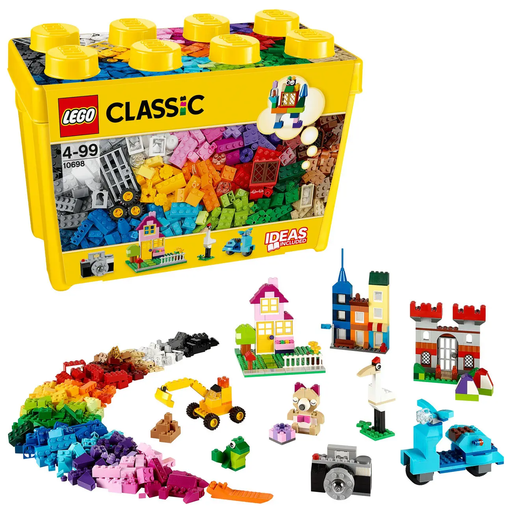
Why it's a great fit: With 790 pieces in 33 different colours, various windows, doors, and special elements like tyres and wheel rims, this box provides a solid foundation for nearly limitless building projects. It is ideal for children who are growing beyond simple stacking and want to bring their own ideas to life.
As part of the LEGO Classic range, the box is fully compatible with all other LEGO System bricks. The wide variety of parts prevents the set from losing its appeal quickly, and the convenient storage box makes cleanup easier.
Includes two green baseplates in different sizes, which serve as a stable foundation for constructions. The mix of standard bricks and special parts specifically fosters creativity and spatial reasoning.
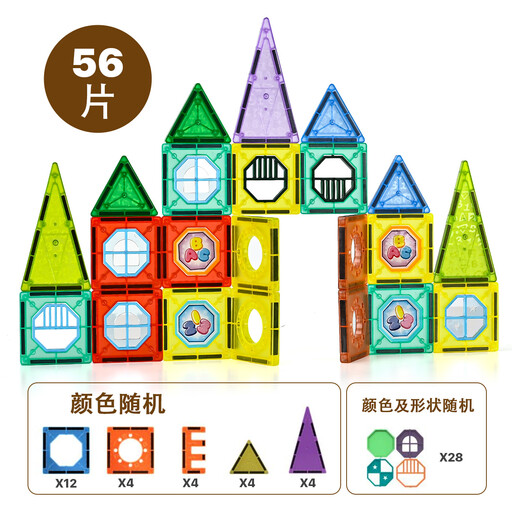
Why it's a great fit: This set offers an alternative to classic interlocking bricks and introduces children to the world of magnetism. The translucent, coloured tiles can be intuitively connected to form 2D and 3D shapes, promoting spatial thinking and an understanding of basic geometric forms.
The product description highlights the strong, securely encapsulated magnets that ensure stable connections, counteracting the problem of unstable constructions. Compatibility with other standard magnetic building sets is also mentioned.
As a STEM toy, it promotes an understanding of magnetism, geometry, and structural engineering. According to the manufacturer, the material is non-toxic ABS plastic with smooth edges, ensuring safety during play.
We have compiled a complete, up-to-date list of products that fully meet these strict selection criteria and German safety regulations.
Look for the CE marking on the packaging. This indicates that the manufacturer declares compliance with EU toy safety standards. Also, check that the material feels robust, such as ABS plastic, and that there are no sharp edges or easily detachable small parts, especially for toys intended for children under three.
Most manufacturers recommend magnetic building blocks for children aged three and up. This is due to the presence of small, strong magnets. It is crucial to choose sets where the magnets are firmly and securely encapsulated inside the plastic parts to prevent them from coming loose and being swallowed.
For plastic interlocking bricks like LEGO, a gentle hand wash in lukewarm water (no hotter than 40°C / 104°F) with a mild soap solution is recommended. For magnetic building blocks, manufacturers usually advise wiping them with a damp cloth, as complete immersion in water could damage the magnets. Always follow the manufacturer's specific care instructions.