
Lieferung heute & morgen

Qualitätsgarantie

Willkommens-Angebote freischalten: KOSTENLOSE Lieferung | Bis zu 80 % RABATT | Kostenlose 30-Tage-JoyPlus-Testphase
App herunterladen
By a Joybuy Product Recommendation Officer, August 28, 2026
The selection of creative building toys is vast, and manufacturers' promises are often grandiose. But not every set delivers. As a gift for children, it should spark joy and support development, not end in frustration. Many parents and grandparents invest in toys that end up gathering dust in a corner. This is often due to avoidable mistakes made during the selection process.
Before you make a decision, you should know the most common pitfalls that can spoil the fun and turn a purchase into a disappointment:
To avoid these pitfalls, you only need to look at a few crucial features. These objective criteria will help you realistically assess the quality and long-term value of a building toy.
A fundamental criterion for any toy is safety. Look for the CE marking, which confirms that the product meets applicable EU requirements. High-quality construction toys are typically made from durable ABS plastic. This material is known for its longevity and resistance to breaking. Equally important is a clean finish without sharp edges or burrs, especially for educational toys for toddlers who also explore their environment with their mouths. For magnetic tiles, the magnets should be securely enclosed within the plastic casing to prevent any risk of being swallowed.
The true value of a building system often reveals itself over time. Before buying, check if the set is part of a larger ecosystem. Classic building blocks for kids, like those from the LEGO DUPLO or LEGO Classic lines, are fully compatible with each other. This means a small LEGO Classic box can be the start of a collection that grows over years, enabling ever new and more complex building projects. With magnetic tiles, there are also standard sizes that allow sets from different manufacturers to be combined, provided the dimensions match. This secures your investment and ensures long-lasting, imaginative play.
The size of the building blocks is directly linked to the age recommendation and is crucial for developing fine motor skills.
Based on these objective criteria, we have identified some products that are well-suited for different age groups and play styles.
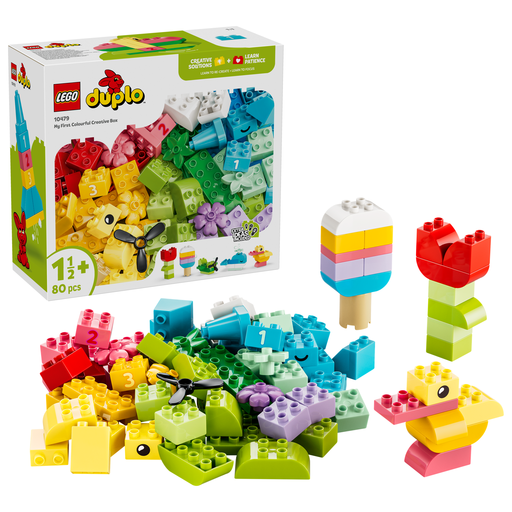
Why This Fits Their Persona: This set is specifically designed for toddlers. The 80 large, colourful bricks are safe and easy to handle, guaranteeing early building success and training fine motor skills without being overwhelming.
Avoids the "wrong complexity" trap. The size of the bricks is perfectly matched to the motor skills of toddlers, preventing frustration. It's also part of the expandable DUPLO system.
Promotes early number recognition with printed bricks (1, 2, 3). The bricks are durable and designed for long-lasting, safe play.

Why This Fits Their Persona: Ideal for children who love to build tall structures and explore geometric shapes. Magnetic tiles offer a different way of building that promotes spatial awareness and an understanding of magnetism.
The description highlights a strong magnetic structure for stable constructions, directly addressing the frustration of poor quality. The parts are made from safe ABS material with smooth edges.
Promotes STEM learning in an intuitive way. The soft macaron colour palette offers an appealing aesthetic. The set is compatible with other magnetic tiles of a similar size.
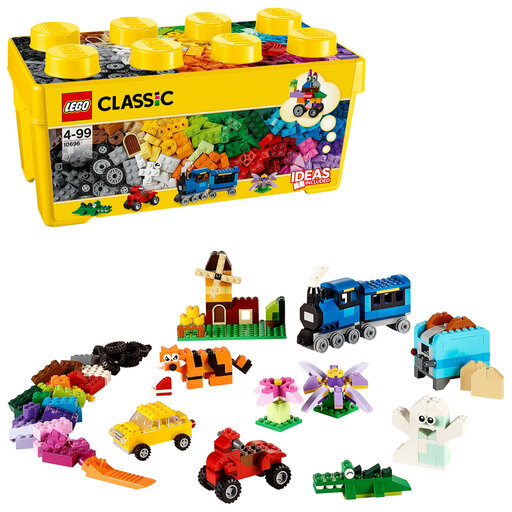
Why This Fits Their Persona: For kids who are ready for smaller bricks and want to let their imagination run wild. This box isn't a themed set, but a treasure trove of bricks in 35 colours for free-form building.
Completely solves the incompatibility problem. As part of the LEGO Classic system, this box can be combined with all other LEGO sets (except DUPLO), ensuring long-term play value.
Includes 484 pieces, including windows, eyes, tyres, and wheel rims, which inspire the construction of vehicles and buildings. The practical storage box makes cleanup easy.
We've compiled a complete, up-to-date list of products that fully meet these strict selection criteria and European safety standards.
How can I identify safe building toys? The most important feature is the CE marking on the packaging. It signals that the manufacturer declares compliance with all relevant EU safety standards. Also, look for high-quality materials like ABS plastic, which is considered robust and non-toxic, as well as a finish without sharp edges. For toys intended for children under three, it's crucial that they do not contain any small parts that could be swallowed.
Are magnetic tiles and LEGO bricks compatible? No, they are two fundamentally different building systems. LEGO bricks are based on a stud-and-tube coupling system, while magnetic tiles hold together using internal magnets. They cannot be directly connected. However, both systems can complement each other well in a playroom, as they offer different building methods and learning experiences—one promotes precise, structured building, while the other encourages fast, intuitive creation of 3D shapes.
What is the best way to clean building blocks? The cleaning method depends on the material. Classic plastic bricks without electronics or stickers (like LEGO) can be washed in a mesh laundry bag at a low temperature (max. 40°C) in the washing machine or by hand in a mild soap solution. Afterwards, they should be air-dried. Magnetic tiles should not be submerged in water, as this can damage the magnets. Instead, wipe them with a slightly damp cloth and dry them immediately.