
Lieferung heute & morgen

Qualitätsgarantie

Willkommens-Angebote freischalten: KOSTENLOSE Lieferung | Bis zu 80 % RABATT | Kostenlose 30-Tage-JoyPlus-Testphase
App herunterladen
Creative and craft sets for children should provide screen-free entertainment, encourage creativity and suit their age. In practice, however, some sets disappoint because they contain too little material, have unclear age recommendations or create more cleaning than expected. Parents, grandparents and education professionals should therefore look beyond the motif, piece count or advertising claims when choosing a set.
A craft set with lots of individual pieces may initially seem comprehensive. What matters, however, is how many complete projects can be made with it and whether consumables need to be purchased separately. With a children's painting set, you should therefore check how much paint is actually included. With a foil art set, it is not just the number of foils that matters, but also how many templates can be decorated.
No-mess craft ideas are particularly practical for travelling or small homes. Finger paints, gouache paints and window paints can still leave marks on clothing, furniture or glass. Cleaning instructions should therefore be read carefully. Water-based paints are often easier to remove while wet, but may still leave stains once dry.
An art set for older children may contain small beads, appliqués, pens or tools. For children under three, such components are particularly concerning because of the potential choking hazard. In addition to the recommended age group, you should check the warnings, material information and the manufacturer's supervision advice.
Simple activities with large, easy-to-grip components are suitable for children aged two to four. Finger paints can offer a direct sensory experience, but require a washable surface and usually adult supervision. For children aged around four and over, pre-cut or pre-drawn projects are a sensible choice, as they achieve a result in just a few steps.
From primary school age, more complex DIY craft sets may be suitable. Children can then mix colours, transfer motifs or work with several materials, for example. When choosing a gift for a child, the set should be neither too easy nor so complicated that the instructions quickly cause frustration.
Look out for:
Labelling does not replace checking whether the set is suitable for your specific situation. Finger paints for fabrics, for example, are not the same as classic children's finger paints. KREUL Mucki Fabric Finger Paints are described as suitable for use on light and dark cotton or blended fabrics containing up to 20 per cent synthetic fibres. The paints are intended to be washable at up to 40 °C after fixing. However, fixing requires a preheated oven or an iron, so adult assistance is essential.
For use on the go, compact, quiet sets without liquids or additional tools are ideal. A foil art set, scratch art pictures or a small painting set are easier to fit in a bag than a large paint box. At home, a larger set may be suitable, provided you have an appropriate work surface and enough storage space.
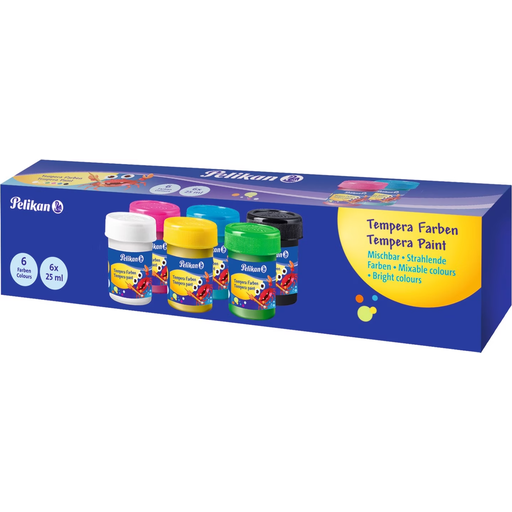
Why this product suits the profile: The set contains six colours, each in a 25 ml pot, along with a paintbrush and mixing palette. Beginners can use it straight away on paper, card, wood or ceramics.
The contents are clear and easy to understand. The age recommendation of three years and over, as well as the warning about possible small parts, should be considered before purchase.
Six basic colours, 25 ml per pot, plus a paintbrush and palette in one set.
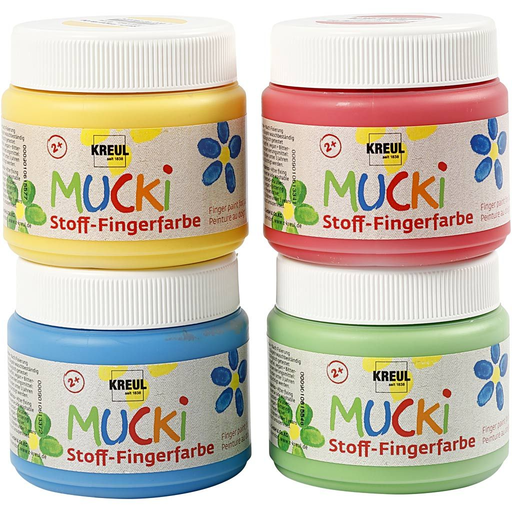
Why this product suits the profile: The four water-based colours are recommended for children aged two and over and are designed for textile projects on cotton and suitable blended fabrics.
The intended surface is clearly specified. The paint must be fixed before washing, preventing false expectations about textile paints being immediately wash-resistant.
Four shades, each 150 ml; according to the product information, free from parabens, gluten, lactose and nuts.
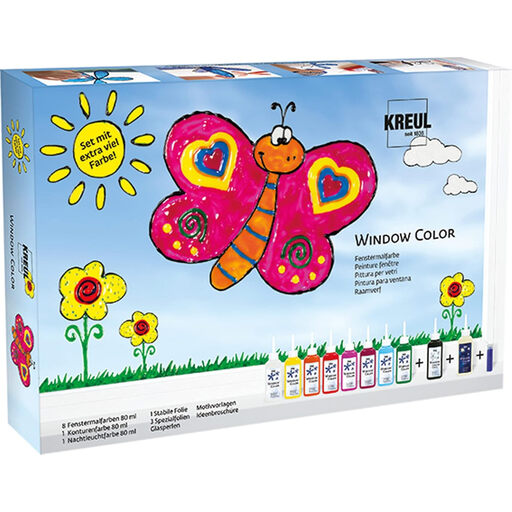
Why this product suits the profile: The set is designed for window pictures and decorations on smooth surfaces such as glass, mirrors, tiles and foil. It is intended for children aged six and over and adults.
It is not limited to use on paper. As liquid paint can cause stains if handled incorrectly, you should plan for a protective surface, drying time and supervision.
Ten bottles of 80 ml each, contour paint, glow-in-the-dark paint, foils, templates and instructions.
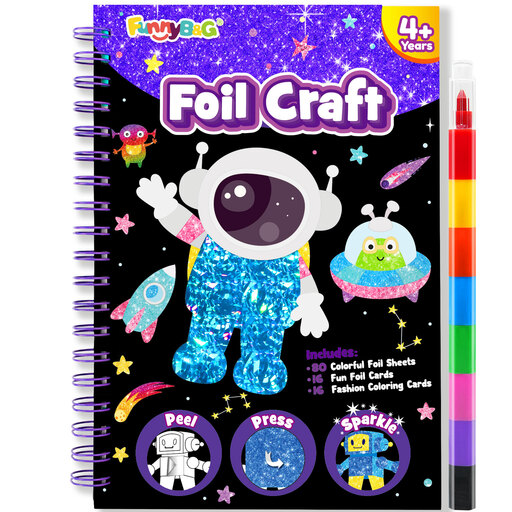
Why this product suits the profile: The set is designed for children aged approximately four to ten and uses the steps of peeling, pressing and revealing. It requires neither glue nor scissors.
The activity is reduced to just a few steps and uses no liquid paints. Even so, the age recommendation and individual components should be checked before use.
112 pieces, including 16 picture boards, 80 foils, 16 painting cards and a rotating pen with eight colours; compact format according to the product information.
We have put together a complete, regularly updated list of products that fully meet these strict selection criteria and the safety regulations applicable in the EU.
For quiet projects without liquids, scratch art pictures are a good choice. The Jar Melo Scratch Art Notes Set-Rainbow contains 130 pre-cut glitter notes and a wooden stylus. It can be used for cards, notes or entertainment on the go; the recommended age group starts at three years.
Diamond painting and 5D diamond painting sets may appeal to creative adults and older children. Small gems are placed on an adhesive template to create the designs. Before buying, consider the design size, number of colours and how much patience you have. Because of the small parts, these sets are only suitable for younger children with appropriate supervision.
Age-appropriate finger paints may be suitable for children aged two and over. They should be used on a protected surface and in accordance with the manufacturer's instructions. Small parts, solvents and complicated tools are not suitable for this age group.
Compact foil art sets, scratch art pictures and small drawing or painting sets generally require less equipment than liquid paints. For use in the car, on the train or on a plane, sets without scissors, glue or paint bottles that could leak are more practical. A sealable bag prevents individual pieces from getting lost.
Shelf life depends on the packaging, storage conditions and use. Paint bottles and tubes should be tightly closed after each use and stored somewhere dry and cool, away from direct sunlight. Paper, foils and scratch art pictures should be stored flat and dry to prevent them from becoming misshapen.